

































Key Points
- Three-judge bench headed by CJI Surya Kant to hear Aravalli case on Monday, December 29
- Government’s redefinition of Aravalli range to 100 meters minimum height triggers environmental protests
- Congress alleges change facilitates large-scale mining, Centre denies allegations and halts new leases
- ICFRE tasked to identify additional Aravalli areas, complete mining ban imposed in identified zones
- Expert warnings indicate 90% of the ancient mountain range could lose protection under new criteria
- Matter assumes urgency as illegal mining activities continue in Haryana and Rajasthan despite court orders
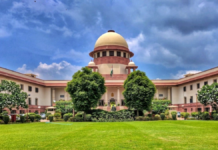
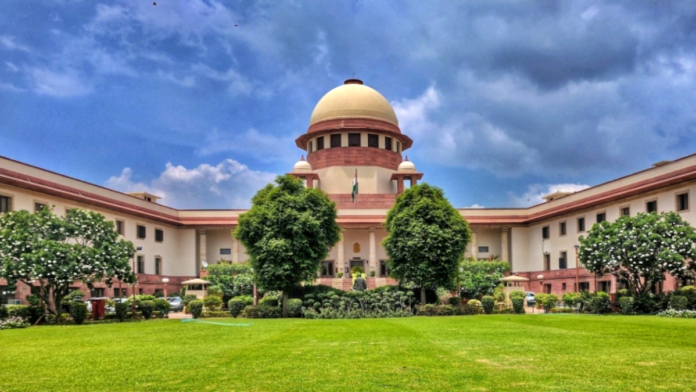
A three-judge bench headed by Chief Justice Surya Kant will hear the Aravalli Hills case on Monday, December 29, after the Supreme Court took suo motu cognizance of the controversy surrounding the government’s redefinition of the ancient mountain range. The bench, comprising Justice J.K. Maheshwari and Justice A.G. Masih, will examine whether the new definition that lowered the minimum height requirement to 100 meters violates previous judicial orders and compromises environmental protection. The court’s intervention follows intense media scrutiny, expert submissions warning of catastrophic consequences, and widespread public protests across Delhi-NCR and Rajasthan. Legal observers note that the Supreme Court may appoint an amicus curiae to assist in this complex matter involving environmental law, mining regulations, and inter-state coordination.
Government’s Defense and Countermeasures
The central government has staunchly defended its redefinition, claiming it is based on comprehensive geological surveys and scientific criteria established by the Indian Council of Forestry Research and Education. Environment Ministry officials argue that the 100-meter threshold aligns with international standards for identifying hill systems and does not constitute an attempt to open areas for mining. In response to the uproar, the government has issued immediate orders to Haryana and Rajasthan to completely stop granting new mining leases in the Aravalli region. The directive extends to both surface and underground mining operations, with existing mines required to comply with all court orders and environmental clearances. The government has further mandated that ICFRE conduct a fresh demarcation exercise to identify additional areas that qualify as Aravalli under the new definition, promising complete protection for the entire geological stretch from Gujarat to Delhi-NCR.
Political Firestorm and Allegations
The Congress party has launched a scathing attack on the government, alleging that the redefinition is a deliberate move to benefit the mining lobby that has long eyed the mineral-rich Aravalli range. Party spokespersons claim that lowering the height criteria effectively excludes nearly 90% of the hills from protection, opening up vast tracts for limestone, quartzite, and sandstone extraction. They point to the timing of the notification, which came amid ongoing efforts to regularize illegal mines in Haryana’s Faridabad and Rajasthan’s Alwar districts. The government has categorically denied these allegations, insisting that its primary objective remains stopping illegal mining activities and preventing desertification. Opposition parties including the Aam Aadmi Party and several environmental activists have joined the chorus, demanding a complete rollback of the redefinition and stronger legal safeguards for the ecologically sensitive zone.
Expert Warnings and Ecological Stakes
Environmental scientists and ecologists have issued dire warnings about the potential consequences of diluting Aravalli protection. Dr. Ghazala Shahabuddin, a senior ecologist, notes that the Aravallis act as a critical green barrier that blocks dust-laden winds from the Thar Desert, preventing desertification of the fertile Gangetic plains. The range harbors over 400 plant species, provides habitat for leopards, hyenas, and numerous bird species, and recharges groundwater for millions of people in Delhi-NCR, Haryana, and Rajasthan. Studies indicate that without the Aravallis, the National Capital Region would experience dust storms similar to those in Jaisalmer and Bikaner, with PM10 levels rising by 300%. The new 100-meter criteria, experts argue, would exclude most of the low-lying but ecologically crucial hills in Haryana’s Mewat region and Rajasthan’s Behror belt, effectively fragmenting the range and destroying its functionality as a continuous ecological unit.
Illegal Mining Continues Despite Ban
Ground reports from environmental activists reveal that illegal mining continues unabated in several parts of the Aravalli range, particularly in Haryana’s Gurugram and Nuh districts and Rajasthan’s Alwar region. Satellite imagery analyzed by the Centre for Science and Environment shows fresh excavation marks and dump sites within areas that were declared protected under the 2018 Supreme Court order. Local communities report that mining mafia operate with impunity, often at night, using heavy machinery to extract minerals worth crores daily. The Supreme Court’s 2004 judgment had completely banned mining in the Haryana Aravallis, but enforcement remains weak due to alleged collusion between local officials and mining operators. The current case assumes critical importance as it may strengthen enforcement mechanisms and impose penalties on violators.
Hearing Could Set Precedent for Natural Resource Protection
Monday’s hearing represents a pivotal moment for environmental jurisprudence in India, as the Supreme Court’s decision could establish binding principles for defining and protecting mountain ecosystems. The court may examine whether the government can unilaterally alter ecological definitions without parliamentary approval or scientific consensus. Legal experts anticipate that the bench might issue an interim order maintaining status quo on mining activities until a comprehensive review is completed. The case also raises questions about federalism, as both Haryana and Rajasthan have conflicting interests, Haryana seeking stricter protection and Rajasthan pushing for mining revenue. The outcome will likely influence how other fragile ecosystems, such as the Western Ghats and Himalayas, are governed in an era of increasing resource extraction pressures.