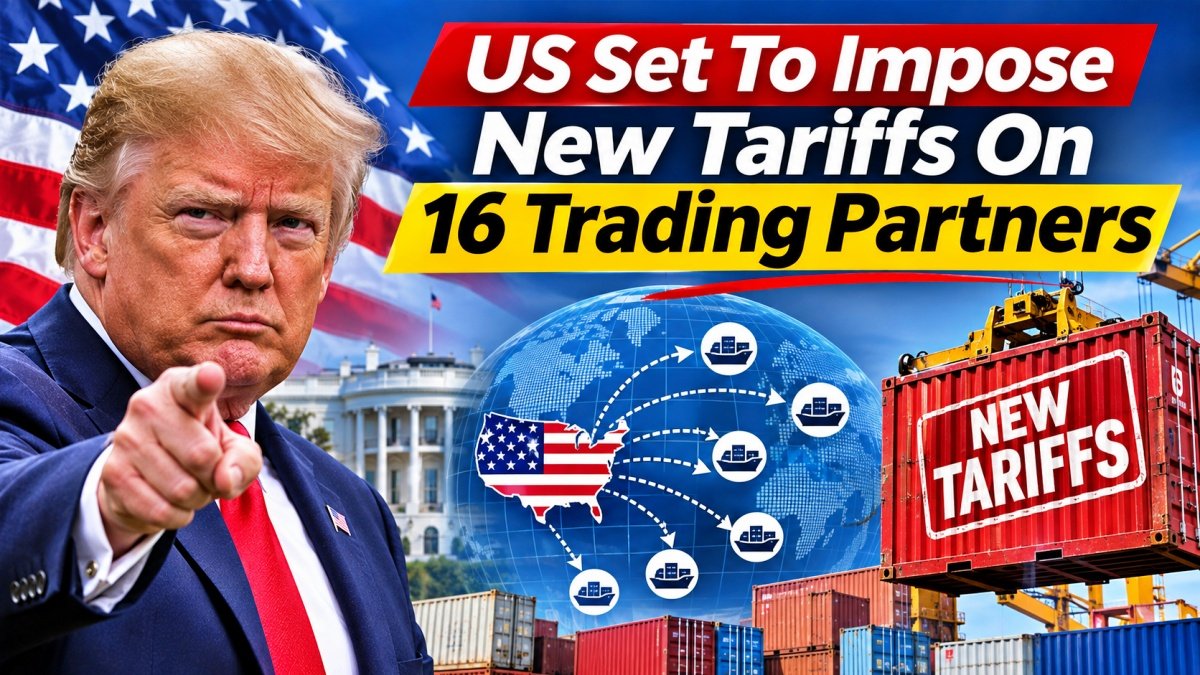
The Trump administration is preparing to announce new import duties on 16 major trading partners following an investigation into excess industrial capacity.
Key Points
- New Tariffs: The US is expected to impose new duties on a wide range of goods from 16 partners.
- Excess Capacity: The probe targets countries with alleged surplus industrial production flooding global markets.
- Country List: The 16 nations include China, India, the EU, Japan, and several Southeast Asian countries.
- Tariff Caps: The administration will honor specific duty caps, such as 15% for the EU and 19% for Malaysia.
- China Focus: China is identified as the primary source of excess capacity in sectors like steel and EVs.
Imminent Tariff Announcement
WASHINGTON: The Trump administration is poised to release the findings of a comprehensive probe aimed at addressing alleged excess industrial capacity across 16 major trading partners. Sources with knowledge of the matter indicated on Tuesday (November 24) that new import duties on a diverse array of goods are expected to be announced shortly. These new levies are intended to stack on top of existing tariffs established during the current presidential term.
The U.S. Trade Representative (USTR) office is expected to propose these duties as a way to replace certain tariffs that were previously struck down by the U.S. Supreme Court in February. While the administration aims to protect domestic industries, the move comes amid public scrutiny, as a recent Reuters/Ipsos poll showed that 62% of respondents support repealing some current tariffs due to their impact on consumer prices.
Targeted Trade Measures
The proposed duties are expected to be specifically tailored to each individual country. While many nations face potential levies, sources suggest that goods from Mexico and Norway are unlikely to see immediate new duties. The USTR has been conducting these investigations under Section 301 of the Trade Act of 1974, focusing on evidence of industrial overcapacity.
The White House plans to honor specific duty caps agreed upon in finalized trade deals. These include a 15% cap on goods from the European Union, Japan, and South Korea, and a 19% cap for Malaysia. Regarding China, the administration is expected to maintain a 20% cap on second-term tariffs, provided that a current trade truce, set to expire on January 10, is successfully extended. If the truce ends, the rate for Chinese excess capacity could rise significantly.
Impact On Global Markets
The 16 countries identified in the probe include China, India, Japan, South Korea, Mexico, Vietnam, Taiwan, Thailand, Malaysia, Indonesia, Switzerland, Norway, Singapore, Bangladesh, and Cambodia, along with the European Union. The administration has specifically highlighted China as the primary source of excess capacity, alleging that it is flooding global markets with steel, aluminum, electric vehicles, appliances, and solar products.
The investigation also addresses Chinese investments in Southeast Asian nations like Vietnam, Indonesia, and Cambodia. The U.S. government believes these investments are being used to manufacture goods for the American market while attempting to circumvent previous trade restrictions. China has officially rejected these accusations, maintaining that its exports are a result of competitive advantages rather than unfair capacity.
Expert Analysis And Next Steps
Ryan Majerus, a former senior Commerce Department trade official, noted that the upcoming report could include differentiated remedies for each of the 16 partners. He suggested that the administration might propose high tariff rates between 15% and 25% on countries with significant excess capacity. These would be in addition to existing duties of 10% to 12.5% imposed due to lax enforcement of anti-forced labor laws.
Alternatively, the administration could opt for lower initial rates with escalation clauses, which would increase over time unless the trading partners take active steps to reduce production capacity. According to Moneycontrol.com, India is expected to take up the fresh tariff threat once the findings of the excess manufacturing capacity probe are finalized.