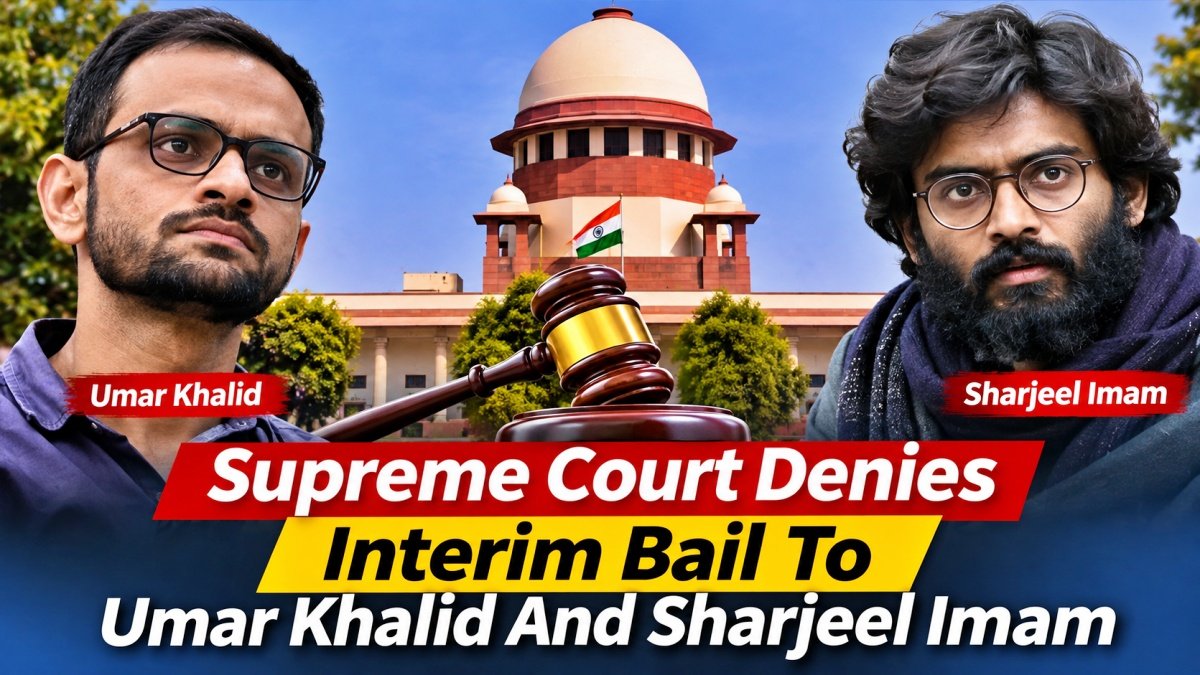
The Supreme Court has refused interim bail to Umar Khalid and Sharjeel Imam in the 2020 Delhi riots case, opting to hear the Delhi Police first.
Key Points
- Bail Refused: The Supreme Court declined the demand for interim bail for both accused.: The court stated that the police side must be heard before any relief is considered.
- Notices Issued: The court issued notices to the Delhi Police regarding the petitions.: The bench will seek a formal response from the authorities on the bail pleas.
- Bench Formation: A three-judge bench will be constituted for the hearing.: The Chief Justice directed that the matter be placed at the administrative level for bench formation.
- Witness Concerns: The accused highlighted the failure to record protected witness testimonies.: Both petitions noted that no testimony from the 47 protected witnesses has been recorded yet.
Supreme Court Refuses Immediate Relief
NEW DELHI: The Supreme Court has declined to grant interim bail to Umar Khalid and Sharjeel Imam in the high-profile conspiracy case related to the 2020 Delhi riots. The bench, comprising Chief Justice Suryakant, Justice Joymalya Bagchi, and Justice V. Mohana, issued notices to the Delhi Police to respond to the petitions filed by the two accused.
The court clarified that it would not consider the demand for interim relief until the side of the concerned party, the Delhi Police, has been heard. This decision follows a recent refusal by the Delhi High Court to grant bail to both individuals in the case registered under the Unlawful Activities (Prevention) Act (UAPA). The court emphasized that the police’s perspective is a necessary component of the judicial deliberation before any interim orders are passed.
Arguments For Speedy Trial And Bail
Senior Advocate Kapil Sibal, representing Umar Khalid, argued for interim bail on the grounds that Khalid has been in custody for over six years. Similarly, Senior Advocate Siddharth Dave made a similar plea for Sharjeel Imam. During the proceedings, Sibal requested a speedy hearing, to which the Chief Justice responded that the bench is fully aware of the facts and has prepared thoroughly for the case.
The Chief Justice further clarified that while the main case would be listed for hearing, the court would not list the specific demand for interim relief at this stage. The court directed that the matters be placed before the Chief Justice at the administrative level to facilitate the constitution of a three-judge bench. This administrative step ensures that the case is heard by a larger panel of judges as required by the court’s internal procedures.
Concerns Over Witness Testimony
In the petitions, both accused raised significant concerns about the trial’s progress. Sharjeel Imam noted that while the chargesheet was filed on September 25, 2020, and the trial involves 18 accused persons with a list of over 900 witnesses, the prosecution has failed to record the testimony of a single witness so far.
The petitions specifically highlighted that out of the 900 witnesses, 47 are classified as protected witnesses. Umar Khalid further contended that continuing his detention beyond the one-year stay period previously fixed by the Supreme Court would violate Article 21 of the Constitution, which guarantees the right to life and liberty. The accused argue that the lack of progress in recording testimonies despite the long duration of their incarceration is a matter of grave concern.
Legal Context And Significance
The case stems from the violent riots that occurred in Delhi in early 2020, which led to widespread destruction and loss of life. The prosecution has framed a conspiracy charge against several individuals, including Khalid and Imam, alleging their involvement in inciting violence. The use of the Unlawful Activities (Prevention) Act (UAPA) allows for stringent measures against individuals accused of activities deemed prejudicial to the sovereignty and integrity of India.
The ongoing litigation highlights the complexities of handling large-scale conspiracy cases involving hundreds of witnesses. The court’s decision to seek a police response first underscores the importance of state security concerns in cases involving public order. By requesting a three-judge bench, the court aims to ensure a comprehensive and balanced judicial review of the evidence and the rights of the undertrial prisoners.
Latest Developments
According to reports from theopenpress.in and Muslim Mirror, the court’s decision to defer interim bail has been widely noted as a significant development in the ongoing Delhi riots proceedings. The court’s move to seek a police response ensures that the state’s position on the security implications of granting bail is weighed against the duration of the accused’s incarceration.
The bench is expected to receive the formal response from the Delhi Police before making a final determination on the interim bail pleas. This process will likely involve a detailed examination of the prosecution’s progress in recording witness statements and the current status of the trial.