



















Key Points:
- US federal court indicted Maduro on narco-terrorism charges in March 2020
- $50 million bounty offered for information leading to Maduro’s capture
- Maduro accused of leading criminal organization “Cartel de los Soles”
- Allegations include cocaine and weapons trafficking with FARC collaboration
- Fighter jets and helicopters patrolled Caracas during arrest operation
- State television broadcasts Defense Ministry appeals for public calm
- Maduro criticized US military intervention as UN Charter violation days before arrest
Tensions between the United States and Venezuela are nothing new. For many years, the US government has leveled serious accusations against Maduro, alleging drug trafficking and ties to terrorist organizations. In March 2020, a US federal court indicted Maduro and more than a dozen others on charges of “narco-terrorism,” marking a significant escalation in the legal campaign against the Venezuelan leader. The indictment represented years of intelligence gathering and cooperation between the Drug Enforcement Administration, Department of Justice, and international law enforcement agencies, who documented alleged criminal activities spanning more than two decades.
The US Department of Justice claims that Maduro and several senior officials of the Venezuelan government were involved in trafficking cocaine and weapons to the United States in collaboration with the notorious Colombian guerrilla group FARC. According to prosecutors, this partnership allowed tons of cocaine to flow through Venezuelan territory into Central America and ultimately into US cities, generating billions of dollars in illicit profits. In this connection, Maduro was also accused of leading a criminal gang called “Cartel de los Soles,” or the “Cartel of the Suns,” named after the sun insignia worn by high-ranking Venezuelan military generals allegedly involved in the operation.
The Trump administration declared this group a foreign terrorist organization last year, opening the door for broader sanctions and enforcement actions. Intelligence reports suggest the cartel operated with impunity within Venezuela’s military and government structures, using state resources, including airports, military bases, and diplomatic pouches to facilitate drug shipments. Witness testimony from former Venezuelan military officers who defected to the United States provided crucial evidence linking Maduro directly to operational decisions regarding drug routes and payment distributions.
Before the arrest, the US had increased the reward for information leading to Maduro’s capture to $50 million, making him one of the most wanted individuals globally by US law enforcement. This move clearly signaled that Washington was preparing for decisive action against Maduro. The bounty, announced by the State Department’s Narcotics Rewards Program, exceeded amounts offered for many international terrorists and drug lords, reflecting the priority the US government placed on bringing Maduro to justice. Former DEA officials noted that such a substantial reward typically produces actionable intelligence from individuals within criminal organizations seeking financial security.
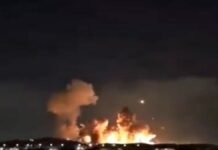
Regarding the situation on the ground, the situation in Caracas, the capital of Venezuela, is currently reported to be under control. According to local journalists, several fighter jets and helicopters were seen flying during the operation, although the city has been calm for the past few hours. Eyewitnesses reported that military aircraft conducted low-altitude patrols over key government buildings and residential neighborhoods during the early morning hours when the arrest took place. People have not left their homes, and the Ministry of Defense’s message is being continuously broadcast on state television channels, appealing to the public to remain calm.
Venezuelan state broadcasters have interrupted regular programming to air recorded messages from military officials urging citizens to stay indoors and avoid gathering in public spaces. The messages emphasize that the situation is under control and that law enforcement is working to maintain order. Markets, schools, and government offices remain closed as authorities assess the security situation. Social media activity from Venezuela shows mixed reactions, with some celebrating Maduro’s removal while others express concern about foreign intervention and Venezuela’s sovereignty.
A few days before this entire incident, in his last interview given on December 31, 2025, Maduro strongly criticized US policy and appeared defiant in the face of mounting international pressure. He said that US military intervention is a blatant violation of the UN Charter, invoking international law principles regarding non-interference in sovereign nations’ internal affairs. During the interview, broadcast on Venezuelan state television, Maduro appeared confident and dismissed threats from Washington as imperialist aggression designed to seize control of Venezuela’s oil reserves.
Maduro claimed that Venezuela is a peace-loving country and his slogan is “No to war, yes to peace,” positioning himself as a defender of Latin American independence against US hegemony. He cited Venezuela’s support for diplomatic solutions and its participation in regional organizations like CELAC and UNASUR as evidence of peaceful intentions. Critics, however, pointed to documented human rights abuses, suppression of political opposition, and the humanitarian crisis that forced millions of Venezuelans to flee the country as contradicting his peaceful rhetoric.
Now, after Maduro’s arrest, the eyes of Latin America and the entire world are focused on the future political and military situation in Venezuela. Regional leaders are weighing their responses carefully, balancing concerns about sovereignty violations with recognition of Maduro’s alleged crimes and authoritarian governance. The arrest raises fundamental questions about international law, the limits of US power projection, and the future of Venezuela’s democratic institutions. Legal scholars debate whether this action sets a dangerous precedent for interventionism or represents legitimate law enforcement against a criminal regime that had lost democratic legitimacy years ago.