


























Key Points
- At least seven killed, dozens injured in five-day anti-government protests across Iran
- Trump issues direct warning to Khamenei on Truth Social, says US “locked and loaded”
- Protests focus on Supreme Leader, chants of “Death to the dictator” reported nationwide
- Violent clashes in Azna city kill three, injure 17 according to semi-official media
- Experts warn situation could spiral into nationwide movement without immediate reform
- Iranian government blames “foreign interference” and deploys Revolutionary Guards
The situation in Iran is currently extremely tense as five days of continuous protests against rising inflation, unemployment, and the economic crisis have turned increasingly violent. At least seven deaths have been confirmed so far, and more than 200 others are reported to be injured across multiple cities, according to human rights organizations monitoring the situation. The protests, which began peacefully in Tehran on December 28, 2025, have now spread to at least 15 cities, including Isfahan, Shiraz, Mashhad, and Tabriz.
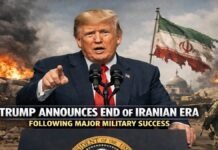
Meanwhile, US President Donald Trump has openly expressed support for the Iranian protesters, dramatically escalating international involvement. Trump shared a post on his social media platform, Truth Social, issuing a direct warning to Iran’s Supreme Leader Ayatollah Ali Khamenei and his military forces, marking the strongest US stance on Iranian internal affairs since the 2009 Green Movement.
What did Trump write about Iran? In his post, Donald Trump wrote that if Iran shoots and kills peaceful protesters, as it has done before, the US will come to the defense of those protesters. He added, “We are locked and loaded,” meaning our missiles are ready, and we are fully prepared for action. Trump concluded his message by writing, “Thank you for your attention to this matter! President Donald J. Trump.” The post, made at 8:47 AM EST on January 2, 2026, was shared over 50,000 times within two hours.
Heavy losses in Iran continue to mount as security forces crack down. The protests in Iran appear to be particularly focused against Supreme Leader Ayatollah Ali Khamenei, with demonstrators demanding his resignation. People on the streets are angry about government policies and rising inflation that has reached 47 percent annually, according to Iran’s own statistical center. Protesters have chanted slogans like “Death to the dictator” in several places, and there have also been reports of damage to public property, including burned police vehicles and smashed windows of government buildings.
According to Iran’s semi-official Fars News Agency, violent protests took place on Thursday in the city of Azna in Lorestan province, about 300 kilometers southwest of Tehran. At least three people were killed in these incidents, while 17 others are reported to be injured. Eyewitnesses claim security forces opened fire on demonstrators after they attempted to storm the governor’s office. The government has imposed a nighttime curfew in Azna and cut internet access across Lorestan province.
What have experts said about Iran? Videos circulating on social media clearly show arson, vandalism, and the sound of gunfire on the streets. In some videos, people can be heard shouting “Shameless! Shameless,” giving an indication of the seriousness of the situation. The Iranian government has responded by deploying units of the Revolutionary Guards to major cities and arresting at least 89 activists, according to state media.
Experts believe that if the situation is not brought under control soon, this movement in Iran could become even more widespread. Dr. Trita Parsi, an Iran analyst at the Quincy Institute, stated that “the economic grievances are real and deep, and the regime’s legitimacy is at its lowest point since 1979.” Meanwhile, Trump’s statement has made this entire issue even more sensitive on the international stage. The world is now watching to see what steps the Iranian government will take next, with European Union foreign ministers scheduled to hold an emergency meeting on January 3 to discuss potential diplomatic responses.