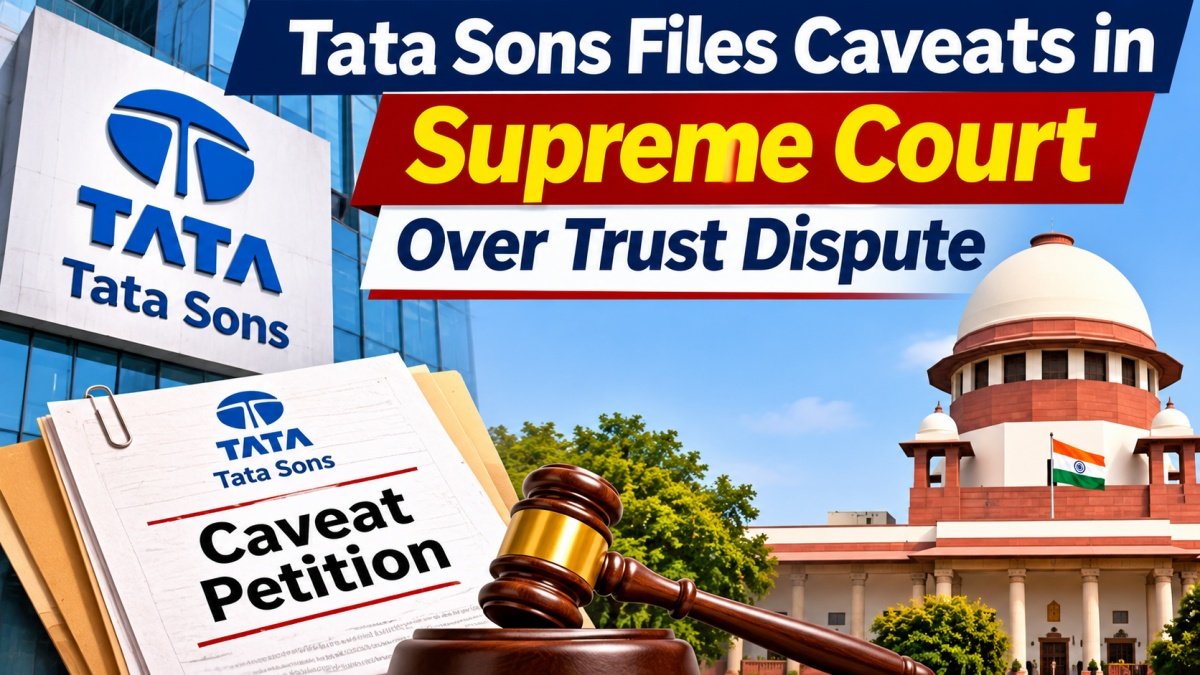
Tata Sons has filed caveats in the Supreme Court and Bombay High Court to ensure it is heard before any interim orders are passed in its ongoing legal battle with the Tata Trusts.
Key Points
- Caveats Filed: Tata Sons filed caveats in two courts to prevent one-sided interim orders.
- Relief Denied: The Bombay High Court refused to stay the November 30 board meeting.
- Voting Dispute: The trusts oppose Executive Chairman N. Chandrasekaran using a casting vote.
- Legal Allegations: Trusts allege violation of Article 121 and seek ₹65 crore in damages.
- Next Hearing: The court has scheduled the next hearing for January 18, 2027.
Strategic Legal Moves by Tata Sons
MUMBAI: Tata Sons Private Limited has proactively filed caveats in both the Supreme Court and the Bombay High Court. This legal maneuver follows a recent ruling by the Bombay High Court which denied interim relief to the Tata Trusts. The company aims to ensure that its side is mandatorily heard by the judiciary before any stay or one-sided interim orders are issued, should the trusts choose to appeal the current decision.
The move is seen as a strategic preparation by the company’s management ahead of a critical board meeting scheduled for November 30. By securing its legal position now, Tata Sons seeks to navigate the complexities of the ongoing litigation while proceeding with its internal corporate governance. The primary objective remains to prevent any sudden judicial interventions that could disrupt the scheduled proceedings.
Bombay High Court Ruling on Board Meeting
On Friday, a bench led by Justice Abhay Ahuja of the Bombay High Court reviewed immediate interim petitions filed by the two major Tata Trusts. The court explicitly refused to postpone or stay the Tata Sons board meeting set for November 30. While the court permitted the meeting to proceed as planned, it clarified that any resolutions or decisions reached during the session will remain subject to the final orders of the court.
The bench further directed Tata Sons and its board members to submit counter-affidavits in response to the lawsuits filed on November 26. The judiciary has now set the next hearing date for January 18, 2027. This ruling provides a temporary window for the company to conduct its business, even as the underlying legal challenges regarding leadership and governance continue to loom.
Core Disputes and Financial Claims
The legal friction centers on the voting process during the upcoming board meeting. The Tata Trusts have sought to prevent Executive Chairman N. Chandrasekaran from exercising a casting vote in instances where opinions among the nominated directors are divided. However, since no interim stay was granted, the meeting will follow the established pre-scheduled rules of the company.
The lawsuits filed by the Sir Dorabji Tata Trust and the RD Tata Trust, which collectively hold a 66 percent stake in Tata Sons, involve serious allegations. The trusts claim that the reappointment of N. Chandrasekaran for a third five-year term violated Article 121 of the company’s Articles of Association, as it allegedly lacked a mandatory affirmative vote. Additionally, the trusts have sought financial compensation, with demands of ₹50 crore and ₹15 crore, respectively, along with 18 percent annual interest.
Ownership Structure and Regulatory Pressure
Beyond the immediate leadership dispute, the conflict is tied to the long-term restructuring of the Tata Group. Noel Tata, Chairman of the Tata Trusts, has been vocal about avoiding a public listing for Tata Sons. This stance contrasts with the regulatory environment, as the Reserve Bank of India (RBI) has classified Tata Sons as an NBFC-Upper Layer, making a public listing mandatory.
The tension between the trusts’ desire to maintain private control and the RBI’s listing mandates creates a complex regulatory hurdle for the conglomerate. The filing of caveats by Tata Sons indicates a firm stance by the management to proceed with the November 30 meeting despite these pressures. The outcome of the dispute remains uncertain as the case moves toward the 2027 hearing, balancing corporate interests, regulatory requirements, and the rights of the majority shareholders.