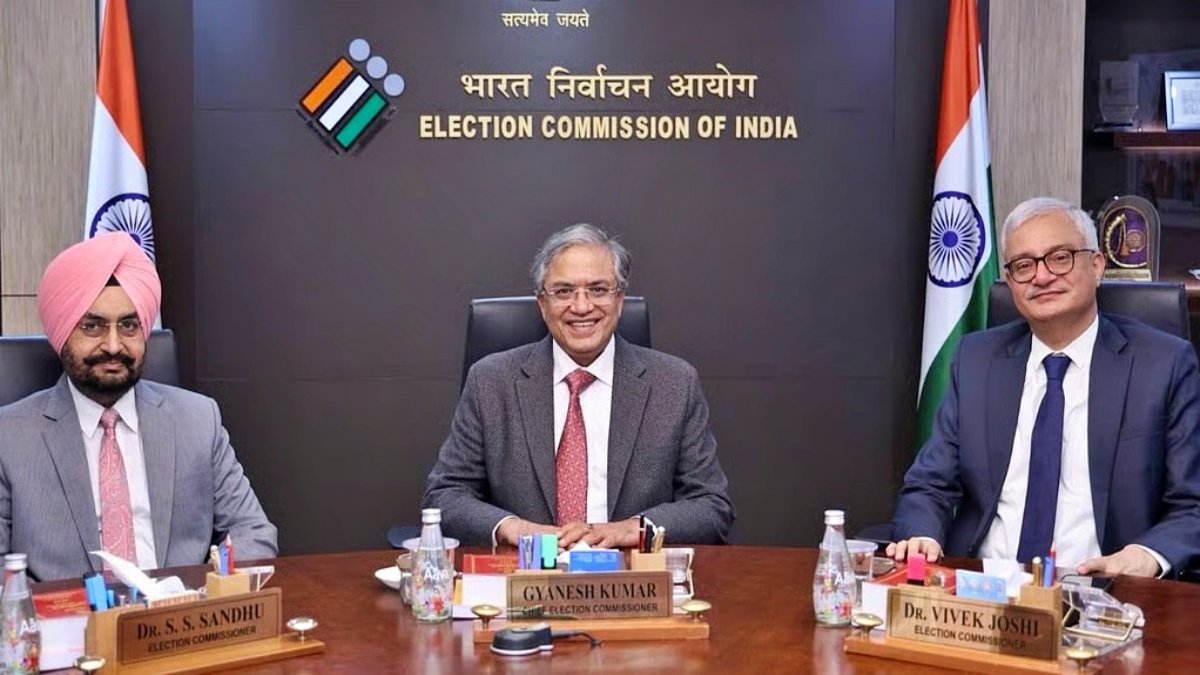
Tamil Nadu’s ruling TVK and DMK, along with other parties, boycotted an ECI meeting on SSR, demanding Chief Election Commissioner Gyanesh Kumar’s resignation over SIR irregularities.
Key Points
- Boycott Details: Nine of 12 political parties walked out of the ECI meeting in Chennai, demanding CEC Gyanesh Kumar’s resignation.
- SSR Concerns: Parties alleged errors in the SIR process, with 74 lakh voters deleted from electoral rolls.
- Demand for Resignation: TVK and DMK leaders claimed the ECI was obstructing voter enrollment while promoting 100% turnout.
- ECI Response: No immediate response from ECI on the allegations or resignation demands.
CHENNAI: Nine of the 12 recognised national and State political parties that attended a meeting convened by Chief Electoral Officer Archana Patnaik at the Secretariat in Chennai on Friday (October 23, 2026) walked out after recording their views and demanding the resignation of Chief Election Commissioner Gyanesh Kumar. The ruling TVK, its allies, and the DMK were among those that staged the walkout. The Election Commission of India (ECI) had invited six national parties including the Congress, BJP, AAP, CPI(M), NPP, and seven State parties such as TVK, DMK, AIADMK, CPI, NTK, VCK, and DMDK to discuss the Special Summary Revision (SSR) of electoral rolls. Barring the BSP, all other parties participated in the meeting.
Allegations of SIR Irregularities
Minister for Energy Resources and Law C.T.R. Nirmal Kumar, representing TVK at the meeting, stated that the SSR was unnecessary as errors in the earlier Summary Revision (SIR) had not been rectified. He alleged that a large number of voters had been deleted from the electoral rolls during SIR, with his party having passed resolutions and held protests against it even before elections. Nirmal Kumar also demanded the resignation of Chief Election Commissioner Gyanesh Kumar.
DMK and VCK Raise Concerns Over Voter Deletions
Former DMK MLA I. Paranthaman said the party had conveyed its views before staging a walkout, highlighting concerns about irregularities in the SIR exercise. He claimed that 74 lakh voters had been deleted from electoral rolls and questioned the steps taken by ECI to enroll eligible voters. ‘The ECI should be people-friendly and facilitate the enrolment of eligible voters,’ he said, adding that while campaigning for 100% voter turnout, the Commission was creating obstacles to including eligible electors.
VCK Questions ECI’s Transparency in SIR
Former VCK MLA S.S. Balaji said the SIR exercise was justified as a means to remove infiltrators from electoral rolls but noted that ECI had not provided clarity on how many such individuals were identified, the methods used, or actions taken against them. He alleged that instead of addressing issues from SIR, the ECI proceeded with SSR as if nothing had happened.
Context of Electoral Roll Revisions in Tamil Nadu
The Special Summary Revision (SSR) is a process conducted by the Election Commission of India to update electoral rolls, ensuring that voter lists are accurate and up-to-date. This follows the Summary Revision (SIR), which is a preliminary step in the voter list correction process. The SIR involves identifying and removing ineligible voters, such as those who have died or moved out of the constituency. However, allegations of irregularities during SIR have been raised by political parties in Tamil Nadu, leading to concerns about the fairness and transparency of the process. The SSR aims to address any remaining discrepancies after SIR, but critics argue that the ECI has not adequately addressed the issues from the earlier phase.
Implications for Upcoming Elections
The boycott of the ECI meeting by major political parties in Tamil Nadu could have significant implications for the upcoming elections. The demand for Chief Election Commissioner Gyanesh Kumar’s resignation may signal a broader dissatisfaction with the ECI’s handling of electoral processes. If the allegations of voter deletions and irregularities are substantiated, it could affect public confidence in the electoral system. The ECI’s response to these demands will be crucial in determining whether the SSR process proceeds smoothly or faces further challenges from political stakeholders.