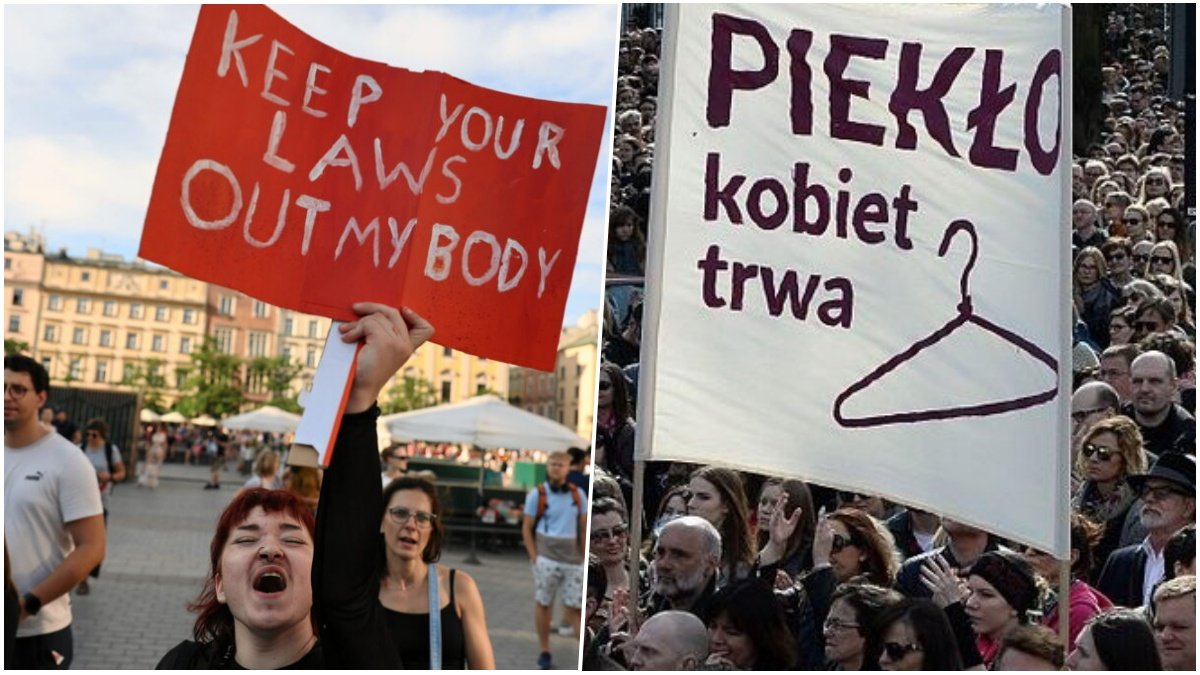
Protesters in Poland demand free and legal abortion as new bills aim to ease restrictive laws, though their passage remains uncertain due to potential presidential veto.
Key Points
- Protests Erupt: Hundreds of women in Warsaw and over 20 cities protested against strict abortion laws, criticizing Prime Minister Tusk’s government.
- Bills Passed: The Sejm approved two bills to ease abortion restrictions, but President Nawrocki may veto them.
- Current Law: Legal abortion is allowed only if pregnancy threatens life or health, or in cases of rape/incest up to 12 weeks.
- Proposed Changes: Bills aim to decriminalize abortions for severe fetal abnormalities and remove criminal penalties for related actions.
- EU Comparison: Poland’s laws remain stricter than most EU nations, which allow abortion on request up to 14 weeks or more.
WARSAW: Hundreds of women gathered outside the Polish Parliament (Sejm) in Warsaw on October 22, 2026, despite heavy rain, to demand free and legal abortion access. Demonstrations spread across more than 20 cities, reflecting widespread anger at Prime Minister Donald Tusk’s failure to liberalise abortion laws as promised. The protests followed the Sejm’s passage of two bills aimed at easing restrictions, though their fate hinges on President Karol Nawrocki’s expected veto.
Current Abortion Law in Poland
Poland has some of the most restrictive abortion laws in Europe. Since 1993, abortions have been allowed only under specific grounds. The situation tightened in October 2020 when the Constitutional Tribunal ruled that abortion due to severe fetal abnormalities was unconstitutional, effective from January 2021. Under current law, legal abortion is permitted if pregnancy threatens a woman’s life or health, or in cases of rape or incest up to the 12th week. Abortion on request is not allowed, and women seeking such terminations face significant barriers. The law also criminalises assistance in unlawful abortions, with penalties up to three years’ imprisonment for those aiding the procedure.
Proposed Reforms in the Two Bills
The two bills passed by the Sejm aim to partially decriminalise abortion. The first bill removes criminal penalties for terminating pregnancies with a woman’s consent outside current legal grounds, including severe fetal abnormalities or incurable conditions threatening the foetus. It also protects healthcare professionals who perform such terminations to avert threats to life or health. The second bill seeks to restore abortion as a legal option for severe fetal abnormalities, reversing the 2020 ruling. However, both bills would require further legislative and presidential approval before becoming law.
Political Challenges and Protests
Despite the bills, protesters argue they are symbolic gestures rather than genuine reforms. Critics claim the government is attempting to show progress ahead of the 2027 parliamentary elections, but not fully liberalising abortion access. The bills face uncertainty as President Nawrocki may veto them, and internal coalition disagreements have delayed reform efforts since 2023.
Comparison with European Abortion Laws
Poland’s abortion laws remain stricter compared to most EU countries. For instance, France allows abortion on request up to 14 weeks with public healthcare coverage. Sweden permits it until 18 weeks, while the Netherlands allows terminations up to around 24 weeks. Spain and Finland permit abortions on request up to 14 weeks, and Portugal allows it until the 10th week. Ireland legalised abortion up to 12 weeks following a referendum in 2018.