































Key Points
- Legislative Proposal: Prime Minister Pedro Sanchez seeks to prohibit social media usage for minors under 16 to combat online harms.
- Content Concerns: The focus of the ban is to protect children from illegal content, child exploitation, and non,consensual deepfakes.
- Global Precedent: Spain joins a growing list of nations, including Australia and France, that are implementing or debating age,restricted social media access.
- Tech Resistance: Elon Musk has publicly condemned the proposal, labeling the Spanish administration as “dictatorial” and “fascist.”
- Implementation Challenges: Experts cite age verification technology as the primary hurdle for the successful enforcement of the ban.
In a move that marks a significant escalation in the global regulatory battle against Big Tech, Spanish Prime Minister Pedro Sanchez has formally proposed a social media ban for teenagers under the age of 16. The proposal, aimed at safeguarding children from the “darker corners” of the internet, has ignited an international debate over the balance between child protection and digital freedom.
A Mandate for Digital Protection
The Spanish government’s announcement comes amid rising concerns regarding the mental health and physical safety of minors in digital spaces. During a recent global summit, Prime Minister Sanchez emphasized that children are currently exposed to environments where they should never be left unsupervised. He specifically cited the proliferation of non,consensual deepfakes and child exploitation as “unacceptable” realities of modern platforms.
“Governments can no longer turn a blind eye to these issues,” Sanchez stated, calling on tech companies to move beyond “performative” age verification and implement robust systems to ensure minors are truly restricted from harmful content.
Criticism from Tech Leadership
The proposal has met with immediate and fierce opposition from Elon Musk, the owner of X (formerly Twitter). Musk took to his platform to criticize Sanchez, characterizing the move as a fascist attempt to curtail online freedom. While Musk’s reaction has been the most vocal, other major entities like Meta have yet to issue a formal response to the Spanish administration’s specific legislative language.
The tension highlights a growing divide between European social democratic values, which favor state intervention for social welfare, and the libertarian “free speech” ideals often championed by Silicon Valley leadership.
Following a Global Trend
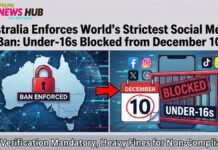
Spain is not isolated in its pursuit of age,based restrictions. The proposal follows in the footsteps of Australia, which recently passed a landmark law banning social media for those under 16. Similarly, France approved legislation in January to restrict access for children under 15, while countries like Denmark and the United Kingdom are currently reviewing similar regulatory frameworks.
Beyond social media, the discussion in Spain has expanded to include the total ban of mobile phones within school environments, a policy already gaining traction in several other European Union member states.
Domestic Politics and Implementation Hurdles
Despite Prime Minister Sanchez’s left,wing coalition lacking an absolute majority in Parliament, the proposal has found unexpected common ground with opposition parties. Conservative and centrist lawmakers have indicated that the mental health crisis among Spanish youth outweighs partisan differences, suggesting that the bill may have a viable path to becoming law.
However, the “ground truth” of implementation remains a major challenge. Determining the exact age of users without compromising privacy is a technological barrier that has yet to be solved effectively. Cybersecurity experts suggest that unless standardized digital ID systems are adopted, the ban may remain difficult to enforce, potentially leading to a cat,and,mouse game between tech,savvy teenagers and government regulators. If successful, however, Spain’s model could serve as a definitive blueprint for the future of the internet worldwide.