





























Key Points
- Swami Avimukteshwaranand’s coronation occurred on October 12, 2022, five days before a Supreme Court order prohibiting future ceremonies.
- Supreme Court addressed him as Shankaracharya in a September 21, 2022 order, his legal team argues, rendering the Mela notice legally untenable.
- Mela Authority officials were absent when the reply was submitted, prompting supporters to paste copies on the office gate.
- Legal counsel threatens action against administration officials for allegedly insulting Hindu sentiments and creating religious confusion.
- Counter-petition filed against rival Vasudevanand, accusing him of securing the court order through false affidavit submissions.
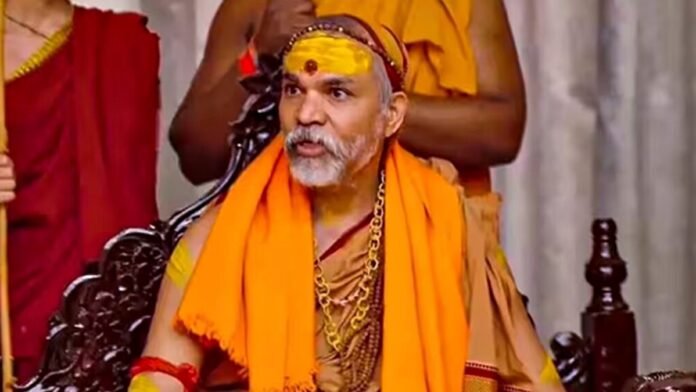
Senior Supreme Court lawyer Anjani Kumar Mishra, representing Swami Avimukteshwaranand, dispatched the comprehensive English-language reply on Wednesday. The document characterizes the Mela administration’s notice as not merely insulting but as a direct assault on followers of Sanatan Dharma. Mishra contends that the administration fundamentally misinterpreted judicial orders, asserting that Swami Avimukteshwaranand’s October 12, 2022, coronation predates the Supreme Court’s October 17, 2022, directive that prohibited future coronations.
The legal argument hinges on a critical timeline discrepancy. According to Mishra, since the coronation preceded the prohibition, the restriction cannot be retroactively applied. Furthermore, the reply emphasizes that the Supreme Court itself acknowledged Swami Avimukteshwaranand’s position in an order dated September 21, 2022, where he was explicitly addressed as Shankaracharya. This judicial recognition, his supporters argue, elevates the Mela administration’s challenge to the status of contempt of court.
Administrative Absence Sparks Dramatic Protest
A striking development unfolded when representatives of Swami Avimukteshwaranand arrived at the Mela Authority office in Sector-4 to formally submit the reply. Sources confirm that no responsible official was present to receive the document during the scheduled submission time. This absence prompted followers to affix multiple copies of the eight-page reply directly onto the office gate, ensuring public visibility. Simultaneously, the administration received the document via official email channels, creating a parallel record of submission.
The unconventional delivery method underscores the escalating tension between religious authorities and administrative bodies overseeing one of Hinduism’s largest congregations. The Magh Mela, attracting millions of devotees annually, has become an unexpected battleground for this succession dispute.
Rival Accusations and Counter-Legal Maneuvers
The reply document launches a vigorous attack on the opposing faction led by Swami Vasudevanand. Advocate P.N. Mishra alleges that Vasudevanand secured the restrictive court order by submitting a false affidavit to the judiciary. In response, Swami Avimukteshwaranand’s camp has already filed a counter-petition challenging the validity of these proceedings. The legal team issued a stern warning that individual officials responsible for issuing the controversial notice will face personal legal consequences for allegedly sowing confusion and insulting the religious sentiments of millions of practitioners.
This development represents the latest chapter in the ongoing Jyotishpeeth succession controversy, which has divided devotees and drawn judicial intervention over the past two years. The dispute centers on the legitimate successor to one of Hinduism’s four cardinal seats established by Adi Shankaracharya, with implications that extend far beyond the Prayagraj Magh Mela grounds.