Key Points
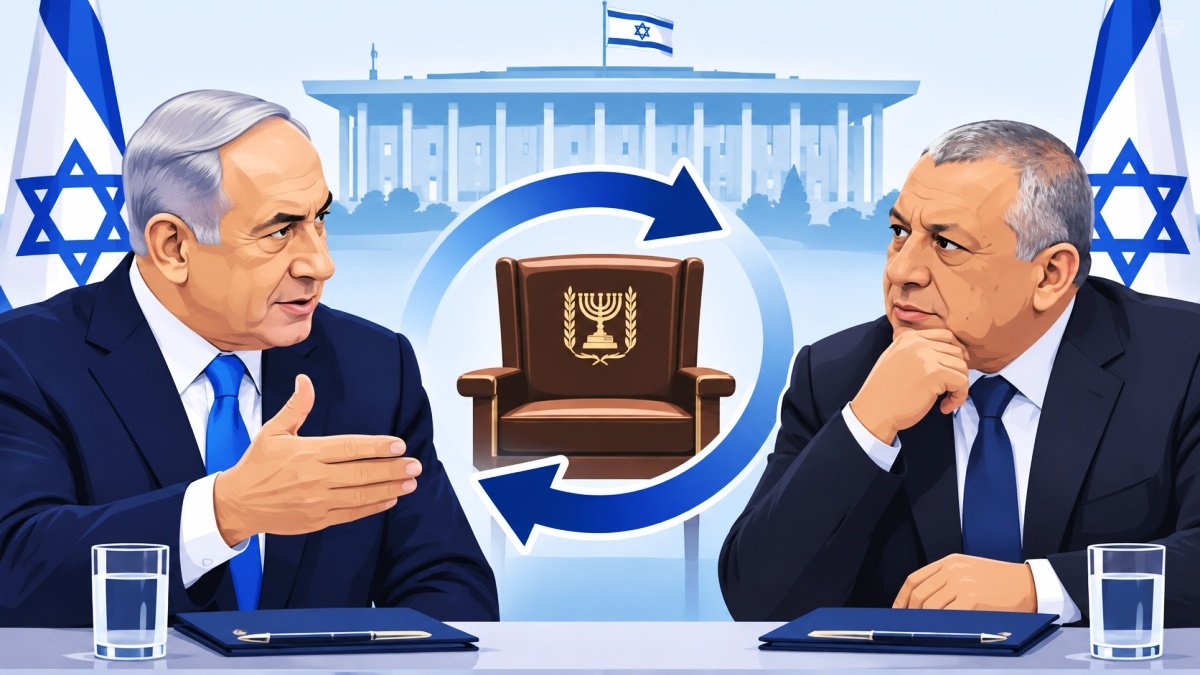
- Rotation offer: Reports indicate Netanyahu is willing to serve second in a rotational unity government with Yashar party leader Gadi Eisenkot.
- Hung parliament: Following the October 27 election, Netanyahu’s right-wing bloc holds 53 seats and Eisenkot’s opposition bloc holds 48, leaving both short of the 61-seat Knesset majority.
- Looming deadline: President Isaac Herzog tasked Eisenkot with forming a government by December 6, with a possible 14-day extension.
- Skepticism and divisions: Eisenkot has questioned Likud’s sincerity in negotiations, while allies Naftali Bennett, Avigdor Liberman, and Yair Golan remain divided over potential coalition partners.
Netanyahu Eyes Rotational Deal as Options Narrow
Israel’s prolonged political deadlock over forming a new government has taken a fresh turn, with Prime Minister Benjamin Netanyahu reportedly considering a rotational premiership deal with his chief rival, Gadi Eisenkot. Under the proposed arrangement, Eisenkot would assume the role of Prime Minister first, with Netanyahu stepping down initially and returning to the top post in the second phase.
According to Israeli media reports, including Channel 13, the idea was floated to Eisenkot through informal channels rather than direct negotiations, and it does not yet command full consensus within Netanyahu’s own political camp. With his right-wing coalition falling short of a parliamentary majority, political analysts view the move as a strategic effort by Netanyahu to remain a central player in the next government.
Deadlock After October 27 Elections
The coalition impasse stems from the October 27 legislative elections for the 26th Knesset, Israel’s first national vote since the October 7, 2023 Hamas attack and the subsequent regional conflict. Voter turnout reached nearly 78%, the highest since 1999, yet no bloc secured the 61 seats required to govern in the 120-member parliament.
According to official results confirmed by Israel’s Central Elections Committee, the Knesset is split across three main camps:
| Political Bloc | Total Seats | Key Parties and Seat Breakdown |
|---|---|---|
| Netanyahu Bloc | 53 | Likud (27), United Torah Judaism (7), Otzma Yehudit (7), Shas (6), Religious Zionist Party (6) |
| Opposition (“Change Camp”) | 48 | Yashar! (21), Beyachad/Together (12), The Democrats (8), Yisrael Beyteinu (7) |
| Arab Parties | 19 | The Joint List (11), Ra’am (8) |
While the 19 seats won by Arab parties could theoretically tip the balance, both Netanyahu and Eisenkot have publicly ruled out forming a formal coalition with them.
Race Against the December 6 Deadline
On November 8, Israeli President Isaac Herzog formally tasked Eisenkot with forming the next government after he received recommendations from 67 lawmakers. Eisenkot faces a December 6 deadline to assemble a governing majority, though the President can grant a 14-day extension. If Eisenkot fails, Herzog may transfer the mandate to Netanyahu. Should neither leader succeed, Israel risks being plunged into another round of snap elections.
Despite the informal overture from Netanyahu’s camp, Eisenkot has remained cautious and skeptical. Speaking on Friday, he accused Likud of failing to negotiate in good faith, noting that their teams had met only five times in two weeks. He criticized Likud for refusing to commit to a state commission of inquiry into the October 7 failures, remove far-right partners, or advance legislation for universal military or national service. Still, Eisenkot maintained that his door remains open if Likud is ready for “serious negotiations and partnership that includes compromise”.
At the same time, Eisenkot is pushing to swear in an alternative government as early as next week. Israel’s public broadcaster KAN reported progress in talks between Eisenkot’s Yashar party and the ultra-Orthodox United Torah Judaism (UTJ) alliance, following preliminary understandings on military conscription legislation.
Divisions Within the Opposition Camp
Eisenkot’s next move is further complicated by competing priorities among his own allies. He has assured Yair Golan, leader of The Democrats, and Avigdor Liberman, leader of Yisrael Beyteinu, that he will not strike a deal with Netanyahu without their consent.
However, fissures within the bloc are widening:
- Naftali Bennett, whose Beyachad (Together) party won 12 seats, has actively advocated for a broad unity government with Likud, and reports suggest he could oppose an Eisenkot-led coalition if talks with Netanyahu are not fully exhausted.
- Avigdor Liberman has opposed relying on Arab parties and favours bringing ultra-Orthodox factions into the coalition. On Thursday, Liberman warned that Netanyahu’s unity offer is a tactical delay, alleging that the Prime Minister, who faces ongoing corruption trials, would drag out talks until the last moment and engineer a crisis to force fresh elections.
- Yair Golan remains firmly opposed to partnering with Netanyahu and has expressed openness to relying on support from Arab-majority parties to form a government.
With less than two weeks left before the initial deadline, Israel’s political future now hinges on whether Eisenkot can bridge the divide within his own camp or risk entering high-stakes unity negotiations with Netanyahu.