






























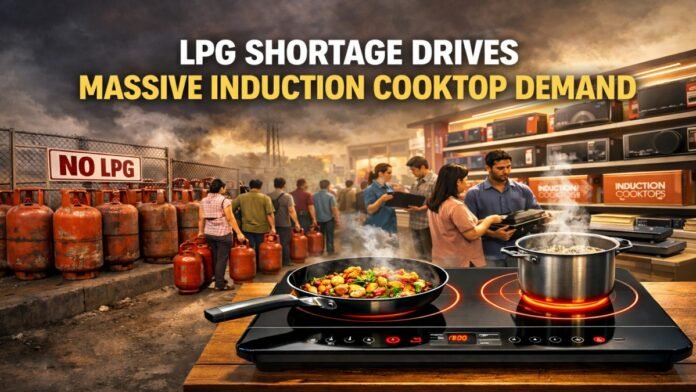
Key Points
- Geopolitical instability in the Middle East, particularly involving Iran, impacts India’s energy supply chain.
- Widespread reports of LPG cylinder shortages and booking delays fuel public anxiety.
- Demand for induction cooktops has surged, resulting in “out of stock” status across platforms, including Blinkit, Swiggy Instamart, and others.
- Major cities, including Delhi, Mumbai, and Bengaluru, face a severe crunch of both appliances and compatible cookware.
- Local retailers report sales jumping from a few units to over 50 units per day.
The intensifying conflict in the Middle East and the war-like situation involving Iran is now making its impact felt within Indian households. As a country heavily reliant on energy imports, India is directly affected by regional instability in the Persian Gulf, which disrupts its supply chain logistics. In recent weeks, this has manifested as a visible shortage of Liquefied Petroleum Gas (LPG) cylinders in several urban centers.
The shortage has not only caused delays in standard cylinder bookings but has also led to reports of price gouging in the black market. These logistical hurdles have created a sense of urgency among consumers, who are increasingly wary of being left without a primary cooking fuel. Consequently, a massive demographic shift toward electric cooking alternatives is underway, transforming the domestic appliance market overnight.
Retail Exhaustion in Major Metros
The surge in demand has caught both online giants and brick-and-mortar retailers off guard. In major hubs such as Delhi, Mumbai, Bengaluru, Chennai, and Kolkata, induction cooktops are scarce. On quick-commerce platforms, which usually promise delivery within minutes, many localities now see the dreaded “out of stock” notification.
In Bengaluru, prominent residential and commercial areas, including MG Road, Ashok Nagar, SG Palya, and CV Raman Nagar, have reported complete inventory exhaustion. Similarly, in Mumbai’s Powai and Juhu areas, shopkeepers are struggling to keep up with the influx of customers. The situation is mirrored in Delhi, where residents in Greater Kalkaji and Greater Kailash are flocking to appliance stores, often purchasing multiple units to ensure their kitchens remain functional in the event of a total gas disruption.
The Shift to Electric Infrastructure
The panic buying is not limited to the stoves themselves. Because induction technology requires specific magnetic-base vessels, the demand for induction-compatible cookware has also spiked. Many families are finding that their existing pots and pans are incompatible, leading to a secondary surge in demand for specialized stainless steel and cast-iron sets.
Retailers in Mumbai’s Juhu district have noted a shift in consumer behavior: customers are no longer browsing for features; they are instead buying whatever is available on the shelf. “On a typical day, we might sell three or four units, but now we are crossing 50 units daily,” stated one local vendor. This rapid transition highlights a significant pivot in India’s kitchen infrastructure, as households shift to electricity to mitigate volatility in the global gas market.
As the situation in the Middle East remains fluid, industry experts expect demand for electric appliances to remain high, even if gas supplies stabilize, as consumers seek to diversify their energy sources for long-term security.