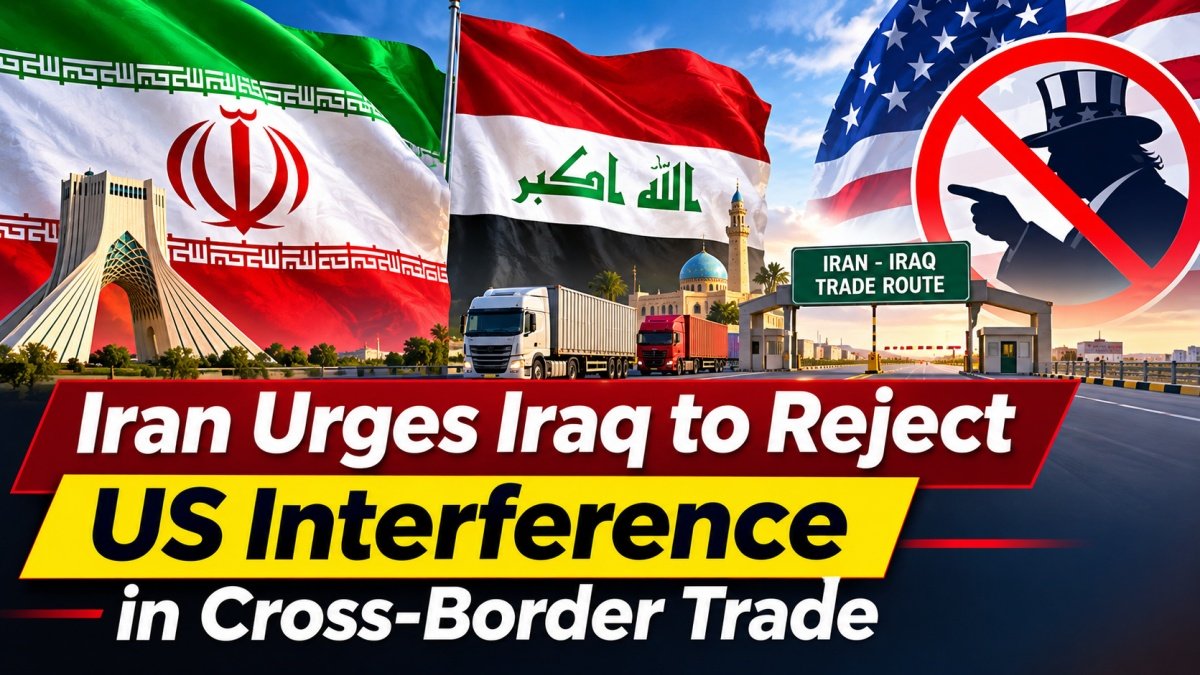
Iran has called on Iraq to resist foreign pressure regarding border closures, specifically urging Baghdad to maintain economic ties despite United States efforts to restrict land commerce.
Key Points
- Iranian Warning: Security chief Mohsen Rezaei urged Iraq to prevent foreign countries from impacting bilateral economic cooperation.
- US Pressure: The US Treasury reportedly requested Iraq to close all but two border crossings with Iran.
- Trade Impact: The move is seen as an attempt by Washington to expand a naval blockade by restricting land-based trade.
- Iraqi Response: Baghdad has stated that it maintains full sovereignty over its own borders and independent trade policies.
Call for Economic Sovereignty
TEHRAN: Iranian security chief Mohsen Rezaei has formally urged Iraq to reject external interference in the economic relationship between the two neighbouring nations. During a meeting with Iraq’s visiting national security adviser, Qasim al-Aboudi, Rezaei stated that foreigners should not be permitted to negatively affect the cooperation between Iran and Iraq. The meeting, reported by Iran’s Fars news agency, highlights the growing friction over regional trade dynamics.
The statement comes as a direct response to reports that Iraq has begun closing several border posts. These actions followed a request from the United States aimed at curbing Iranian trade. Iranian officials expressed concern that such moves could undermine the established economic ties in the region, which are vital for the stability of both nations. By urging Iraq to resist these pressures, Iran is seeking to preserve the flow of goods and services that define their bilateral commerce.
US Pressure on Border Crossings
The diplomatic friction follows a specific request from the US Treasury, which asked Iraq to shut down all border crossings with Iran, with the exception of two. This move is part of a broader Washington policy intended to escalate economic pressure on Tehran. According to Iraqi Foreign Minister Fuad Hussein, who spoke earlier this month, the US seeks to restrict Iranian land commerce as a means of reinforcing its existing naval blockade.
By targeting land-based trade routes, the United States aims to limit Iran’s ability to move goods and resources across its borders. This strategy is designed to tighten the economic squeeze on the Iranian economy, which has faced various international sanctions over several years. However, the move has sparked significant pushback from regional actors who view it as an infringement on Iraqi sovereignty and a potential threat to local economies that rely on cross-border movement.
Regional Reactions and Context
In response to the Iranian warnings, Iraqi officials have maintained a firm stance on their national autonomy. Baghdad has publicly stated that it manages its own borders independently and will not act as an instrument for foreign interests. The situation highlights the growing tension between Western economic sanctions and the regional trade requirements of Middle Eastern nations, where Iraq often serves as a critical transit point.
According to Al Jazeera, Iran specifically warned Baghdad against becoming an instrument for the Trump administration’s policies during the border crackdown. The ongoing dispute underscores the complex balance Iraq must strike between maintaining its security relations with the West and preserving its economic ties with its immediate neighbours. As the US continues to push for more restrictive measures, the impact on regional trade infrastructure remains a primary concern for local businesses and government bodies alike.
Background on Iran-Iraq Relations
The economic relationship between Iran and Iraq is deeply rooted in shared geography and historical trade routes. For years, the two countries have engaged in significant trade, particularly in the energy, construction, and consumer goods sectors. Iraq has frequently looked to Iran as a primary source for many of its imports, while Iran relies on Iraqi markets for various commodities and transit opportunities.
The current tension arises from the intersection of international sanctions and local economic needs. While the United States has long imposed sanctions on Iran to influence its domestic and foreign policies, these measures often have ripple effects on neighbouring countries. Iraq, seeking to balance its own development goals with its international obligations, finds itself in a difficult position when pressured by major powers to restrict trade with its immediate neighbour.