






















Key points
- Protests have spread to more than 78 cities across all 31 provinces of Iran in just 10 days.
- Demonstrations have shifted from economic grievances to explicit calls for the end of Supreme Leader Ayatollah Ali Khamenei’s rule.
- At least 35 people, including minors, have been killed in clashes with security forces and more than 1,200 protesters have been detained.
- Students and youth at major universities are leading the movement, raising slogans like “Death to the dictator” and comparing the IRGC to ISIS.
- The movement is largely leaderless, driven by anger over inflation, water shortages, corruption and human rights abuses.
- The regime has responded with lethal force, mass arrests and internet restrictions, but protesters continue to regroup in cities such as Kermanshah.
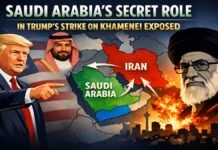
- A warning and strong statements from US President Donald Trump have turned the crisis into a key global diplomatic flashpoint.
The protests that have been roiling Iran for the past 10 days have now evolved into a full-blown popular uprising, stretching far beyond isolated demonstrations over prices and jobs. According to local reports and exile groups, rallies and clashes have been recorded in more than 78 cities, covering all 31 provinces of the country, from Tehran and Mashhad to Kermanshah and Ahvaz.
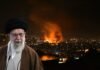
What began as scattered anger over rising costs of living and the free fall of the Iranian rial has now openly targeted the country’s political system. Crowds in multiple cities are no longer limiting themselves to economic slogans; they are directly calling for an end to the rule of Supreme Leader Ayatollah Ali Khamenei and for a change in the Islamic Republic’s power structure.
Economic collapse and public anger
At the heart of the unrest lies a deep economic crisis that has been years in the making. The Iranian rial has plunged to record lows against the dollar, triggering runaway inflation, soaring food and fuel prices and a steep decline in purchasing power. For many middle and lower income families, salaries and savings now cover barely half of what they did a few years ago.
This economic pain has spilled onto the streets in the form of strikes and shutdowns. Merchants and shopkeepers in several cities, including traders in Tehran’s historic Grand Bazaar, have downed shutters in protest, a direct blow to the regime’s traditional commercial support base. Analysts argue that a toxic mix of international sanctions, chronic mismanagement and entrenched corruption has pushed ordinary Iranians to the brink, convincing many that incremental reforms are no longer enough.
Universities and students at the forefront
Iran’s youth and university students have emerged as the most vocal and visible face of the movement. On campuses in Tehran and other major cities, young protesters are chanting defiant slogans such as “Death to the dictator” and “Bury the mullahs”, openly challenging both political and religious authority.
In the dormitories and courtyards of Tarbiat Modares University and Khajeh Nasir University in Tehran, students have gone further, comparing the Islamic Revolutionary Guard Corps, IRGC, to the terrorist group ISIS. For many of these students, the core belief is that as long as clerical hardliners dominate the state, Iran cannot fully modernise, integrate with the global economy or offer real social freedoms to its young population.
A leaderless, unpredictable movement
One striking feature of the current wave of protests is its lack of a single recognised leader or formal political organisation. There is no central party, opposition figure or exiled group openly directing events, which makes the uprising both harder to control and more difficult for the regime to co-opt. Demonstrations can erupt quickly, coordinated through informal networks and social media, then disperse and reappear elsewhere.
Initially triggered by discontent among merchants and traders, the movement has rapidly broadened to embrace a spectrum of grievances, from severe water shortages and environmental mismanagement to complaints over torture, arbitrary detention and long-standing human rights abuses. While some commentators suggest that elements sympathetic to Reza Pahlavi, the son of the deposed Shah, are trying to influence events, the protests on the ground largely reflect spontaneous, homegrown anger from ordinary citizens.
Brutal crackdown, rising toll
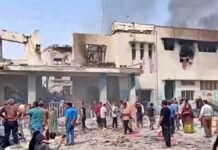
Facing the most serious internal challenge in years, the Khamenei led establishment has doubled down on repression. Security forces, including the IRGC and riot police, have reportedly used live ammunition, metal pellets and tear gas against protesters in multiple cities, leading to deadly confrontations. So far, at least 35 people, among them innocent children and teenagers, have lost their lives in the violence, and the number is feared to be higher as information trickles out.
More than 1,200 people have been detained, with mass arrests reported in flashpoint areas. Despite heavy deployments, videos and eyewitness accounts suggest that in some cities, including Kermanshah, determined crowds have forced security forces to retreat from key streets and squares. The authorities have also severely restricted internet access, slowed mobile data and targeted messaging apps in an attempt to disrupt protest coordination and control the flow of images and testimony to the outside world.
New groups join the streets
Far from cooling tempers, the harsh methods used by the state appear to have broadened the base of resistance. Alongside students and unemployed youth, segments of the urban middle class, small business owners and even truck drivers have joined demonstrations and strikes. Local reports speak of honking convoys and work stoppages that amplify the message of the street, signalling that discontent is no longer confined to any one social group.
This cross-cutting participation makes the situation more volatile. Economists warn that prolonged strikes in transport and trade could further damage an already fragile economy, yet many participants argue that short-term pain is necessary if it helps force bigger political change.
International reaction and diplomatic pressure
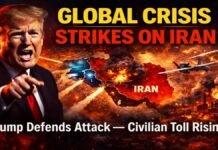
The scale of the unrest and the images of security forces firing on protesters have drawn strong international reactions. US President Donald Trump issued a pointed warning to Iran’s leaders, publicly backing the protesters and cautioning the regime against a bloody crackdown. His administration has signalled that further sanctions and diplomatic measures could follow if the violence escalates.
The crisis has quickly become a focal point of global diplomacy, with Western governments, human rights organisations and Iranian diaspora groups calling for restraint, accountability and respect for the right to peaceful protest. Regional observers worry that prolonged instability in Iran, a major energy producer at the heart of the Middle East, could have serious implications for oil markets, regional security and ongoing power struggles across the region.