
































Key Points
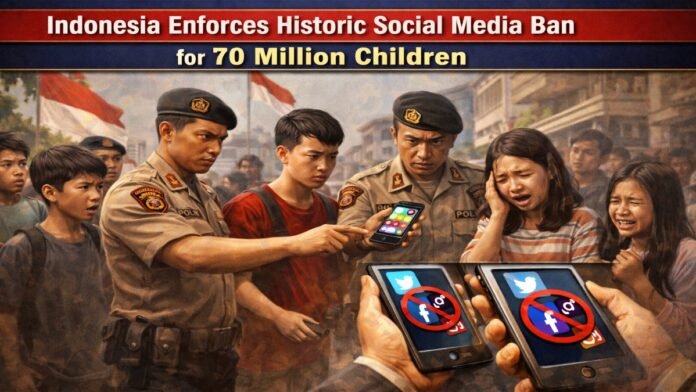
- The ban targets approximately 70 million children under the age of 16 to combat online pornography, cyberbullying, and addiction.
- High-risk platforms affected include TikTok, YouTube, Instagram, Facebook, X, and the gaming site Roblox.
- Communication and Digital Affairs Minister Meutya Hafid warned tech giants that there is “no room for compromise” regarding compliance.
- The move follows a landmark $6 million US court verdict this week holding Meta and YouTube liable for “addictive design.”
- Indonesia is the first Southeast Asian nation to implement such restrictions, following a similar move by Australia last December.
In a decisive move that positions the country at the forefront of global digital regulation, Indonesia began enforcing a nationwide ban on social media and high-risk online gaming for children under 16 on Saturday, March 28, 2026. The regulation, which affects roughly 70 million minors, aims to shield the younger generation from the escalating threats of online pornography, predatory behavior, cyberbullying, and the mental health toll of internet addiction.
“No Room for Compromise”
Communication and Digital Affairs Minister Meutya Hafid issued a stern ultimatum to global technology firms during a late-night press conference on Friday. She emphasized that the Indonesian government requires absolute adherence to the new age restrictions. While the enforcement will be implemented gradually, the Minister clarified that platforms failing to comply would face severe regulatory sanctions, including potential market restrictions.
Several major platforms have already begun adjusting their operations to meet the new legal standards. The microblogging site X (formerly Twitter) has officially updated its minimum user age to 16 for Indonesian users, while Bigo Live has achieved full compliance. TikTok, which remains immensely popular among Indonesian youth, pledged to take “appropriate measures” to identify and deactivate accounts held by those under the legal age threshold. Gaming giant Roblox is also reportedly in discussions with the ministry to introduce an “offline mode” or restricted features for younger users.
A Growing Global Movement
Indonesia’s policy is part of a rapidly accelerating international trend. The nation’s decision was heavily influenced by Australia, which implemented a world,first social media ban for minors in December. Similarly, the upper house of the British Parliament recently voted in favor of comparable restrictions, signaling that Western and Asian governments are increasingly aligned on the necessity of state intervention in the digital lives of children.
The urgency of these measures was underscored by a watershed legal victory in the United States just days ago. On Wednesday, March 25, a Los Angeles jury found Meta and YouTube liable for the “addictive design” of their platforms, which they ruled had caused significant mental and physical harm to a young woman. The jury ordered the tech giants to pay a combined $6 million in damages, a verdict that experts say redefines platforms as “products” responsible for their inherent design risks rather than mere hosts of content.
Impact and Controversy
While teachers’ associations and many parent groups in Jakarta have welcomed the ban as a necessary “digital hygiene” measure, the policy has not been without criticism. Human rights organizations, including Amnesty International, have raised concerns that a blanket ban could stifle the freedom of expression for young people and cut off vital communication channels in remote regions.
The ban also poses a financial challenge for Indonesia’s burgeoning community of young content creators. For example, 14, year, old Instagram influencer Charissa Putri Chandra Kirana, who has over 800,000 followers, expressed hope that the government might consider exceptions for those who use the platforms as a legitimate source of household income. Despite these concerns, the government remains steadfast, insisting that the long-term safety of the nation’s 70 million children outweighs the immediate disruption to the digital economy.