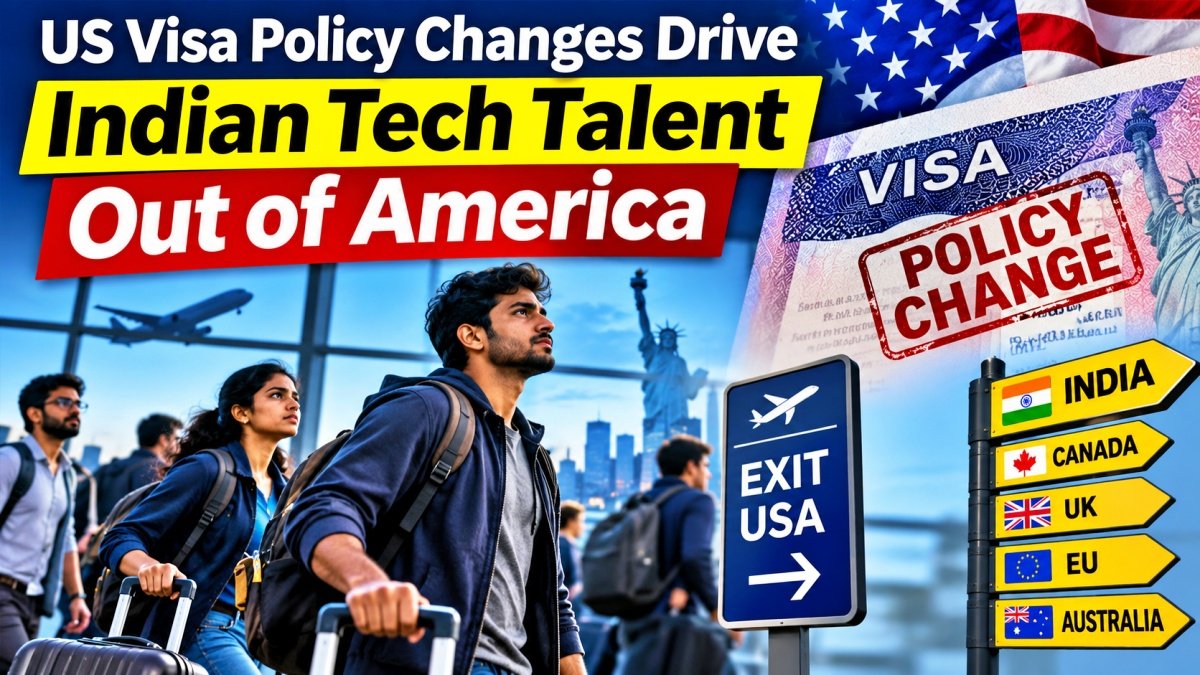
Strict new US visa policies and significant backlogs are forcing skilled Indian tech workers to leave the United States for other countries due to extreme uncertainty.
Key Points
- Talent Exodus: Skilled Indian engineers are moving to countries like the UK due to unpredictable visa rules.
- Corporate Impact: Major firms like IBM are halting sponsorship for many roles in their consulting divisions.
- Policy Shifts: The Trump administration has introduced tighter rules and higher fees for H-1B applications.
- Economic Impact: Experts warn of a significant brain drain and a decline in foreign student numbers.
The ‘Golden Prison’ Experience
NEW DELHI: Skilled workers from India are increasingly choosing to leave the United States as new visa policies make long-term planning nearly impossible. According to a Bloomberg report, the administration has reshaped the rules governing how graduates and skilled staff enter the US workforce, effectively dismantling a system that previously attracted top-tier engineers and researchers.
Yash Sharma, a 36-year-old software engineer at Google, described his six-year experience on an H-1B visa as a ‘golden prison.’ Sharma, who has not left the country in 18 months for fear of being barred from re-entry, is moving to the UK next month on a Global Talent visa. He cited the constant rule changes, slim odds of obtaining citizenship, and the massive backlog for Indian nationals as primary reasons for his departure.
Another Indian national, Swapnil Deshpande, a senior data analyst at a US tech firm, echoed these sentiments. Having arrived in 2018 to study at Northeastern University, Deshpande questioned whether the constant stress and unpredictability of the current immigration climate are worth the professional benefits.
Corporate Shifts and Offshoring
The policy shift is forcing major corporations to rethink their hiring strategies. IBM recently informed staff that it will stop sponsoring foreign workers for most jobs within its consulting division, requiring affected employees to move outside the US or resign by the end of the year. Additionally, the payments firm Flywire is considering moving some hiring operations to more affordable locations.
Several tech giants, including Microsoft and Adobe, have been barred from a key green-card sponsorship programme while officials conduct investigations. Legal experts, including Chris Thomas of Holland & Hart, noted that clients now fear that a single administrative slip could lead to a ban or a criminal probe, prompting some companies to begin offshoring their operations.
Government Policy and Economic Context
The Trump administration maintains that the current measures are necessary to address long-term abuses of the system. Officials argue that the previous framework turned a route for temporary, specialized talent into a large-scale programme that lowered wages for American workers. A study by a Harvard economist, who served on the Council of Economic Advisers, suggested that skilled immigration can lower pay for college-educated US workers, though research on this remains mixed.
Recent developments include the appointment of Stephen Miller as chief of staff and the introduction of a separate $103,000 fee for new H-1B applications in August. While many of these changes face ongoing court challenges, the pressure on the immigration system continues to mount. The administration also recently announced investigations into employers’ green-card sponsorships.
Data Trends and Expert Warnings
Early data suggests the impact of these policies is already visible. Analysis of federal data by the Migration Policy Institute shows that the US issued approximately 260,000 fewer temporary visas in the 2025 budget year compared to the previous year. Furthermore, the Institute of International Education estimates that new foreign student numbers fell by about 15% this autumn.
Immigration lawyers have characterized these moves as a ‘quiet dismantling’ of employment-based immigration. Kate Angustia of the American Immigration Lawyers Association warned that the current instability is creating a significant brain drain, as the world’s most skilled workers seek stability in other jurisdictions.