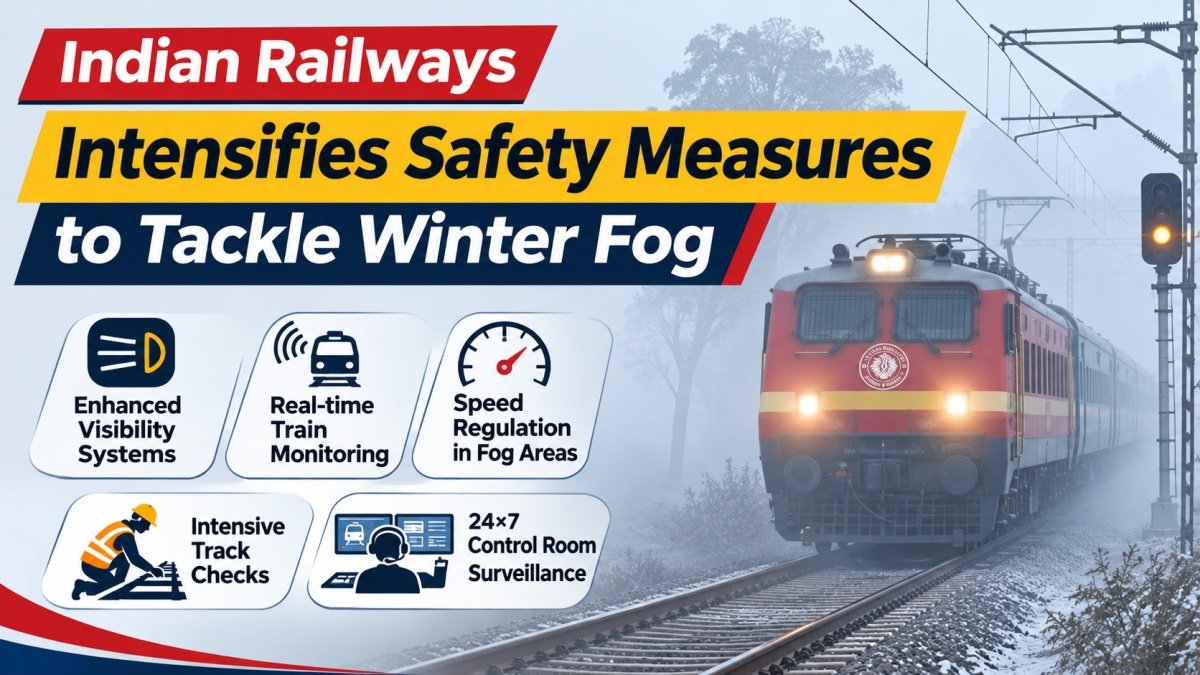
Indian Railways has directed zonal authorities to strengthen safety protocols and infrastructure visibility to minimize train disruptions caused by dense winter fog.
Key Points
- Safety Measures: The Railway Board ordered zonal railways to intensify track patrolling and safety monitoring.
- Visibility Focus: Railways will use luminous markings and sigma boards to improve signal visibility.
- Staff Training: Personnel will receive specific training on handling equipment failures during low visibility.
- Infrastructure Checks: Officers are required to conduct night and footplate inspections to assess operational readiness.
- Operational Flexibility: The board stressed the need for scratch rakes to manage disruptions effectively.
Enhanced Safety Protocols
NEW DELHI: The Railway Board has issued comprehensive directives to zonal railways to bolster safety measures ahead of the winter season. With dense fog frequently causing significant delays and operational hurdles across north India, the national transporter aims to ensure smoother train movements and passenger safety.
The instructions mandate intensified track patrolling and the provision of essential safety equipment. Railway personnel tasked with safety duties have been told to remain vigilant and strictly adhere to prescribed precautions when working in conditions of low visibility. Furthermore, the board has highlighted the importance of monitoring fire and smoke detection systems, specifically those located in pantry cars, as part of the broader safety preparedness measures.
Infrastructure and Visibility Improvements
To combat the challenges posed by heavy fog, the Railways is focusing on improving the visibility of critical infrastructure. This includes ensuring that signal indications are clearly visible, maintaining sighting boards, and applying luminous markings such as lime markings and sigma boards.
At level crossing gates, the authorities will implement luminous strips and other visibility-enhancing measures to help railway staff identify indicators. Additionally, the board emphasized the necessity of ensuring that tail lamps and the ‘X’ marks on the final coaches of trains remain clearly visible to staff during operations.
Staff Training and Inspections
A key component of the winter preparedness plan involves specialized training for railway staff. Employees will be trained on fog-related safety procedures, including the management of equipment failures and the operation of modified automatic signalling arrangements. This initiative aims to equip loco pilots and ground staff with the necessary skills to handle unpredictable weather.
Railway officers have been instructed to conduct regular night and footplate inspections. These reviews are designed to assess the readiness of both the infrastructure and the personnel, while also providing a platform for officers to counsel staff on best practices for safe operations during the fog season.
Operational Adjustments and Logistics
The Railway Board has also stressed the requirement for scratch rakes to provide the necessary operational flexibility to manage disruptions. These measures are part of a broader strategy to maintain the flow of traffic despite the recurring seasonal challenges that often lead to significant logistical bottlenecks.
By ensuring the availability of these rakes, the Railways can more effectively manage the movement of trains when visibility is compromised. The board’s focus on both technical infrastructure and human resource readiness reflects a multi-layered approach to maintaining the integrity of the national rail network during the peak winter months.
Background and Context
Every winter, the northern regions of India experience dense fog that can reduce visibility to near-zero levels. This phenomenon poses a severe risk to railway operations, as it can obscure signals, hide track obstacles, and make it difficult for loco pilots to navigate safely. Historically, these conditions have led to frequent train cancellations, long delays, and safety concerns for thousands of passengers.
Indian Railways, the national transporter, manages one of the largest rail networks in the world. Maintaining safety during extreme weather is a recurring priority. The current measures, including the use of luminous markings and specialized training, are part of an ongoing effort to modernize safety standards and mitigate the impact of seasonal weather patterns on the country’s primary transport backbone.
Recent Developments and Regional Impact
In recent updates, the Railway Board Chief reviewed the fog preparedness plans to ensure safe operations. This review comes as various regions begin to see the impact of the winter weather. For instance, reports indicate that some regions, such as Jharkhand, have already seen train cancellations and reduced frequencies.
Additionally, the Railways issued a specific fog safety advisory for passengers in Kashmir on November 29. To manage the increased seasonal demand and potential disruptions, the Railways also announced plans to temporarily augment over 100 trains with 131 extra coaches during the month of December.