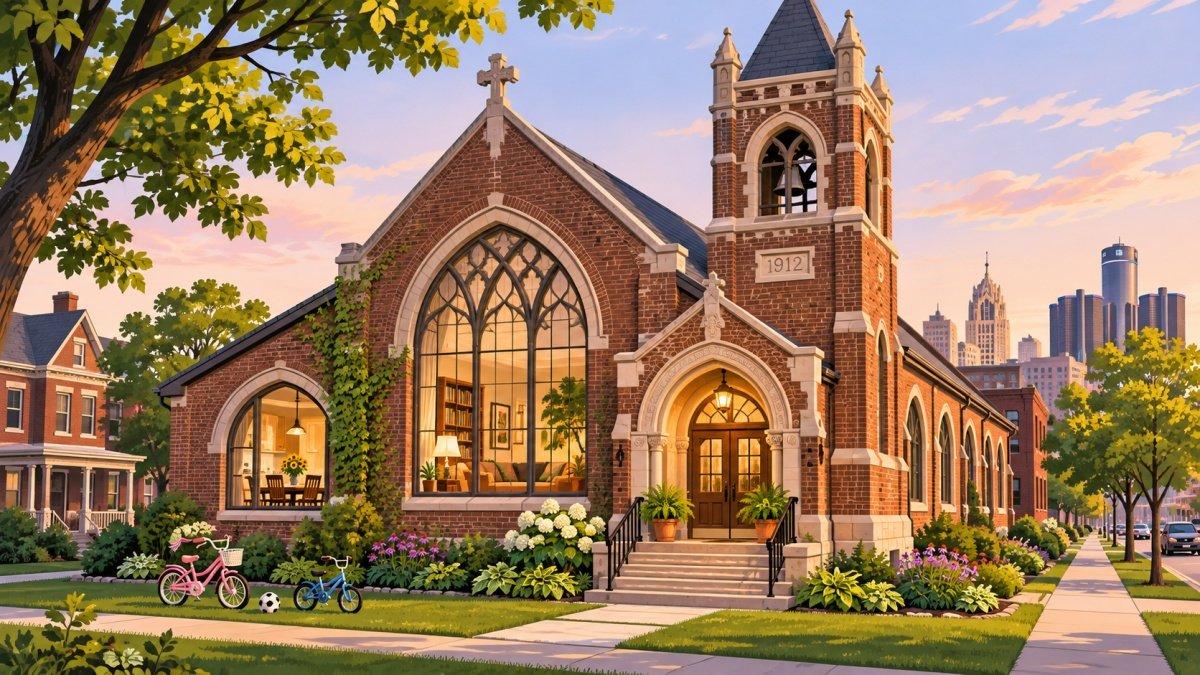
A Detroit interior designer is converting a vacant 1912 church into a family residence and a designer show house to promote creative education for children.
Key Points
- Project Scope: The renovation transforms a vacant church into a home with four bedrooms and a library.
- Historic Preservation: The owners are preserving original red-brick exteriors and stained-glass windows.
- Show-house Plans: The property will host an annual show house starting in 2027 to showcase local artisans.
- Educational Goal: Proceeds will support an initiative to make design education accessible to children.
- Public Engagement: Over 500 people visited the site during a home and garden tour in June 2026.
Adaptive Reuse of a Historic Landmark
DETROIT: Rachel Nelson, the CEO and principal designer of the Detroit-based studio Concetti, is leading a major transformation of a vacant church in the city’s Indian Village neighbourhood. The building, which stood empty for approximately 15 years, is being reimagined as a private residence titled Divinely Detroit. The project aims to blend a modern family living space with a commitment to preserving the architectural heritage of the structure.
The church, originally used by St Luke’s Evangelical Lutheran Church and later by Mount Olive East Missionary Baptist Church, was purchased by Nelson and her husband, Joe Trobaugh, for approximately $390,600 in December 2024. The couple secured the property after obtaining necessary approvals from the Detroit Land Bank Authority and the city’s historic preservation commission. While the initial renovation estimate was around $600,000, the final costs continue to evolve as the project progresses.
Preserving Architectural Integrity
A central component of the renovation is the retention of the building’s historic character. City preservation officials have mandated the restoration of the church’s red-brick exterior, stone detailing, and leaded stained-glass windows. Inside, the design team is integrating four bedrooms, three full bathrooms, and a half bathroom into the existing shell, while maintaining the high vaulted ceilings and arched windows.
The interior layout includes a double staircase connecting the main floor to an upper level, while the former choir balcony is being converted into a library and meditation area featuring a fireplace. To meet modern building codes, the team, including specialists from 4545 Architecture, has worked to create compliant bedroom escape windows that do not compromise the street-facing aesthetic of the historic landmark.
Community Impact and Education
The project serves a dual purpose as a private home and a public platform for the creative community. Starting in 2027, Divinely Detroit is scheduled to host an annual designer show house. This event will feature work from various Detroit designers and makers, showcasing different creative interpretations of the historic space. The initiative is designed to demonstrate that thoughtful design can contribute significantly to a city’s future.
Proceeds from the annual show house will benefit Detroit Deserves Good Design, an initiative aimed at making quality design education more accessible. The program intends to introduce children and aspiring young designers to careers in architecture and interior design, providing opportunities for those who might not otherwise have access to these creative fields.
Public Engagement and Progress
Nelson has been actively documenting the renovation process on social media, highlighting the complexities of adaptive reuse, which involves giving an existing building a new purpose rather than demolishing it. The project gained significant public attention in June 2026, when more than 500 people visited the site during the Indian Village Home and Garden Tour.
According to reports from ClickOnDetroit, the tour allowed the public to see the restoration in progress, offering a firsthand look at how historic buildings can be adapted for contemporary use. By opening the doors to the community, Nelson and Trobaugh hope to foster a deeper appreciation for historic preservation and the role of design in urban development.