

























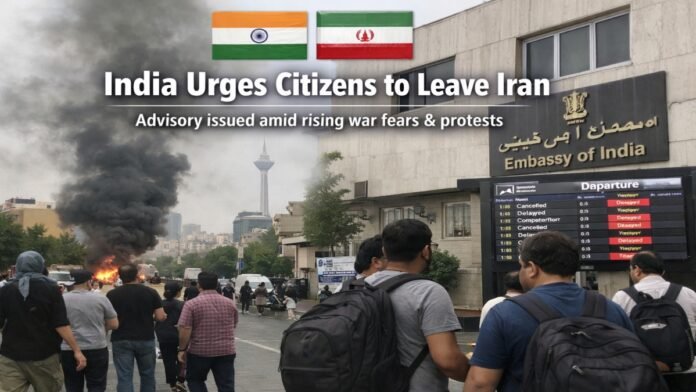
Key Points
- Evacuation Order: Indian students, pilgrims, and tourists have been advised to leave Iran by all available means of transport.
- US Ultimatum: President Donald Trump has issued a 10 to 15-day deadline for Iran to reach a “meaningful” nuclear agreement or face military action.
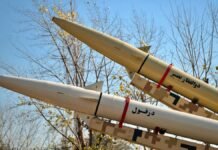
- Military Build-Up: The United States has deployed a massive force in the Middle East, including two aircraft carrier strike groups and multiple destroyers.
- Internal Unrest: Anti-government student protests have erupted at major universities in Tehran and Mashhad, complicating the security landscape.
- Embassy Support: Emergency helplines and a mandatory registration link have been activated for the approximately 10,000 Indians residing in the country.
The Indian Embassy in Tehran issued a fresh, high-priority advisory on Monday, February 23, 2026, urging all Indian nationals to leave Iran at the earliest opportunity. This directive follows a significant deterioration in the regional security climate, fueled by a high-stakes nuclear standoff between the United States and Iran, alongside widespread internal civil unrest.
The advisory, which reiterates and strengthens previous warnings issued in January and early February, specifically targets students, pilgrims, business travelers, and tourists. Indian citizens are urged to secure seats on commercial flights while they remain operational and to maintain a high state of vigilance.
The Trump Ultimatum and Nuclear Brinkmanship
The primary driver of the current crisis is a recent ultimatum delivered by US President Donald Trump. Speaking at the inaugural “Board of Peace” meeting in Washington, Trump warned that Tehran has a window of roughly 10 to 15 days to finalize a new nuclear framework. The President indicated that failure to comply would lead to “unfortunate” consequences, a statement widely interpreted as a threat of precision military strikes.
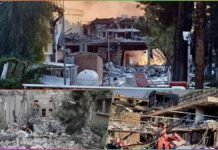
In response, the US military has orchestrated its largest buildup in the region in decades. The USS Gerald R. Ford and the USS Abraham Lincoln carrier strike groups have been positioned in the Middle East, supported by over a dozen destroyers and advanced fighter jet wings. While diplomatic talks are technically scheduled to resume in Geneva on February 26, the parallel military posturing has heightened fears of an imminent kinetic conflict.
Internal Turmoil and Security Concerns
The external threat is compounded by a volatile domestic situation within Iran. For the second consecutive day, thousands of students have staged anti-government demonstrations at major institutions, including the University of Tehran and Sharif University of Technology. These protests, which often involve scuffles with pro-government groups, have led to a heavy deployment of security forces across major urban centers.
The Indian Embassy has cautioned its citizens to strictly avoid all areas of demonstration and to monitor local media constantly. Citizens are also required to keep their travel and identification documents, including passports and residence permits, readily accessible for emergency transit.
Embassy Helplines and Registration
To ensure the safety of the Indian community, the mission has activated four emergency mobile numbers:
- +989128109115
- +989128109109
- +989128109102
- +989932179359
Indian nationals who have not yet registered with the Embassy are requested to do so immediately via the official portal at cons.tehran@mea.gov.in. In the event of internet disruptions, which have become frequent in Tehran, the Embassy has asked families back in India to complete the registration process on behalf of their relatives.
As the 15-day deadline approaches, the Ministry of External Affairs in New Delhi is reportedly coordinating with international carriers to ensure that exit routes remain open for the Indian diaspora, even as several regional airlines have begun suspending flights over Iranian airspace.