






























Key Highlights of Census 2027
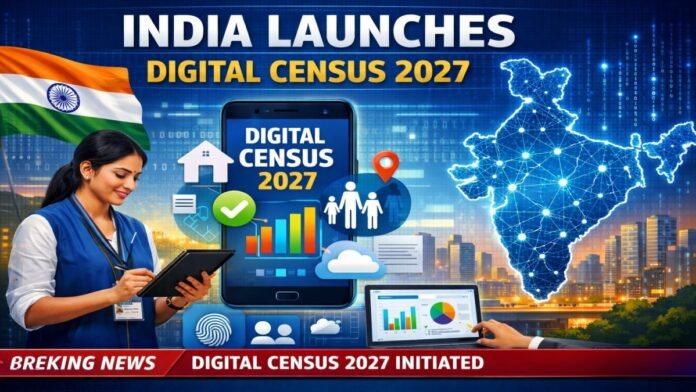
- First Digital Census: Data will be collected primarily through a dedicated mobile application, replacing traditional paper forms.
- Caste Enumeration: For the first time since 1931, the census will include a comprehensive count of caste categories.
- Two-Phase Execution: The process begins with the “House-listing and Housing Census” (HLO), followed by “Population Enumeration” in early 2027.
- Self-Enumeration Portal: Citizens can fill in their details online in 16 languages via a secure government portal before the door-to-door survey.
- Staggered Rollout: Ten states and Union Territories, including Delhi and Karnataka, are leading the first phase starting this April.
After a gap of nearly 15 years, the process for Census 2027 is commencing across the country today. While India typically conducts its census every decade, the 2021 exercise was postponed due to the COVID-19 pandemic and subsequent policy discussions regarding the inclusion of caste data.
Mrityunjay Kumar Narayan, the Registrar General and Census Commissioner of India, has confirmed that the first phase, known as the House-listing and Housing Census (HLO), will run from April 1, 2026, to September 30, 2026. This phase provides the structural foundation for the population count, which is scheduled for February 2027.
The Digital Shift and Self-Enumeration
In a significant technological leap, this census is entirely digital. Citizens now have the option for “Self-Enumeration” through the official portal, available in 16 major Indian languages. This facility opens for a 15-day window before the start of the house-to-house enumeration drive in each specific state.
For example, in the NDMC and Cantonment areas of Delhi, as well as in states like Karnataka and Goa, the self-enumeration window is open from April 1 to April 15, 2026. This feature allows heads of households to log in using a mobile number, mark their location on a digital map, and submit family details at their convenience.
33 Questions for a Changing India
During the first phase, enumerators will pose 33 specific questions to citizens. These questions are designed to provide an accurate picture of the nation’s infrastructure and living standards, covering:
- Housing Details: Building material used for floors, walls, and roofs, and the current condition of the house.
- Social Identification: Name and gender of the head of the household, and whether they belong to a Scheduled Caste, Scheduled Tribe, or Other category.
- Basic Amenities: Primary sources of drinking water, electricity, toilet facilities, wastewater drainage, and cooking fuel (LPG/PNG).
- Household Assets: Ownership of digital devices like smartphones, laptops, and internet access, as well as vehicles ranging from bicycles to cars.
- Dietary and Contact Info: Information regarding staple diets and a mobile number for official census communication.
The Landmark Inclusion of Caste
One of the most significant changes in Census 2027 is the inclusion of caste enumeration. While the first phase focuses on housing and amenities, the specific counting of castes will take place during the second phase, the population enumeration phase, in early 2027. This decision follows years of political and social debate and is expected to provide critical data for future policy planning and social welfare schemes.
Strict Confidentiality and Data Security
To address privacy concerns, the government has emphasized that all personal data collected during the census is strictly confidential. Under the Census Act, 1948, this information is not admissible as evidence in any court of law. Furthermore, the data cannot be used to verify eligibility for individual government schemes, its sole purpose is the generation of aggregate statistical figures to aid national development.
How to Participate in Self-Enumeration
- Register: Visit the official census portal (
se.census.gov.in) and sign up using a valid mobile number. - Location: Use the integrated map tool to identify the precise location of your residence.
- Submit: Fill out the household details for all family members and submit the form.
- SE ID: Once submitted, a 16-digit Self-Enumeration ID (SE ID) will be sent to your mobile.
- Verification: Present this SE ID to the census enumerator during their field visit to confirm your data and save time.
As the world’s largest population exercise, Census 2027 will involve over 3 million officials and enumerators. The final comprehensive reports, aimed at guiding India’s growth for the next decade, are expected to be released by late 2027.