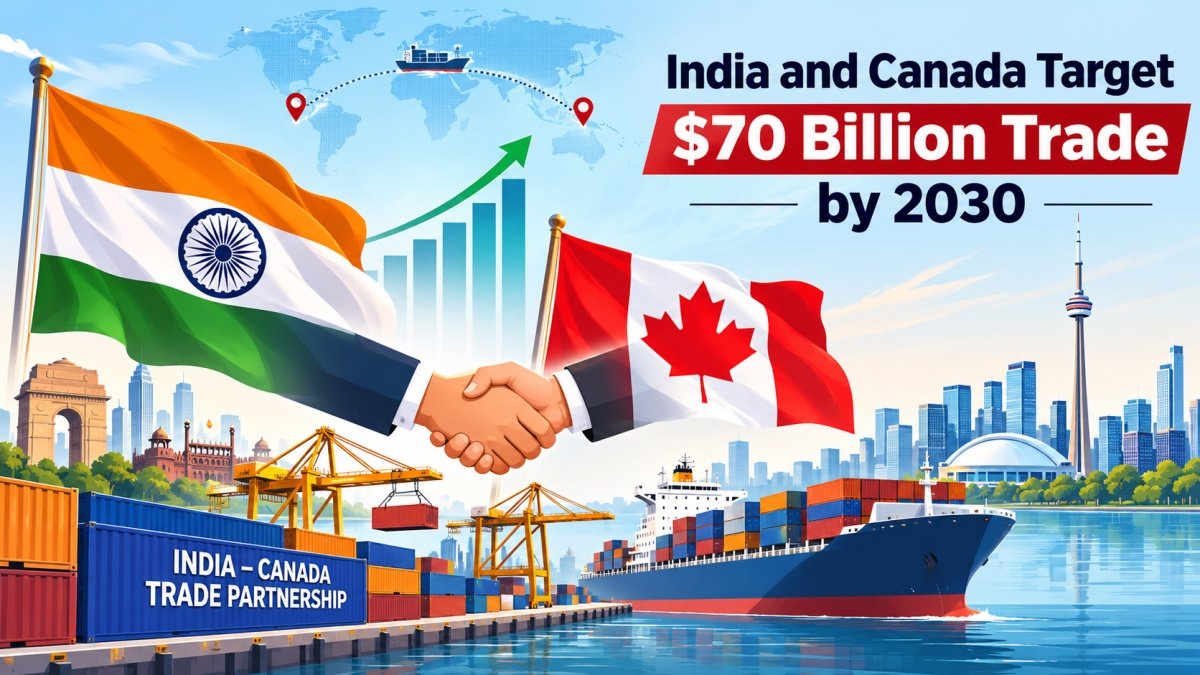
India and Canada have set an ambitious target to reach $70 billion in annual trade by 2030, driven by intensifying negotiations on a Comprehensive Economic Partnership Agreement.
Key Points
- Trade Target: Bilateral trade aims to reach 70 billion Canadian dollars annually by 2030.
- CEPA Progress: Negotiators are holding daily talks to finalize the trade deal by the end of 2026.
- Ontario Growth: Trade between Ontario and India has surged by 88 percent since 2018.
- Key Sectors: Cooperation is being prioritized in AI, defense, minerals, and clean energy.
Ambitious Economic Goals for 2030
TORONTO: During the Canada-India Investment Forum held in Toronto on Friday, Canadian Foreign Minister Anita Anand highlighted the significant potential for expanding economic ties between the two nations. Speaking ahead of Prime Minister Narendra Modi’s upcoming visit to Canada, Anand noted that the proposed Comprehensive Economic Partnership Agreement (CEPA) is poised to provide businesses with greater certainty and reliable market access.
The minister revealed that while the total trade in goods and services between India and Canada stood at 30.4 billion Canadian dollars last year, the new agreement could more than double this figure. The government aims to hit a milestone of 70 billion Canadian dollars in annual trade by the year 2030, fostering long-term investments and stronger business partnerships. Anand emphasized that such certainty would give businesses the confidence to expand operations and build robust partnerships.
Anand shared her sentiments on the social media platform X, stating that the upcoming visit by Prime Minister Modi provides a unique opportunity to build on current momentum and unlock new economic possibilities between the two countries.
Accelerated Negotiations and Strategic Cooperation
The push for the CEPA has gained significant momentum, with reports indicating that New Delhi and Ottawa are very close to concluding negotiations. Officials from both countries are reportedly engaged in daily discussions to finalize the agreement by the end of this year. This diplomatic effort aims to create a structured framework for trade that benefits both economies.
India’s High Commissioner to Canada, Dinesh Patnaik, emphasized that the deal could create resilient supply chains, promote clean energy, and accelerate economic growth for both nations. He noted that the CEPA could open new opportunities in trade and innovation, fostering shared prosperity.
Beyond general trade, the forum highlighted specific areas of mutual interest. Discussions included cooperation in technology, energy, critical minerals, aerospace, and advanced manufacturing. The initiative seeks to unlock new economic possibilities by building on the current momentum of bilateral relations, focusing on creating a more integrated economic corridor.
Regional Growth and Sectoral Focus
The investment forum also showcased the success of regional trade, specifically between the Canadian province of Ontario and India. Victor Fedeli, Ontario’s Minister of Economic Development, Job Creation and Trade, stated that bilateral trade between the province and India has increased by 88 percent since 2018. This growth underscores the deepening economic integration between the two regions.
Ontario is actively exploring specific avenues for cooperation with India in high-growth sectors, including Artificial Intelligence (AI), defense, and manufacturing. These sectors are increasingly vital for global economic competitiveness and are expected to be major pillars of the upcoming trade framework.
The forum, hosted by the law firm Castles Brock & Blackwell in partnership with Toronto Global and the Canada-India Business Council, served as a platform to discuss these strategic priorities. The event highlighted the importance of infrastructure, advanced manufacturing, and critical minerals in shaping the future of the India-Canada economic relationship.
Context and Significance of CEPA
A Comprehensive Economic Partnership Agreement (CEPA) is a broad trade deal that typically covers not only the reduction of tariffs on goods but also services, investment protections, and intellectual property rights. For India and Canada, such an agreement is intended to streamline customs procedures and provide a more predictable environment for small and medium enterprises, as well as large corporations.
The move toward a 70 billion Canadian dollar target reflects a strategic shift toward diversifying trade partners and securing supply chains for critical components. By focusing on minerals and defense, both nations are looking to secure the raw materials and technological expertise required for the green energy transition and modern security needs.
The successful conclusion of these talks by the end of 2026 would mark a significant milestone in bilateral relations, potentially serving as a blueprint for other trade agreements in the Indo-Pacific region.