

























Key Points:
- Bangladesh High Commission suspends visa services in Delhi after India halts services in three Bangladeshi cities
- Protests turned violent in Chittagong with stone-pelting at Indian Visa Application Centre
- Youth leader Sharif Usman Hadi shot on December 12, died in Singapore on December 18
- Anti-India slogans chanted at Hadi’s funeral, escalating tensions
- Bangladesh claims High Commissioner received death threats; India denies security lapse
- Motaleb Shikdar, National Citizen Party worker wing head, shot in Khulna on Monday
- Limited impact expected as few Indian citizens travel to Bangladesh, mainly journalists and businesspeople
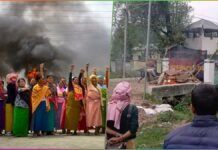
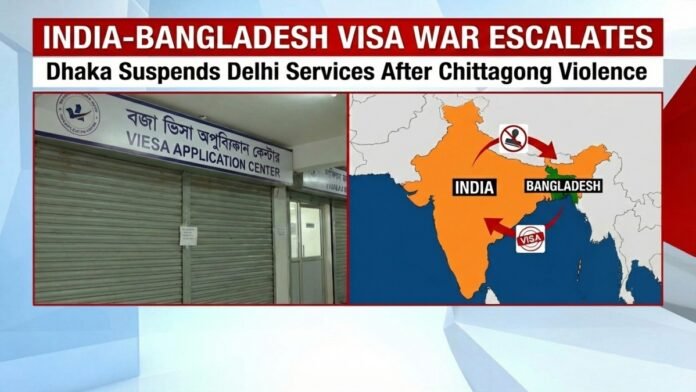
The diplomatic standoff intensified on Monday, December 22, 2025, when Bangladesh’s High Commission in New Delhi announced the temporary suspension of all consular and visa services for Indian citizens. This retaliatory move came just 24 hours after India’s Ministry of External Affairs indefinitely suspended visa operations at its Visa Application Centres in Chittagong, Khulna, and Rajshahi. The Indian decision followed violent protests outside the Chittagong IVAC on Sunday, where demonstrators allegedly pelted stones at the facility, breaking windows and forcing staff to evacuate. Bangladesh’s Foreign Affairs Adviser Touhid Hossain described India’s suspension as “unilateral and disproportionate,” while Indian officials maintained they had no choice but to prioritize staff safety after the Chittagong incident.
The Hadi Killing and Its Aftermath
The crisis traces its origins to the assassination of Sharif Usman Hadi, a prominent youth leader associated with the National Citizen Party, on December 12, 2025. Masked gunmen attacked Hadi during an election rally in Dhaka’s Bijoynagar area, shooting him in the head at point-blank range. Despite emergency surgery at Dhaka Medical College and subsequent airlifting to Singapore’s Mount Elizabeth Hospital, Hadi succumbed to his injuries on December 18. His death ignited immediate unrest across Bangladesh, with violent protests erupting in Dhaka, Chittagong, Khulna, and Rajshahi. Protesters targeted symbols of perceived foreign interference, with Indian diplomatic missions bearing the brunt of their anger due to longstanding allegations of India’s role in Bangladesh’s internal politics.
Anti-India Sentiment and Protest Violence
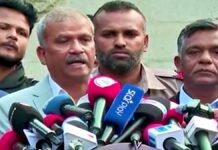
During Hadi’s funeral procession on December 19, thousands of mourners chanted slogans like “India, hands off Bangladesh” and “Down with Indian interference,” reflecting deep-seated anti-India sentiment among certain political factions. The violence escalated on December 21 when protesters in Chittagong surrounded the Indian Visa Application Centre, demanding its closure. Eyewitnesses reported that a group of 200-250 demonstrators threw stones and bricks, shattering glass facades and forcing Indian staff to seek refuge in a secure room. Bangladeshi police arrived after 45 minutes, using tear gas to disperse the crowd. In Khulna, on Monday morning, Motaleb Shikdar, head of the National Citizen Party’s worker wing and a close associate of student leader Nahid Islam, was shot by unidentified assailants, further inflaming tensions. Islam, a key figure in the anti-Sheikh Hasina movement, has publicly accused “foreign elements” of targeting his supporters.
Diplomatic Allegations and Counter-Allegations
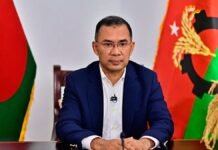
Bangladesh’s interim government, led by Chief Adviser Muhammad Yunus, has adopted a firm stance against India. Foreign Affairs Adviser Touhid Hossain claimed on Sunday that Bangladeshi High Commissioner to Delhi, Riaz Hamidullah, had received specific death threats, allegedly from “right-wing Indian elements” angered by Bangladesh’s internal political changes. Hossain stated that 20-25 protesters had demonstrated outside the Bangladesh High Commission in Delhi on Saturday, creating a security concern. However, India’s Ministry of External Affairs spokesperson Randhir Jaiswal categorically rejected these allegations on Monday, stating, “There was no security lapse at the Bangladesh High Commission. Delhi Police promptly removed the protesters from the premises, and the mission continues to function under full security cover.” Jaiswal added that the protest was peaceful and involved only 8-10 individuals, not the 20-25 claimed by Bangladesh.
Impact on Citizens and Bilateral Relations
The suspension of visa services creates significant inconvenience for citizens of both countries. Indian journalists, businesspeople, and medical tourists form the bulk of travelers to Bangladesh, with approximately 1,200-1,500 visa applications processed monthly in Delhi. Bangladeshi officials estimate that around 800 Indian citizens currently await visa processing, including 300 journalists covering Bangladesh’s political transition. Conversely, India’s suspension affects Bangladeshi students, medical patients, and business travelers seeking to visit India. The Chittagong IVAC alone processed 2,000-2,500 visa applications monthly before its closure. The mutual suspensions mark the lowest point in India-Bangladesh relations since the 2001 border skirmishes, threatening to derail recent progress in trade, connectivity, and security cooperation.
Regional Security Implications
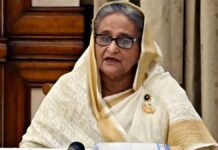
The diplomatic crisis occurs against the backdrop of Bangladesh’s ongoing political transition following the ouster of Sheikh Hasina in August 2025. The interim government, comprising student leaders and civil society figures, has distanced itself from India’s influence, which was strong during Hasina’s 15-year rule. This shift has created anxiety in New Delhi about China’s growing presence in Bangladesh, with Beijing quickly moving to fill the diplomatic vacuum. The visa suspension could provide China an opportunity to strengthen its visa facilitation services in Bangladesh, further expanding its influence. Additionally, the crisis may impact regional security cooperation on issues like cross-border terrorism, human trafficking, and drug smuggling, where India and Bangladesh have historically collaborated closely.
Path Forward and Diplomatic Channels
Despite the public posturing, both sides are reportedly maintaining back-channel communications to resolve the crisis. India’s High Commissioner to Bangladesh, Pranay Verma, held a meeting with Bangladesh’s Foreign Secretary on Monday evening, though no official statement was issued. Sources suggest that India may restore visa services if Bangladesh provides enhanced security guarantees for its diplomatic missions and takes action against those responsible for the Chittagong violence. Bangladesh, in turn, seeks an Indian apology for “unilateral actions” and assurances of non-interference in its internal affairs. The coming days will be crucial in determining whether this diplomatic spat escalates further or whether pragmatic considerations lead to a negotiated settlement.