


























Key Points:
- Temperatures in Northwest India likely to fall by 2-3 degrees Celsius over next two days
- Central India (Madhya Pradesh, Chhattisgarh, Eastern Maharashtra) to see 2-4 degree drop in three days
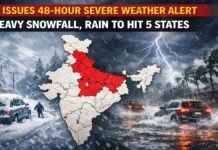
- Orange alert for dense fog in Punjab, Haryana, Uttar Pradesh, Bihar, and Odisha
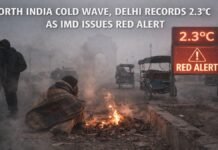
- Cold wave conditions to continue in Delhi, Punjab, Haryana, Chandigarh until January 7
- Cold day conditions expected in parts of Uttar Pradesh, Madhya Pradesh, Bihar between January 3-5
- Light rain and snowfall predicted in Jammu and Kashmir, Ladakh, Himachal Pradesh on January 5-6
- Rain expected in Meghalaya, Assam, Sikkim, and Himalayan West Bengal
In the first week of January, the weather in North and Central India has changed dramatically. After the passage of a Western Disturbance, icy winds have now gripped the plains, bringing a sharp drop in temperatures and creating hazardous conditions across the region. The weather system, which moved across the Himalayan region earlier this week, has left behind a trail of cold air that is now settling over the northern plains, affecting millions of people from Kashmir to Odisha.
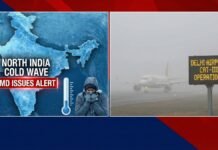
According to the latest forecast from the India Meteorological Department (IMD), a significant drop in temperature will be recorded in Northwest and Central India, further intensifying the cold. The department has warned that this cold spell could be one of the most severe in recent years for this time of the season, with minimum temperatures likely to fall below normal by several degrees. The IMD report has issued a fog alert from Kashmir to Odisha, covering a vast stretch of the country and raising concerns about transportation and public safety.
The weather department also stated that cold wave conditions will persist in Bihar and Uttar Pradesh, two states that are particularly vulnerable to winter-related health issues. Cold wave conditions will also prevail in Delhi, Punjab, Haryana, and Chandigarh, prompting local authorities to prepare emergency measures. An orange alert has been issued for dense fog in Punjab, Haryana, Uttar Pradesh, Bihar, and Odisha, indicating a high probability of severely reduced visibility. Meanwhile, a rain alert has been issued for the Himalayan region of West Bengal, where precipitation could compound the cold conditions.
The IMD said that due to a cyclonic circulation over the Bay of Bengal, there is a possibility of rain in Tamil Nadu and Assam-Meghalaya. Rain is also expected in Ladakh and Jammu and Kashmir, where it could add to the winter chill and create difficult living conditions for residents and security personnel stationed in the region.
Temperature Drop Details and Regional Impact
According to the IMD report, minimum temperatures in Northwest India (i.e., Delhi-NCR, Western UP, Haryana, Punjab) are likely to drop by 2 to 3 degrees Celsius over the next two days, and the cold spell will continue thereafter. This drop will bring nighttime temperatures close to freezing in several areas, increasing the risk of frost and health hazards for vulnerable populations. People in Central India (Madhya Pradesh, Chhattisgarh, Eastern Maharashtra) will also experience intense cold. Here, the mercury could drop by 2 to 4 degrees Celsius in the next three days, making it one of the coldest periods this winter season.
In East India, temperatures will also drop by 2-3 degrees after the next 24 hours, extending the cold wave conditions to states like West Bengal, Jharkhand, and Odisha. There is some relief for the people of Gujarat, where temperatures may rise by 2-3 degrees in the next three days, offering a brief respite from the ongoing winter chill that has affected the region.
Fog Alert and Visibility Concerns
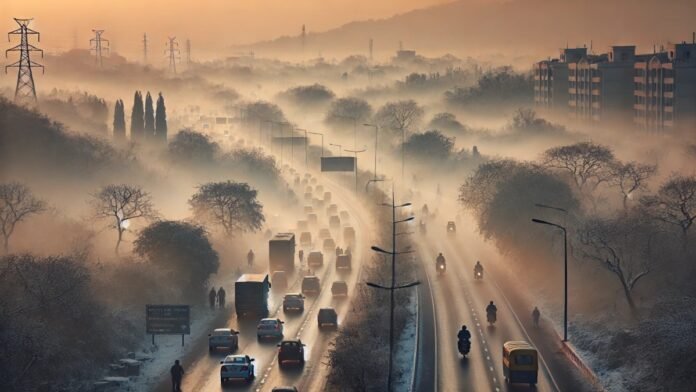
The IMD has issued an orange alert for dense fog in the plains, signaling a serious threat to transportation and daily activities. A warning of dense to very dense fog has been issued for Punjab, Haryana, and Chandigarh until January 7th, and for Eastern Uttar Pradesh until January 8th, during the night and morning hours. Dense fog will prevail in Western Rajasthan until January 4th and in Odisha until January 6th, potentially disrupting road and rail traffic.
Dense fog is also expected to affect Delhi, western Uttar Pradesh, northern Madhya Pradesh, and parts of Bihar between January 7 and 9, which could lead to flight delays, cancellations, and hazardous driving conditions. The combination of low temperatures and high moisture content is creating ideal conditions for fog formation, and the IMD has advised travelers to check weather updates before planning journeys.
Double Whammy of Cold Wave and Cold Day Conditions
The Meteorological Department has stated that along with fog, a cold wave will continue to prevail in the plains, creating a double impact on residents. According to the weather department, a cold wave is likely to continue in Punjab, Haryana, Chandigarh, and Delhi until January 7, with nighttime temperatures dropping to 3-4 degrees Celsius in several areas. The situation is expected to be even more severe in Rajasthan, with the cold wave continuing in the western parts from January 5 to 8 and in the eastern parts from January 4 to 8.
In addition, cold day conditions will persist in some areas of Uttar Pradesh, Madhya Pradesh, and Bihar between January 3 and 5, making even the daytime sunshine ineffective. Cold day conditions occur when maximum temperatures remain significantly below normal, often due to dense fog blocking solar radiation, and can lead to a continuous feeling of cold throughout the day.
Snowfall in the Mountains and Rain in the Northeast
While the plains are reeling under severe cold, the weather in the mountains remains pleasant due to snowfall, though the biting cold is still being felt by residents and tourists. Light rain and snowfall are expected in Jammu and Kashmir, Ladakh, and Himachal Pradesh on January 5 and 6, which could affect road connectivity on mountain passes and highways. The snowfall, while scenic, adds to the challenges for local administration in maintaining essential services in remote areas.
Meanwhile, rain is expected today in Meghalaya and Assam in Northeast India, where it could disrupt daily life and agricultural activities. The Meteorological Department has also predicted rain in Sikkim and the Himalayan regions of West Bengal, such as Darjeeling and Siliguri, where the precipitation could lead to landslides in vulnerable areas and affect tea plantations that are crucial to the local economy.