






























Key Points
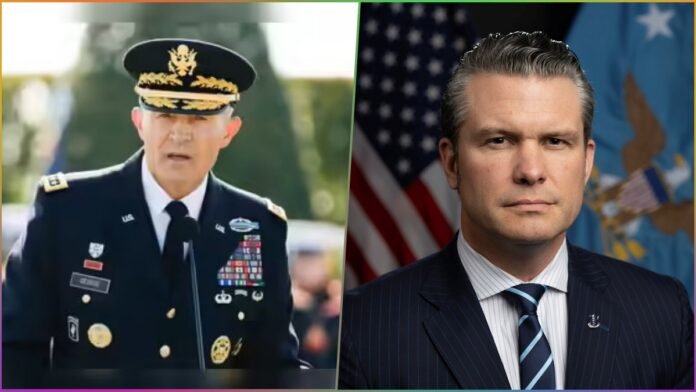
- Immediate Retirement: Gen. Randy George, the 41st Chief of Staff of the Army, has stepped down effective immediately at the request of Secretary Pete Hegseth.
- Acting Leadership: Gen. Christopher LaNeve, the current Vice Chief of Staff and former aide to Hegseth, has been named acting Army Chief of Staff.
- Wartime Context: The removal comes five weeks into active U.S. and Israeli military operations against Iran, which began on February 28, 2026.
- Wider Purge: George is the latest of more than a dozen senior generals and admirals removed since the Trump administration took office in 2025.
- Additional Ousters: Gen. David Hodne, head of Army Training and Doctrine Command, and Maj. Gen. William Green Jr., the Army’s chief of chaplains, were also removed.
In a significant and sensitive development for U.S. national security, Secretary of Defense Pete Hegseth announced on Thursday, April 2, 2026, that Army Chief of Staff Gen. Randy George would retire ahead of schedule. While the Pentagon provided no formal reason for the move, officials speaking on the condition of anonymity stated the administration sought a leader more closely aligned with its “America First” defense priorities.
Gen. George, who was confirmed in August 2023 for a four-year term, was originally expected to serve through 2027. His early departure is viewed as a definitive signal of the administration’s intent to overhaul the military’s top brass. Gen. Christopher LaNeve, a “battle-tested” leader who previously commanded the 82nd Airborne Division, will assume the role in an acting capacity.
A Growing List of Departures
The dismissal of Gen. George is not an isolated event but rather the latest in a sweeping series of leadership changes within the Department of Defense. Since Pete Hegseth assumed office, the administration has moved aggressively to replace holdovers from the previous era. Notable removals include:
- Gen. Charles “CQ” Brown Jr., the former Chairman of the Joint Chiefs of Staff, was dismissed in early 2025.
- Admiral Lisa Franchetti, the former Chief of Naval Operations.
- Gen. Jim Slife, the former Vice Chief of Staff of the Air Force.
- Gen. David Allvin, the former Air Force Chief of Staff, was asked to retire in late 2025.
Strategic Tensions and the Iran Conflict
This transition occurs at a volatile moment as the U.S. remains engaged in a high-stakes conflict with Iran. President Donald Trump stated in a national address on April 1 that strategic objectives are “nearing completion,” even as U.S. forces continue to strike Iranian infrastructure, including the recent destruction of the B1 Bridge near Tehran.
Critics have raised concerns about the stability of military command during active combat operations. However, Pentagon spokesperson Sean Parnell emphasized that the department remains “grateful for General George’s decades of service” and is focused on ensuring continuity of command through Gen. LaNeve.
The Legacy of Gen. Randy George
Gen. George leaves behind a distinguished 38-year career. A West Point graduate and career infantry officer, he served with distinction in the First Gulf War, Iraq, and Afghanistan. Before becoming the Army’s top uniformed officer, he served as the senior military assistant to former Defense Secretary Lloyd Austin, a role that reportedly made him a target for the current administration’s leadership realignment efforts.