





























Key Highlights
- European Surge: EU arms exports now command a 28 percent global market share, nearly quadrupling Russia’s total output.
- Russian Decline: Arms exports from Moscow have crashed by 64 percent, the only major supplier to see a decrease.
- Ukraine Leads: Ukraine has become the world’s largest arms importer, accounting for 9.7 percent of global transfers.
- Massive Investment: The EU’s €150 billion SAFE program is actively funding joint procurement to reduce U.S. dependency.
- U.S. Dominance: The United States remains the top global supplier with a 42 percent share, as exports to Europe trebled.
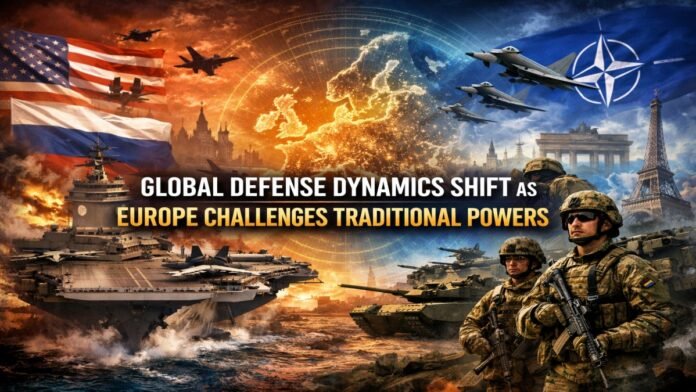
The landscape of international security has reached a historic turning point, according to the March 2026 report from the Stockholm International Peace Research Institute (SIPRI). Driven by the prolonged conflict in Ukraine and a collective push for strategic autonomy, European nations have emerged as a dominant force in the global arms trade. Over the 2021, 2025 period, the European Union’s arms exports increased by 36 percent, significantly outperforming the growth rates of other major powers like China.
This European renaissance is led by France, Germany, and Italy. France has solidified its position as the world’s second largest exporter with a 9.8 percent share, while Italy witnessed a staggering 157 percent growth in its export volume. Collectively, the EU now accounts for 28 percent of the global market, a figure that is five times greater than China’s share and signals a move toward a multipolar defense economy.
The Collapse of the Russian Defense Industry
In stark contrast, the report details a catastrophic decline for Russia, once a primary rival to the United States. Russian arms exports fell by 64 percent between the two five-year periods, with its global market share shrinking from 21 percent to just 6.8 percent. Traditionally reliable customers, including India and China, have significantly diversified their procurement. India, while remaining the world’s second largest importer, has reduced its Russian imports from 70 percent a decade ago to just 40 percent in the latest cycle, favoring Western technology from France and Israel.
Experts attribute this collapse to the poor performance of Russian hardware on the modern battlefield and the severe impact of international sanctions. Many nations that once relied on Moscow for jet engines and missile systems are now turning toward European or domestic alternatives to avoid secondary sanctions and ensure technological superiority.
Security Action for Europe (SAFE) and the Path to Autonomy
To cement this newfound industrial strength, the EU has launched the Security Action for Europe (SAFE) program. This initiative represents a landmark €150 billion investment in joint defense procurement. In early 2026, the European Commission approved the first wave of national defense plans for sixteen member states, including Poland, Italy, and Greece, allowing them to access low-cost loans to modernize their militaries.
Despite this progress, the challenge of U.S. dependence remains a critical nuance. While Europe is producing more of its own equipment, imports into the region actually tripled over the last five years, with nearly half of those systems still originating from the United States. High-end technologies like the F, 35 combat aircraft and Patriot missile defense systems remain the preferred choice for Eastern European nations. However, the “ReArm Europe” plan aims to eventually unlock up to €800 billion in total defense spending, a move intended to ensure that Europe can stand firmly on its own feet regardless of shifts in American foreign policy.