


























Key Points
- Delhi High Court quashed Lokpal’s order allowing CBI to file charge sheet against Mahua Moitra
- Bench of Justices Anil Kshetrapal and Harish Vaidyanathan Shankar found procedural flaws in Lokpal’s decision
- Court ordered Lokpal to deliver fresh decision within a month after considering Moitra’s arguments
- Mahua’s lawyer argued Lokpal violated Section 20(7) of Lokpal Act by not providing hearing
- CBI claimed accused only has right to written comments, not oral hearing
- Case stems from BJP MP Nishikant Dubey’s complaint alleging bribes from industrialist Darshan Hiranandani
- Mahua admitted sharing parliamentary login/password with Hiranandani but denied cash allegations
- Trinamool Congress hailed the verdict as vindication, BJP called it a temporary setback
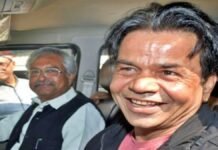
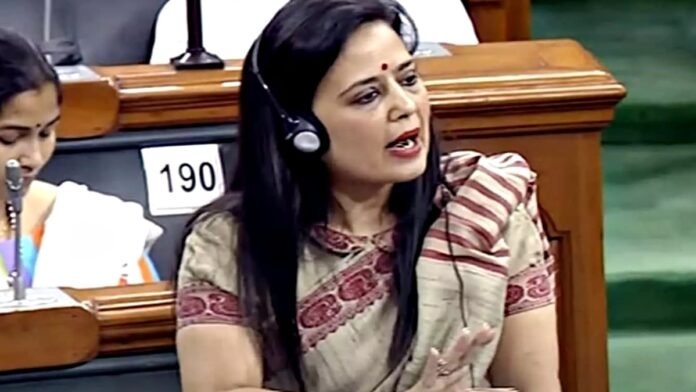
In a significant development, the Delhi High Court has delivered a major relief to Trinamool Congress MP Mahua Moitra by quashing the Lokpal’s decision that had granted permission to the CBI to file a charge sheet against her in the cash-for-query case. A bench comprising Justices Anil Kshetrapal and Harish Vaidyanathan Shankar passed the order on December 19, 2025, after hearing detailed arguments from both sides. The court not only stayed the Lokpal’s order but also issued strong directives, ordering the anti-corruption ombudsman to properly consider Mahua Moitra’s arguments and deliver a fresh decision within one month, strictly in accordance with the law.
The court’s 42-page judgment pulled no punches in criticizing the Lokpal’s approach. It was observed that the Lokpal had acted like a “rubber stamp” without properly understanding the provisions of the Lokpal and Lokayuktas Act, 2013. The bench noted that the Lokpal had failed to apply its mind to the specific facts of the case and had not given Mahua Moitra a meaningful opportunity to present her defense before granting sanction for prosecution. This procedural lapse, the court held, amounted to a violation of principles of natural justice and rendered the decision unsustainable.
Legal Arguments, Natural Justice vs. Prosecutorial Efficiency
During the intense hearing that spanned three days, senior advocate Nidesh Gupta, representing Mahua Moitra, mounted a vigorous attack on the Lokpal’s decision-making process. He argued that the Lokpal’s action constituted a gross violation of the principles of natural justice, particularly the rule of audi alteram partem (let the other side be heard). Citing Section 20(7) of the Lokpal Act, Gupta submitted that the statute explicitly requires the Lokpal to provide the accused an opportunity to be heard before granting sanction for prosecution.
Gupta pointed out that the Lokpal had issued a show-cause notice to Mahua Moitra on September 15, 2025, but had granted permission to the CBI on October 2, 2025, just 17 days later, without waiting for her detailed response or granting her a personal hearing. He argued that this mechanical approach reduced the Lokpal’s constitutional role to a mere formality, undermining the safeguards built into the law to prevent malicious prosecutions of public servants.
On the other hand, CBI lawyer S.V. Raju contended that the accused only has the right to submit written comments, not an oral hearing. He argued that the Lokpal had followed the procedure prescribed in its rules and that granting an oral hearing would delay investigations and hamper prosecutorial efficiency. Raju submitted that the Lokpal had considered Mahua’s written submissions and had applied its mind before taking the decision.
Jivesh Nagarath, the lawyer for complainant BJP MP Nishikant Dubey, supported the CBI’s position, claiming that the entire legal process had been followed meticulously. He argued that the Supreme Court, in various judgments, had held that the requirement of a hearing does not necessarily mean an oral hearing, and that written representation can satisfy the principles of natural justice.
The Parliamentary Password Controversy
The entire controversy erupted into the public domain in October 2023 when BJP MP Nishikant Dubey wrote to the Lok Sabha Speaker, alleging that Mahua Moitra had taken bribes from industrialist Darshan Hiranandani in exchange for asking specific questions in Parliament. Dubey’s complaint was based on an affidavit filed by Supreme Court lawyer Jai Anant Dehadrai, who claimed to have insider information about the arrangement.
The most damning allegation was that Mahua Moitra had shared her parliamentary login credentials and password with Hiranandani, allowing him to directly draft and upload questions to be asked in Parliament. This raised serious national security concerns, as parliamentary systems contain classified information and sensitive government data.
Mahua Moitra later admitted in a press conference that she had indeed given her parliamentary login and password to Hiranandani, but she categorically denied the allegations of receiving cash bribes. She claimed that Hiranandani was a childhood friend who helped her with the technical aspects of the parliamentary portal, as she was not tech-savvy. She argued that the questions she asked were in the public interest and related to the Adani Group, which she had been critical of, and that the complaint was politically motivated to silence her.
The Ethics Committee of Lok Sabha, which investigated the matter, recommended her expulsion from Parliament in December 2023, calling her conduct “highly unethical, contemptuous, and condemnable.” She was expelled after a vote in the Lok Sabha, becoming only the second MP to be expelled in independent India.
Timeline of Legal Proceedings
The case has seen several twists and turns since the initial complaint. After her expulsion, the CBI registered an FIR in April 2024 and began its investigation. The Lokpal, which is the competent authority to grant sanction for prosecuting MPs, issued a show-cause notice to Mahua Moitra in September 2025. She responded with detailed submissions, but the Lokpal granted permission to the CBI on October 2, 2025, without a personal hearing.
Mahua Moitra immediately challenged this decision in the Delhi High Court, which granted her interim protection from arrest on October 15, 2025. The court had reserved its judgment on December 10, 2025, after hearing extensive arguments. The final verdict on December 19, 2025, has now set aside the Lokpal’s order, giving her a reprieve.
The case has also seen parallel proceedings in the Supreme Court, where Mahua Moitra challenged her expulsion from Lok Sabha. The apex court is yet to hear that matter, as it has been pending before a Constitution Bench since March 2025.
Political Reactions and Implications
The Delhi High Court’s verdict has triggered sharp political reactions across the spectrum. Trinamool Congress has hailed the judgment as a complete vindication of Mahua Moitra and a slap on the face of the BJP-led central government. Party spokesperson Kunal Ghosh said, “The court has exposed how constitutional bodies were being misused to target opposition leaders. This is a victory for truth and justice.”
West Bengal Chief Minister Mamata Banerjee, who had personally supported Mahua Moitra throughout the ordeal, tweeted, “Justice prevails! The Delhi HC has exposed the witch-hunt against @MahuaMoitra. The Lokpal must now act as per law, not as per political dictates.”
On the other hand, the BJP has called the verdict a temporary setback. Party leader and complainant Nishikant Dubey said, “The court has only asked the Lokpal to reconsider. It has not said that Mahua Moitra is innocent. The facts of the case remain; she shared her parliamentary password for benefits. We are confident the Lokpal will grant sanction again after following due process.”
Congress leader Jairam Ramesh commented, “This judgment reinforces the importance of due process. Institutions must not become tools of political vendetta. The Lokpal should introspect on how it functioned.”
What Happens Next, The Road Ahead
With the Delhi High Court’s order, the Lokpal now has one month to reconsider Mahua Moitra’s case. Legal experts suggest that the Lokpal has three options, it can grant sanction again after providing a proper hearing, it can reject the CBI’s request for sanction, or it can seek clarification from the High Court.
If the Lokpal grants sanction again after following due process, the CBI can proceed with filing the charge sheet, and Mahua Moitra will have to face trial. However, she can challenge the fresh sanction in court again, potentially leading to a protracted legal battle.
If the Lokpal refuses sanction, the CBI can challenge that decision in the High Court, arguing that there is sufficient evidence to prosecute. This could set up a confrontation between the investigative agency and the anti-corruption ombudsman.
The Supreme Court’s pending decision on her expulsion from Lok Sabha will also have a bearing on the case. If the apex court restores her membership, it could strengthen her position in the criminal proceedings. Conversely, if the expulsion is upheld, it might influence the Lokpal’s decision.
Legal Experts’ Views on the Judgment
Constitutional law experts have largely welcomed the Delhi High Court’s judgment, seeing it as a reinforcement of procedural safeguards. Senior advocate Indira Jaising said, “The court has correctly held that even in corruption cases, the principles of natural justice cannot be dispensed with. The Lokpal is not a post office to mechanically grant sanction.”
Former Solicitor General Mohan Parasaran commented, “This judgment will have far-reaching implications for how sanctions are granted under the Lokpal Act. It clarifies that the Lokpal must apply its mind and give the accused a meaningful hearing, not just a token opportunity.”
However, some legal practitioners have expressed concerns that the judgment might delay corruption investigations. Criminal lawyer Rebecca John argued, “While due process is important, we must also ensure that it doesn’t become a tool for the accused to indefinitely delay prosecution. The balance is crucial.”
Broader Context, Institutional Integrity, and Political Accountability
The Mahua Moitra case has raised fundamental questions about institutional integrity in India. The Lokpal was created in 2013 after a massive anti-corruption movement, with the promise of being an independent body to investigate corruption at high levels. However, this case has shown how its functioning can be influenced by political considerations.
The case also highlights the challenges of maintaining parliamentary accountability in the digital age. The sharing of passwords and logins raises questions about cybersecurity protocols in Parliament and whether MPs receive adequate training on handling sensitive information.
Moreover, the case has sparked a debate on the ethics of politicians’ relationships with industrialists. While Mahua Moitra claims her friendship with Darshan Hiranandani was personal and not transactional, critics argue that such proximity creates conflicts of interest, especially when the industrialist’s companies are subject to parliamentary scrutiny.