The Rajasthan Congress ended a 43-hour protest after police refused to register an FIR in the Ritu Barala assault case, vowing legal action against authorities.
Key Points
- Protest Duration: Congress staged a 43-hour sit-in at Jaipur Police Commissionerate demanding an FIR against Delhi Police.
- Police Response: Jaipur Police Commissioner Sachin Mittal stated no legal grounds existed for a Zero FIR.
- Legal Action: Congress plans to challenge the refusal in court, alleging law misinterpretation.
- Victim's Statement: Ritu Barala accused authorities of political pressure from PM Modi and Home Minister Amit Shah.
Congress Ends 43-Hour Protest Over Ritu Barala FIR Refusal
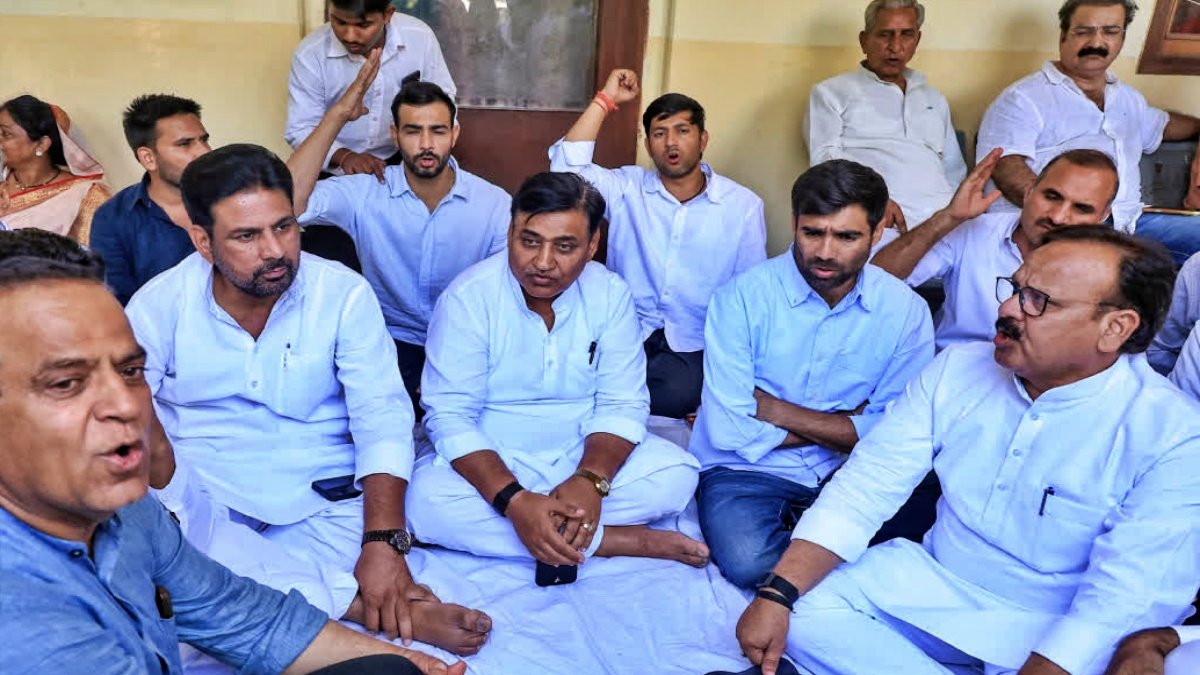
JAIPUR: The Rajasthan Congress concluded a 43-hour sit-in at the Jaipur Police Commissionerate on Wednesday afternoon after police refused to register an FIR in the Ritu Barala assault case. The protest, which began on Monday evening, was organized by state Congress president Govind Singh Dotasra and other senior leaders to demand a Zero FIR against Delhi Police personnel allegedly involved in the assault of student leader Ritu Barala. According to Dotasra, police informed them that they would not lodge the FIR and provided a written statement explaining their decision. The Congress has now decided to take legal action against the authorities for what it describes as a misinterpretation of the law.
Barala, a student leader with the National Students’ Union of India (NSUI), was allegedly assaulted during her detention at a protest against 'vote chori' in New Delhi on October 13. The protesters were demanding the removal of Chief Election Commissioner Gyanesh Kumar, and Rahul Gandhi had directed Dotasra to seek an FIR in Rajasthan. The protest at the Commissionerate began around 6 pm on Monday, with leaders occupying the premises to press their demand. After three days of sit-in, the Congress called off the protest on Wednesday when police confirmed their refusal to register an FIR.
Following the conclusion of the sit-in, Barala expressed frustration with the authorities. She stated that there is a distinction between receiving a complaint and registering an FIR, emphasizing her role as the victim seeking legal recourse. Barala accused the government of exerting pressure from Prime Minister Narendra Modi and Home Minister Amit Shah, claiming that authorities had misled the Congress for three days. She questioned the government's inaction and the police's role, stating that they have a different law for people like her.
Background on Ritu Barala and the Case
Ritu Barala, a 27-year-old student leader from Jhunjhunu district in Rajasthan, has been a prominent figure within the NSUI. Born to Mahendra Singh Barala and Anita Devi, she pursued her higher education in Jaipur after completing Class 12 from her hometown. She enrolled at Maharani College for a BA degree, later earning the college president's post in 2018 student union polls. Barala continued her studies with an MA from Rajasthan University and was declared the NSUI's official presidential candidate for 2022 student union polls from the university.
According to party sources, Barala was selected for her work during the Covid pandemic, her clean image, and humble background. However, she finished third in the 2022 polls behind independent candidate Nirmal Choudhary and NSUI rebel Niharika Jorwal. In 2023, she was appointed as NSUI national secretary and later became the in-charge for Madhya Pradesh and western Uttar Pradesh. Barala's interests extend beyond politics; she is an active Taekwondo practitioner who has participated in international tournaments, including in Dubai. She was also an NCC cadet.
The incident that sparked the Congress's protest occurred on October 13 during a demonstration against 'vote chori' in New Delhi. Barala was allegedly assaulted while in detention, prompting demands for legal action against the involved police personnel. The Congress's decision to stage a prolonged sit-in was influenced by Rahul Gandhi's directive to seek an FIR in Rajasthan. The party now plans to challenge the police's refusal in court, asserting that the authorities have misinterpreted legal provisions regarding FIR registration.
Police Justification and Legal Context
Jaipur Police Commissioner Sachin Mittal clarified that the complainant had already submitted an application to Connaught Place police station, and the legal process was underway. He stated that there were no lawful grounds to register a Zero FIR, as the case would be handled through standard legal procedures. This explanation was provided in writing to Congress leaders, who had demanded either the registration of an FIR or a formal rejection of their request.
The concept of Zero FIR, which allows complaints to be registered at any police station regardless of jurisdiction, is intended to streamline the process for victims. However, Mittal's statement suggests that the case falls under a different legal framework, necessitating the complainant to approach the relevant police station directly. This interpretation has been contested by Congress leaders, who argue that the refusal to register a Zero FIR is an attempt to avoid accountability. The party's decision to pursue legal action reflects its belief that the authorities are misapplying legal provisions in this case.
Congress's Legal Strategy and Implications
The Rajasthan Congress has announced its intent to challenge the police's refusal in court, alleging that officials have misinterpreted legal provisions regarding FIR registration. This move is expected to draw attention to the broader issue of police accountability and the enforcement of legal procedures in cases involving political activists. The party's decision to pursue legal recourse underscores its commitment to addressing perceived injustices through judicial means.
The case has also sparked discussions about the role of political pressure in legal proceedings. Barala's allegations that authorities are influenced by PM Modi and Home Minister Amit Shah have added a layer of political sensitivity to the situation. While the police maintain that their decision is based on legal grounds, the Congress's stance highlights concerns about potential bias or undue influence in such cases.
The outcome of this legal challenge could set a precedent for similar cases involving political activists. If the court rules in favor of Congress, it may encourage more victims to seek Zero FIRs without fear of bureaucratic hurdles. Conversely, a ruling in favor of the police could reinforce existing legal interpretations and limit the scope of Zero FIRs. The case is likely to be closely watched by legal experts, activists, and political observers as it unfolds in the courts.