































Key Points
- IMD predicts fresh cold wave in northwest India from December 12, 2025
- Temperatures to fall by 2-3°C in Bihar, Madhya Pradesh, Jharkhand over next 3 days
- Dense fog expected in eastern Uttar Pradesh from December 10-13, Assam-Manipur from December 10-14
- Manali records -8°C, Uttarakhand’s snow-covered areas drop to -14°C
- Delhi-NCR AQI ranges between 200-400, Patna’s AQI hits 500-600 (severe category)
- Cold wave conditions persist in Maharashtra, Punjab, Haryana, and Chandigarh
The India Meteorological Department has issued a fresh cold wave warning for northwest India effective December 12, 2025, signaling a significant intensification of winter conditions across the region. The current cold wave, affecting central India and surrounding areas, is expected to persist and intensify over the coming days. Meteorologists attribute this to strong northwesterly winds from the Himalayas and clear sky conditions that allow maximum radiative cooling during nights.
According to the latest IMD bulletin, cold wave to severe cold wave conditions are very likely in isolated pockets of Punjab, Haryana, Chandigarh, and north Rajasthan during the next 4-5 days. In central Indian states, including parts of Madhya Pradesh, Vidarbha region of Maharashtra, and Chhattisgarh, minimum temperatures are expected to gradually fall by 2 to 3 degrees Celsius over the next 72 hours, bringing them 4-6°C below normal levels.
Regional Temperature Variations and Snowfall
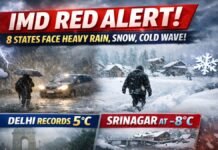
The capital region continues to experience biting cold, with morning temperatures in Delhi-NCR recorded at around 7 degrees Celsius on Thursday. Weather experts predict the mercury could drop to 5°C by the weekend, with the wind chill factor making it feel even colder. The ridge area in Delhi recorded a minimum of 6.8°C, while Ayanagar and Lodhi Road stations registered 7.2°C and 7.4°C, respectively.
In the Himalayan region, temperatures have plummeted to freezing levels. Manali in Himachal Pradesh recorded a bone-chilling -8°C in the morning, with daytime temperatures expected to reach only 4°C. Keylong in Lahaul-Spiti district recorded -12°C, while Kalpa in Kinnaur saw -6°C. In Uttarakhand, the morning temperature in Dehradun was around 7°C, but snow-covered areas like Auli and Badrinath experienced temperatures as low as -14°C. The ongoing snowfall in the higher reaches of Jammu and Kashmir, Himachal Pradesh, and Uttarakhand will further intensify the cold wave conditions across the northern plains.
Jammu recorded 8°C this morning, while Srinagar saw 1°C with frost covering most surfaces. Leh in Ladakh recorded a minimum temperature of -15°C, making it one of the coldest places in the region.
Dense Fog Disrupts Transportation
The IMD has issued a dense fog advisory for several states, warning of significantly reduced visibility that could severely impact road, rail, and air traffic. Eastern Uttar Pradesh is expected to experience dense to very dense fog conditions between December 10 and 13, with visibility dropping below 50 meters in the morning hours. This has already affected flight operations at Varanasi and Gorakhpur airports, with several trains running 2-4 hours behind schedule.
In Assam and Manipur, foggy conditions are likely to prevail from December 10 to 14, creating hazardous driving conditions on national highways. Guwahati airport authorities have issued advisories for passengers to check flight statuses before traveling. Heavy fog is also expected in some parts of Himachal Pradesh, particularly in the Kangra and Mandi districts, on the morning of December 10. Odisha may experience foggy conditions on December 10 and 11, affecting vehicular movement in coastal areas.
The fog situation is compounded by high moisture levels in the atmosphere due to recent western disturbances, creating ideal conditions for radiation fog formation during early morning hours.
Air Quality Crisis in Major Cities
The intensifying cold wave has worsened the air quality crisis across northern and eastern India. In Patna, the Air Quality Index (AQI) level was recorded between 500 and 600, placing it in the ‘severe plus’ category, which is hazardous for all age groups. Kolkata’s AQI fluctuates between 350 and 450, while Delhi-NCR’s AQI ranges between 200 and 400, categorized as ‘poor’ to ‘very poor’. Lucknow’s AQI stands between 250 and 350, with morning readings consistently above 300.
Meanwhile, Mumbai and Bengaluru are experiencing relatively better air quality, with AQI levels recorded between 100 and 200, falling in the ‘moderate’ to ‘poor’ category. However, experts warn that calm wind conditions during the cold wave could cause pollutant accumulation even in these cities.
Health officials have issued advisories urging vulnerable populations, including children, the elderly, and those with respiratory conditions, to avoid outdoor activities during early morning and late evening hours when pollution levels peak. The Central Pollution Control Board has directed industries to reduce emissions and banned construction activities in cities where the AQI exceeds 400.
Government Advisories and Preparedness
State governments have activated winter action plans, with district administrations setting up night shelters and distributing blankets to homeless populations. The National Disaster Management Authority has advised states to stock adequate supplies of fuel, food, and medical equipment in remote areas that may get cut off due to snowfall.
Railway authorities have deployed fog safety devices in trains running through affected regions, while airlines are issuing waivers for flight rescheduling. The Ministry of Health has circulated guidelines to hospitals to prepare for an increase in cold-related illnesses such as hypothermia, respiratory infections, and cardiac events.
Latest Updates and Forecast
As of December 11, 2025, the IMD has predicted that the cold wave conditions will persist until at least December 17, with a slight respite expected around December 15 due to a weak western disturbance that may bring light rain to parts of Punjab and Haryana. However, this precipitation will be followed by another intense cold spell.
The weather department has also issued a yellow alert for several districts in Madhya Pradesh and Rajasthan, warning of cold day conditions where maximum temperatures may remain 5-7°C below normal. Farmers have been advised to protect their standing rabi crops, particularly wheat and mustard, from frost damage by arranging smoke generators and irrigation.