
































Key Points:
- Airtel launches RCS messaging nationwide in partnership with Google, ending previous refusal
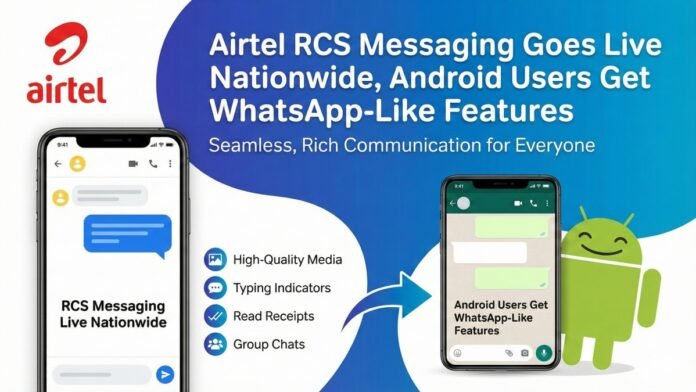
- Android users get high-quality photo/video sharing, group chats, typing indicators, read receipts
- Service works on both Wi-Fi and mobile data, replacing traditional SMS experience
- Airtel charges ₹0.11 per message, follows 80:20 revenue sharing model with Google
- Airtel previously refused RCS due to spam concerns, now integrates Google’s intelligent spam filter
- India’s three largest telecom companies, Airtel, Jio, and Vodafone Idea, now offer RCS support
- RCS is a global messaging standard developed by GSMA in 2007 to modernize SMS
- Partnership marks major shift in Indian messaging system, could challenge WhatsApp dominance
In a major shift in the Indian telecom sector, Bharti Airtel, the country’s second-largest telecom company, has announced the official launch of Rich Communication Services (RCS) messaging on its network in partnership with Google. Airtel had previously refused RCS support, citing concerns about user spam and encrypted messaging security. However, under a new agreement, Airtel is implementing this advanced messaging feature nationwide using Google’s platform, marking a significant reversal of its long-standing position. This development means that India’s three largest companies, Airtel, Jio, and Vodafone Idea, now offer RCS support, creating a unified advanced messaging ecosystem across the country.
The partnership represents a strategic pivot for Airtel, which had been the last major holdout against RCS adoption in India. For years, the company argued that RCS would open floodgates for spam and fraudulent messages, potentially harming user experience and network security. Google’s agreement to integrate its intelligent spam filter with Airtel’s existing systems appears to have addressed these concerns, paving the way for this landmark collaboration. The move positions Airtel to compete more effectively in the digital services space while offering customers modern communication features they have long demanded.
Beyond SMS: Premium Messaging Experience for Airtel Users
If you’re an Airtel user and use an Android smartphone, you’ll now have access to a new, faster, and advanced experience instead of traditional SMS. With RCS, users will get these features, high-quality photo and video sharing, group chat support, typing indicator, read receipts, and messaging on both Wi-Fi and mobile data. This feature will be particularly beneficial for users who prefer always-available, network-based messaging compared to apps like WhatsApp, which require separate downloads and contact synchronization.
The RCS implementation will work seamlessly within Android’s default Messages app, eliminating the need for users to install additional applications. Messages will be delivered over IP networks when available, falling back to traditional SMS only when necessary. This hybrid approach ensures reliability while maximizing feature availability. Users can share files up to 100MB, participate in group chats with up to 100 participants, and enjoy end-to-end encryption for one-on-one conversations, features that were previously exclusive to over-the-top messaging apps.
Revenue Model: 80:20 Sharing with ₹0.11 Per Message
The new agreement between Google and Airtel has established an 80:20 revenue-sharing model. According to industry reports, Airtel will charge ₹0.11 for each RCS message, a significant departure from the free SMS model that consumers have enjoyed for years. Under this arrangement, Airtel retains 80% of the revenue while Google receives 20% for providing the technology platform and spam filtering capabilities. This pricing strategy positions RCS as a premium service while generating new revenue streams for both companies.
Airtel’s decision to monetize RCS messages reflects the telecom industry’s struggle to find sustainable business models in the era of free messaging apps. While ₹0.11 per message may seem nominal, it could generate substantial revenue given Airtel’s massive user base of over 350 million subscribers. However, the pricing also risks pushing cost-conscious users back to free alternatives like WhatsApp, potentially limiting RCS adoption. Airtel may need to bundle free RCS messages in postpaid plans or offer promotional packages to drive initial uptake.
Airtel’s Spam Concerns Finally Addressed
Airtel had previously refused to partner with Google and Apple for RCS, raising concerns about spam and encrypted messaging. The company argued that without proper controls, RCS would become a conduit for unsolicited commercial messages, phishing attempts, and fraudulent communications that plague traditional SMS. Now, Google has agreed to integrate RCS with Airtel’s intelligent spam filter, making this partnership possible. This integration combines Google’s machine learning algorithms with Airtel’s network-level spam detection, creating a multi-layered defense against unwanted messages.
The spam filtering system will analyze message content, sender behavior patterns, and user reports to identify and block suspicious messages before they reach users. Airtel’s network intelligence will complement Google’s global spam databases, creating a robust solution tailored to Indian market conditions. This addresses one of the primary reasons why Airtel had resisted RCS adoption for years, potentially setting a template for how telecom operators and technology platforms can collaborate on security challenges.
What is RCS? Understanding the Technology
RCS (Rich Communication Services) is a global messaging standard developed by the GSMA in 2007 to modernize SMS. Similar to WhatsApp and iMessage, this platform offers users file sharing, location sharing, group chat, read receipts, full-media support, and all of this works on both mobile data and Wi-Fi. Unlike proprietary messaging apps, RCS is designed to be a universal standard that works across all carriers and devices, creating an interoperable messaging ecosystem.
The technology has evolved significantly since its inception, with Google becoming its primary champion after acquiring Jibe Mobile in 2015. Google’s Android Messages app has become the default RCS client for most Android devices worldwide. The standard supports rich cards, suggested replies, business messaging, and integration with enterprise systems, making it attractive for both consumers and businesses. In India, RCS could enable everything from railway ticket confirmations with interactive options to banking transactions with enhanced security features.
Major Change in Indian Messaging System
This partnership between Airtel and Google is set to usher in a new era of messaging technology in India. With the arrival of RCS, users will be able to replace SMS with a smart, secure, and high-tech messaging service. The implications extend beyond consumer messaging to transform how businesses communicate with customers. Banks, e-commerce companies, and government agencies can leverage RCS to send interactive notifications, payment reminders, and service updates that users can act upon without leaving the messaging app.
India’s messaging landscape, currently dominated by WhatsApp with over 500 million users, could see significant disruption. RCS offers several advantages over WhatsApp, including native integration, no need for separate installation, and phone number-based identity that doesn’t require sharing with contacts. However, WhatsApp’s entrenched position, end-to-end encryption for all chats, and massive user base present formidable challenges. The success of RCS will depend on how quickly users adopt the new service and whether businesses embrace it for customer engagement.
The launch also strengthens Google’s position in India’s digital ecosystem, giving it deeper integration with the telecom infrastructure. For Airtel, RCS opens new revenue streams and enhances its digital services portfolio, helping it compete with Jio’s comprehensive digital offerings. The partnership may also pressure Apple to support RCS on iPhones in India, though the company has been reluctant to adopt the standard globally. If Apple eventually supports RCS, it would create a truly universal messaging platform across all smartphones in India.