
































Key Highlights
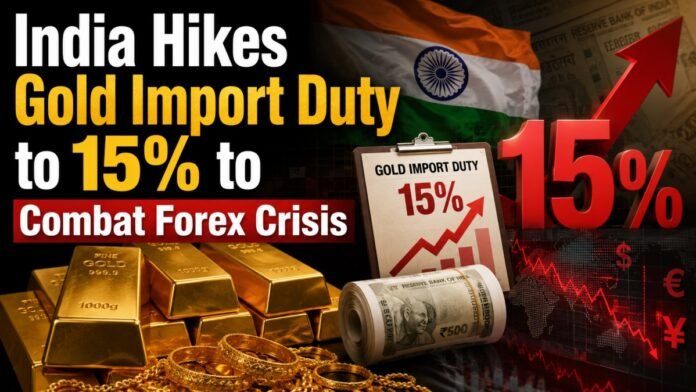
- Duty Surge: The effective customs duty on gold and silver has jumped to 15%, comprising 10% Basic Customs Duty and 5% AIDC.
- Economic Defense: The move aims to protect the Indian rupee, which recently hit an all-time low of 95.75 against the US dollar.
- Platinum Impact: Tariffs on platinum have also been adjusted upward, rising from 6.4% to 15.4%.
- Austerity Appeal: Prime Minister Modi has requested citizens to pause gold purchases and non-essential foreign travel for one year.
- Forex Savings: Officials estimate that a 40% reduction in gold imports could save the national exchequer up to $25 billion annually.
In a decisive move to stabilize the national economy, the Central Government has implemented a significant hike in import tariffs on precious metals. Starting at midnight on May 13, 2026, the total import duty on gold and silver has been raised to 15%, a steep climb from the previous rate of 6%. This intervention comes as India grapples with the cascading economic effects of the ongoing West Asia conflict, which has sent global energy prices soaring and placed unprecedented strain on the country’s foreign exchange reserves.
The Ministry of Finance issued Customs Notification No. 16/2026 on Wednesday, detailing the new tax structure. The 15% levy is a combination of a 10% Basic Customs Duty (BCD) and a 5% Agriculture Infrastructure and Development Cess (AIDC). Similar increases have been applied to platinum, which now attracts a 15.4% duty, and other precious metal components, including doré and coins.
PM Modi’s National Appeal for Austerity
The tariff hike follows a series of public appeals by Prime Minister Narendra Modi. During recent addresses, the Prime Minister urged the nation to adopt “judicious” spending habits to help conserve foreign currency. “The country spends a vast amount of foreign currency on gold,” the PM stated, adding that until global economic conditions normalize, citizens should refrain from buying gold, especially for ceremonial purposes or destination weddings.
The Prime Minister’s austerity push extends beyond precious metals, he has also called for a reduction in fuel consumption through carpooling, increased use of public transport, and reviving work, from, home practices where feasible to lower the nation’s massive oil import bill.
Context: The $72 Billion Gold Appetite
India remains the world’s second-largest consumer of gold, and its reliance on imports is nearly absolute. In the 2025,26 financial year, the country spent a record $71.98 billion on gold imports. While the volume of imports has seen a slight dip, the value has ballooned due to skyrocketing global prices, which recently crossed ₹1.6 lakh per 10 grams in domestic futures trades.
The government’s primary objective is to curb this “non-essential” drain on the dollar. With the rupee under heavy pressure, the administration believes that reducing gold demand by even 30% to 40% could save between $20 billion and $25 billion. These savings are viewed as critical for maintaining macroeconomic stability as the cost of essential imports, like crude oil and fertilizers, continues to climb due to the disruption of shipping routes in the Strait of Hormuz.
Industry Impact and Market Reaction
The immediate aftermath of the duty hike saw domestic gold prices surge by over 7%, with 24K gold trading near ₹15,475 per gram. While the government views the measure as a necessary economic safeguard, industry bodies like the India Bullion and Jewellers Association (IBJA) have expressed concerns. Analysts warn that such a high duty threshold could inadvertently revive the “grey market,” making gold smuggling more profitable and difficult to police.
Despite these concerns, the government maintains that proactive, targeted interventions are necessary to avoid more disruptive economic corrections later in the year. For now, the message to the Indian public is clear: national interest must take precedence over traditional investments in precious metals.