

































Key Highlights
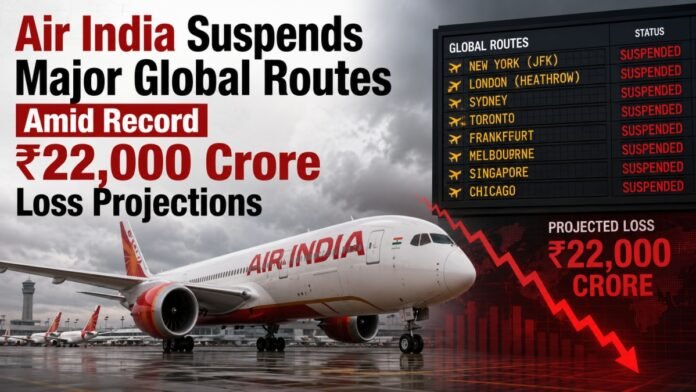
- Strategic Suspensions: Non-stop flights from Delhi to Chicago, Newark, Singapore, and Shanghai are halted from June to August.
- Frequency Reductions: Services to San Francisco, Paris, Toronto, Melbourne, and Sydney have been significantly curtailed.
- Ethical Crackdown: Over 1,000 employees were dismissed for violations including smuggling, travel fraud, and baggage irregularities.
- Financial Crisis: The Air India Group expects a record ₹22,000 crore loss for FY26, leading to frozen increments and cost,cutting.
- Fuel Surge: Jet fuel prices have skyrocketed to over $162 per barrel due to the ongoing conflict in West Asia.
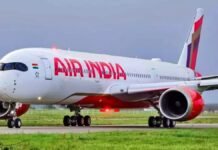
The ongoing geopolitical instability in the Middle East, particularly the closure of the Strait of Hormuz and restricted airspace, has forced Air India to take drastic measures to preserve its financial health. The airline officially announced it will suspend several high-profile international routes for three months, beginning in June 2026. This decision follows a sustained rise in Aviation Turbine Fuel (ATF) costs, which have surged to approximately $162.89 per barrel, up from under $100 just months ago.
The suspension primarily impacts departures from Delhi, including critical long-haul routes to Chicago and Newark, as well as high-traffic regional services to Singapore and Shanghai. Additionally, the carrier is reducing flight frequencies to other global hubs such as San Francisco, Paris, and Toronto. In total, the airline has slashed nearly 100 daily flights from its schedule to mitigate the impact of longer flight paths and soaring operational expenses.
CEO Campbell Wilson Issues Stern Warning to Staff
In a town hall meeting held last week, Air India CEO and MD Campbell Wilson described the current business environment as “extremely challenging.” He emphasized that with fuel accounting for nearly 40% of operating costs, the current price spike has rendered many international routes unprofitable.
Wilson also used the forum to address internal discipline, revealing that the airline has terminated more than 1,000 employees over the past three years for ethical misconduct. These dismissals were linked to diverse policy violations, such as the misuse of the Employee Leisure Travel (ELT) system, the smuggling of items off aircraft, and allowing passengers to carry excess baggage without paying the required fees. Wilson’s message was clear: as the airline navigates a “very, very difficult year,” operational integrity cannot be compromised.
Financial Outlook and Austerity Measures
The operational scale, which comes back as the Air India Group, which includes Air India and Air India Express, faces a daunting financial reality. Projections for the financial year ending March 2026 suggest a combined loss exceeding ₹22,000 crore. This marks a significant setback for the Tata Group, the owner of the carrier’s multi-year transformation plan.
To stabilize the balance sheet, the airline has initiated aggressive cost-saving measures, including:
- Salary Freezes: A temporary halt on all annual salary increments for staff.
- Expenditure Caps: Strict limits on non-essential spending and personal travel expenses.
- Fare Adjustments: The introduction of fuel surcharges to partially offset rising costs, though the airline warned that fares can only be raised so far before impacting passenger demand.
This crisis is not unique to Air India, as the Federation of Indian Airlines recently warned that the entire industry is under “extreme stress.” However, Air India remains particularly vulnerable due to its reliance on long-haul routes that are now forced into fuel, heavy detours to avoid restricted airspace in West Asia.