


































Key Developments
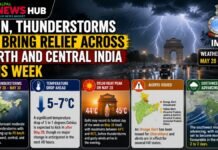
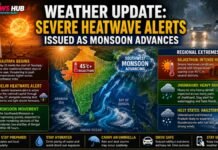
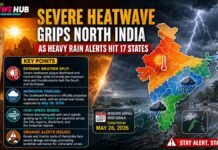
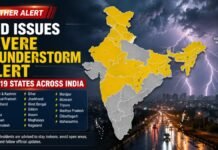
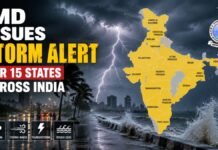
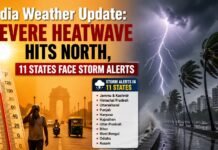
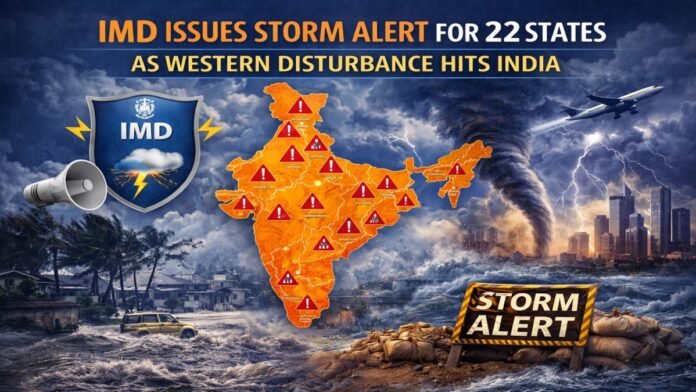
- Massive Coverage: 22 states, including the entire North-West and North-East belts, face severe weather alerts.
- Peak Activity: Delhi, Punjab, and Haryana are expected to see peak storm activity and hailstorms on April 3rd and 4th.
- Wind Hazards: Gusty winds between 50 and 70 km/h are forecasted for Uttar Pradesh and Bihar.
- Agricultural Risk: Significant threats to standing Rabi crops due to predicted hailstorms in the plains.
- Health Advisory: Recent climate research warns of increased cardiovascular strain on the elderly due to shifting humidity levels.
Across India, the transition into April has brought a confusing climatic mix. While solar intensity has been rising, a potent Western Disturbance originating over Iran is currently sweeping across the subcontinent. Although the system was initially thought to be weakening, the IMD confirmed on Thursday, April 2nd, that its interaction with local cyclonic circulations is intensifying.
This atmospheric instability is expected to persist until at least April 5th, with impact zones stretching from the high Himalayan ranges of Jammu & Kashmir to the central plains. Meteorologists note that while temperatures in North-West India will likely remain below normal through the weekend, the erratic nature of the storm front makes outdoor planning a challenge.
Regional Forecast: Rain, Hail, and Dust Storms
Residents in the National Capital Region (NCR) and surrounding states should prepare for significant disruptions. Delhi is on alert for light to moderate rainfall accompanied by thunder and lightning on April 3rd and 4th, with a high probability of localized hailstorms.
In Uttar Pradesh, the situation is more critical, with an alert issued for April 4th and 5th. Forecasts suggest heavy downpours paired with squally winds reaching speeds of 70 km/h. Bihar is expected to follow this pattern on April 5th and 6th, facing the twin threats of lightning strikes and severe storms. Meanwhile, in Rajasthan, the cyclonic circulation has shifted toward the northeast of the state, likely triggering widespread dust storms that could severely impact visibility on major highways.
North-East and Hilly Regions Under Watch
The weather remains equally precarious in the North-East. Strict advisories for heavy rainfall are in place for Arunachal Pradesh, Assam, and Meghalaya, where moderate rainfall has already been recorded over the last 24 hours. In the higher altitudes of Himachal Pradesh and Uttarakhand, the IMD predicts a continued spell of snowfall and rain, which could trigger localized landslides in sensitive corridors.
Climate Change and the Health Crisis
This year’s unstable weather is more than just a logistical hurdle; it is increasingly a health crisis. New data released in early 2026 highlights a growing “thermal perception” gap among the elderly. As climate change increases humidity during these transitional storms, the human body’s ability to regulate temperature through sweating is compromised.
Experts warn that for those over 60, engaging in outdoor activities during these humid, pre-storm windows can lead to rapid spikes in core temperature and cardiovascular strain. Authorities are advising vulnerable populations to stay indoors and monitor weather updates closely before stepping out.
Farmers are also being urged to take immediate precautions, as the combination of high-speed winds and hail poses a “decisive threat” to nearly mature crops across the northern grain belt.