



































Key Highlights
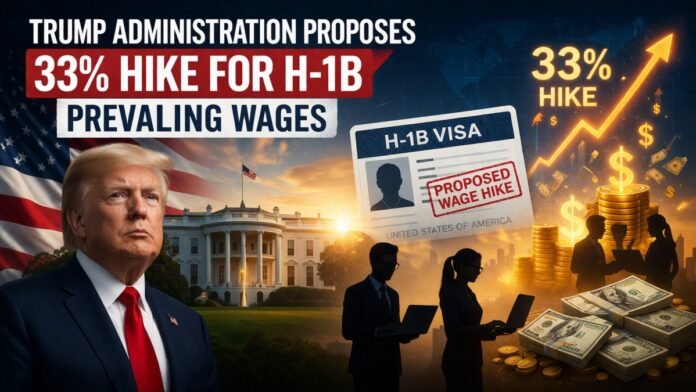
- Salary Increases: Minimum required wages for H-1B, E-3, and PERM programs would rise by 21% to 33%, depending on experience.
- Economic Barriers: The move complements a new $100,000 entry fee for H-1B holders, aimed at making foreign labor less financially attractive.
- Industry Impact: Tech and AI sectors are expected to face the most significant disruptions, as international students comprise the majority of graduate programs in these fields.
- Legal Timeline: A 60-day public comment period has begun, with experts anticipating immediate litigation from business advocacy groups.
The U.S. Department of Labor (DOL) officially released a Notice of Proposed Rulemaking this week, signaling a major shift in how the government calculates “prevailing wages” for high-skilled foreign nationals. This proposal targets several key visa categories, including the H-1B, H-1B1, and E-3, as well as permanent residency routes like the EB, 2 and EB, 3 programs.
The proposed rule would mandate a salary increase between 21% and 33% for foreign workers. The specific hike is contingent upon the worker’s “level” of experience, with entry-level positions often seeing the most aggressive adjustments. The administration argues that current wage levels allow companies to undercut American workers, a claim the new policy seeks to address by forcing parity with the highest-paid U.S. professionals in similar roles.
The Miller Strategy: Making Immigration “Financially Unfeasible”
This latest regulation is a cornerstone of the Trump administration’s broader immigration overhaul. White House Deputy Chief of Staff Stephen Miller, the primary architect of these policies, has worked to pivot U.S. immigration toward a model that prioritizes domestic labor through aggressive economic deterrents.
The wage hike follows the recent introduction of a $100,000 entry fee for new H-1B visa holders. Together, these measures are intended to create a financial threshold that many corporations may find impossible to justify. Administration officials have been candid about the intent, stating that the goal is to ensure foreign nationals are a “supplement” to the U.S. workforce rather than a lower-cost replacement.
Historical Context and Legal Hurdles
This proposal is not the first attempt to overhaul the wage system. It bears a striking resemblance to a final rule issued in January 2021, which was ultimately sidelined during the previous administration’s transition. A similar “interim final” rule from October 2020 was struck down by federal judges who ruled the government had failed to provide sufficient justification for bypassing the standard public comment process.
By utilizing a Notice of Proposed Rulemaking this time, the DOL is adhering to the traditional 60-day comment period. However, legal experts suggest that the rule remains vulnerable to challenges, particularly regarding the data used to justify the specific 21% to 33% increases.
AI and the Talent Gap
The timing of the rule has caused significant concern within the technology sector, particularly in the field of Artificial Intelligence. Current data from U.S. universities shows that international students represent between 75% and 80% of full-time graduate students in AI, related disciplines.
Because H-1B visas are often the only viable path for these graduates to remain in the U.S. after finishing their degrees, industry leaders warn that the combined weight of the $100,000 fee and the 33% wage hike could trigger a “talent drain.” If U.S. companies cannot afford to hire these specialized workers, there is a growing fear that the next generation of AI innovation will move to more cost-effective global markets.
The Department of Labor maintains that the revisions are necessary to protect program integrity and prevent the exploitation of foreign workers by employers seeking to avoid paying competitive market rates.