


































Key Points
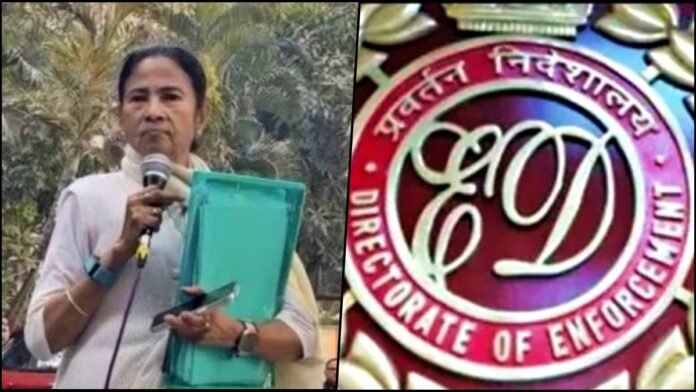
- ED has filed an Article 32 writ petition in the Supreme Court against CM Mamata Banerjee, DGP Rajeev Kumar and Kolkata Police Commissioner Manoj Verma, alleging obstruction, intimidation and wrongful restraint of three ED officers during January 8 searches in Kolkata.
- The searches were carried out at the Salt Lake office of political consultancy I-PAC and the residence of its director Pratik Jain, in a money laundering probe linked to an alleged ₹2,742 crore coal smuggling scam in West Bengal.
- ED alleges senior state officials entered the premises with nearly 100 police personnel, stopped the search, snatched “a trunk load” of files, laptops and phones, and took away devices undergoing forensic cloning.
- The agency has asked the Supreme Court to direct the CBI to register FIRs against Mamata Banerjee and top cops and to restore allegedly removed evidence, arguing that its right to conduct a fair investigation has been curtailed.
- ED says its attempt to seek relief in the Calcutta High Court failed after hearings were disrupted by commotion in a courtroom crowded with ruling party supporters, leading to adjournment till January 14.
- The West Bengal government has filed a caveat in the Supreme Court and lodged FIRs against ED officials, accusing the agency of data theft, illegal access to party strategy and harassment during the I-PAC raids.
- Mamata Banerjee has publicly denied wrongdoing, calling the raids “political vendetta” and alleging ED tried to steal Trinamool Congress election data and candidate details.
- The Supreme Court has taken note of ED’s plea, with the matter now expected to be heard around January 14, alongside related proceedings pending before the Calcutta High Court.
In its writ petition under Article 32, the Enforcement Directorate has asked the Supreme Court to order the CBI to register FIRs against Mamata Banerjee, West Bengal DGP Rajeev Kumar, and Kolkata Police Commissioner Manoj Verma, accusing them of obstructing and sabotaging a lawful money laundering investigation tied to the I-PAC coal scam probe. The agency says three of its officers were threatened, wrongfully confined, and prevented from completing search and seizure operations on January 8, in violation of protections guaranteed under Articles 14, 2,1 and 22 of the Constitution, and has sought judicial protection from what it terms “malicious criminal prosecution” by the state machinery.
ED’s petition describes January 8 as a “showdown” during which senior state officials allegedly used their authority to overrule officers acting under Section 17 of the Prevention of Money Laundering Act, arguing that a state executive cannot sit in judgment over an ED officer’s “reason to believe” or physically block a central probe by force. The agency maintains that intervening state authorities turned from “protectors of law” into participants in a cognisable offence by intimidating investigators and tampering with seized material.
Inside the January 8 I-PAC Raids
According to the ED, officers were conducting searches at around 10 locations linked to the alleged coal scam, including six premises in West Bengal and four in Delhi, when the confrontation in Kolkata unfolded. Among the sites were the Salt Lake office of the Indian Political Action Committee (I-PAC), which manages election strategy for the Trinamool Congress, and the south Kolkata residence of its director, Pratik Jain.
The agency claims that Mamata Banerjee arrived at Pratik Jain’s residence, accompanied by the chief secretary, DGP, Kolkata Police Commissioner, and roughly 100 police personnel, after which officers were surrounded and pressured to halt the search. ED has alleged that laptops, mobile phones,s and “a trunk load of files” that had already been seized or were in the process of forensic extraction were forcibly removed and loaded onto a vehicle, compromising panchnama proceedings and evidentiary integrity. Sources quoted in separate reports also claim the Chief Minister took away the phone of an I-PAC official and that senior police instructed ED not to show any recovery in records, warning officers of arrest if they failed to comply, an allegation the state has not accepted.
ED further told the courts that independent witnesses present during the raid were allegedly harassed by local police and members of the Chief Minister’s staff, adding that officers were restrained from recording events or video‑documenting the obstruction. The agency argues that such conduct has “seriously compromised” its ability to conduct an impartial investigation and sets a dangerous precedent for central probes in states where they face political resistance.
The ₹2,742 Crore Coal Scam and Money Trail to I-PAC
The January 8 action stems from a broader money laundering probe into an alleged coal smuggling network operating out of Eastern Coalfields Limited leasehold areas in West Bengal between 2017 and 2020, which ED and CBI say generated illegal proceeds of around ₹2,742 crore. Investigators allege that syndicates linked to alleged kingpin Anup Majee siphoned coal from government mines and moved the cash through a complex chain of shell entities and hawala operators.
ED has told the courts that a portion of these “proceeds of crime”, estimated at around ₹20 crore, was routed through hawala channels to I-PAC and used to fund election‑related activities during the 2022 Goa Assembly polls, where the consultancy worked with Trinamool Congress, while another detailed petition pegs the amount closer to ₹10 crore, reflecting variation across case documents and media reports. The searches at I-PAC and Pratik Jain’s residence were aimed at tracing this alleged financial trail, securing digital records, contracts, and internal communication that could link coal scam funds to political campaigning. Both the ED and CBI are running parallel probes in the coal case, with the central agency stressing before the Supreme Court that any interference with digital evidence or witnesses could irreversibly damage the investigation.
Mamata Banerjee, Bengal Government, and TMC’s Counter‑Allegations
The West Bengal government and Trinamool Congress have sharply rejected ED’s accusations, portraying the raids and subsequent petition as part of a broader political campaign against the state leadership ahead of upcoming elections. Mamata Banerjee has publicly claimed that the January 8 searches were a “politically motivated” attempt to steal confidential party information, including probable candidate lists and campaign strategies stored at I-PAC, rather than a neutral financial investigation.
After ED approached the Calcutta High Court, the state filed cross‑petitions and two FIRs against agency officials, accusing them of data theft, unlawful seizure of political documents, and harassment of I-PAC staff, while also lodging a caveat in the Supreme Court to ensure no orders are passed without hearing the state’s side. At a rally in Kolkata, Mamata told supporters that she had “done nothing wrong” and accused the agency of trying to “steal all data” from her political operation, framing her intervention at the raid site as an act of protecting democratic and privacy rights, a stance that directly clashes with ED’s version of events.
Courtroom Drama, High Court Gridloc,k and What Happens Next
Before moving the Supreme Court, ED had first gone to the Calcutta High Court seeking directions for a CBI probe and registration of an FIR against the Chief Minister over alleged obstruction during the I-PAC raids. However, a single‑judge bench and later a division bench led by the Acting Chief Justice were forced to adjourn hearings after heavy crowding and commotion in the courtroom, with orders noting that the atmosphere was “not conducive” for proceedings, which ED attributes to mobilisation by ruling party supporters.
Arguing that its remedy under Article 226 had become “illusory” in these circumstances, the agency turned to the Supreme Court, filing its Article 32 plea on January 10 and asking the top court to step in, restore seized materials and restrain state authorities from any further interference in the I-PAC probe. The Supreme Court has taken note of the petition and, along with related Calcutta High Court cases listed for January 14, is expected to decide on ED’s request for an independent CBI investigation and on the larger question of how far state governments can intervene in central agency raids, a decision that could have wide political and legal ramifications beyond West Bengal.