
































Key Points:
- Social media scrutiny now mandatory for all H-1B and H-4 visa applicants globally
- Indian professionals face interview cancellations and 3-5 month processing delays
- Hundreds stranded in India after December visa renewals were postponed
- US Embassy states visa is a “privilege, not a right” amid security concerns
- Applicants advised to apply 3-6 months in advance and maintain clean digital footprint
A major policy shift at the US State Department is sending shockwaves through India’s tech community. Starting December 15, the US government began requiring comprehensive social media background checks for all H-1B and H-4 visa applicants, a move that threatens to derail careers and separate families. Indian nationals, who comprise nearly 75% of all H-1B visa holders, are bearing the brunt of these enhanced security protocols.
The US Embassy in India confirmed the development through its official X account, stating that the expanded “Online Presence Review” now forms a mandatory component of standard visa screening. Consular officers will examine applicants’ Facebook, X, LinkedIn, Instagram, and other digital platforms for any red flags. This policy applies universally to all nationalities, but the impact disproportionately affects India’s 500,000+ H-1B workers who form the backbone of Silicon Valley and America’s healthcare system.
Interview Cancellations Strand Hundreds in India
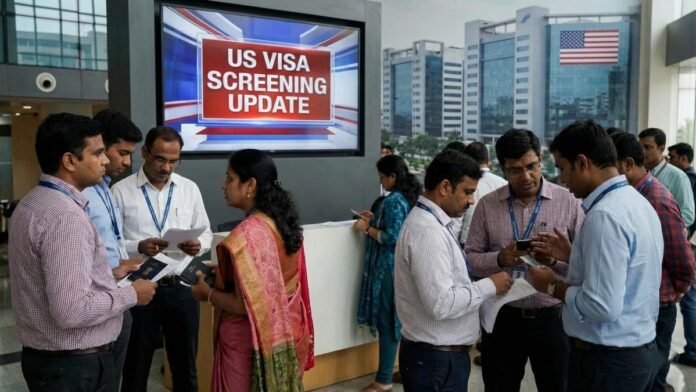
The new screening process has created a bureaucratic bottleneck of unprecedented scale. Hundreds of Indian professionals who traveled home in December for routine visa stamping have had their consular appointments abruptly canceled or pushed to March, April, and even May 2025. These workers now find themselves in limbo, unable to return to their jobs, homes, and families in the US.
The situation has triggered a cascade of financial and personal crises. Many stranded professionals face mounting pressure from US employers demanding their return or threatening termination. Others struggle to pay mortgages, car loans, and children’s school fees while stuck in India without income. Social media groups for affected H-1B holders have swelled with desperate pleas for guidance, with some members reporting severe anxiety and depression.
Security Concerns Drive Unprecedented Scrutiny
US officials defend the policy as essential for national security and program integrity. The enhanced screening aims to detect fraudulent applications, identify potential security threats, and verify that applicants’ stated qualifications match their actual work roles. The initiative gained momentum during the Trump administration and has continued evolving under current policies.
A senior US Embassy official stated unequivocally that “a US visa is a privilege, not a right,” emphasizing that security agencies retain authority to continue investigations even after visa issuance. Consular officers are now trained to spot discrepancies between applicants’ social media activity and their visa petitions, including unauthorized employment, misrepresented job titles, or extremist content.
Critical Guidance for Affected Applicants
The US Embassy has issued urgent advice for navigating the new reality. Applicants should now submit visa requests at least 90 to 180 days before planned travel dates. All social media account information must be accurate and complete, any discrepancies can trigger automatic denials.
Legal experts recommend that H-1B holders immediately audit their digital footprint. This includes removing controversial posts, ensuring LinkedIn profiles precisely match H-1B petition details, and setting strict privacy controls on personal accounts. Applicants should also prepare for additional processing time of 2-4 weeks beyond standard timelines and carry detailed employment verification letters to their interviews.
Industry bodies like Nasscom are reportedly engaging with US officials to seek expedited processing for critical tech workers, but no relief measures have been announced yet. As the policy takes full effect, India’s $194 billion IT services industry watches anxiously, bracing for potential talent disruptions and project delays.