
































Key Points:
- US officially withdraws from WHO, flag removed from Geneva headquarters
- Trump administration cites COVID-19 pandemic mismanagement as primary reason
- Approximately $260 million in membership dues disputed by US officials
- All funding terminated, limited cooperation only for legal formalities
- WHO member states to discuss implications at February Executive Board meeting
- US shifts to bilateral cooperation strategy for global health initiatives
- Legal experts warn potential violation of US law for unpaid dues
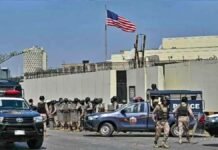
The United States completed its historic withdrawal from the World Health Organization on Thursday, culminating in the removal of the American flag from the organization’s Geneva headquarters and triggering a major realignment in global health governance. The move, executed through a joint statement from the Department of Health and Human Services and the State Department, marks the first time a founding member has voluntarily exited the UN health agency since its establishment in 1948.
The ceremonial flag removal, witnessed by WHO staff and diplomatic observers, symbolized the definitive end of America’s 77-year membership. HHS Secretary Robert F. Kennedy Jr. and Secretary of State Marco Rubio issued the joint communiqué at 3 PM EST, stating the United States “is no longer a member of this global institution” and would “systematically complete the process of fully withdrawing from the organization.” The statement outlined that subsequent cooperation would exist only at a “limited level” to finalize legal and administrative disentanglement.
Dispute Over Financial Obligations
Central to the separation is a contentious financial dispute. WHO records indicate the United States owes approximately $260 million in unpaid membership assessments for 2024 and 2025, representing nearly 15% of the agency’s core budget. However, US officials categorically rejected this claim, with one senior administration official telling reporters, “We deny any obligation to pay for an organization that failed America during its greatest health crisis.” The official, speaking on condition of anonymity, argued that the WHO’s “flawed decisions” caused “trillions of dollars in economic losses” that offset any dues.
Legal experts have raised alarms about potential violations of US law. Professor Lawrence Gostin of Georgetown University warned that departing without settling financial commitments could breach the 1948 Joint Resolution that authorized US membership in WHO. “This move appears contrary to established rules and could set a dangerous precedent for international treaty obligations,” Gostin stated in an interview. He noted that while legal action against the administration remains unlikely given current political alignments, the outstanding debt could complicate future US re-entry or negotiations with other multilateral organizations.
Pandemic Failures Cited as Catalyst
The Trump administration has consistently blamed the WHO for mismanaging the COVID-19 pandemic, citing delayed warnings about human-to-human transmission, praise of China’s early response, and opposition to travel restrictions. The joint statement explicitly referenced these grievances, claiming the agency “completely failed to fulfill its responsibilities during the crisis.” Administration officials argue that the WHO’s structure allowed political considerations to override scientific guidance, necessitating a fundamental reimagining of America’s global health partnerships.
Critics counter that the withdrawal itself occurred during a pandemic transition period, noting that the WHO declared COVID-19 a public health emergency in January 2020 while the Trump administration’s response remained contested. Dr. Margaret Harris, WHO Communications Chief, expressed “deep concern” over the sudden departure, emphasizing that “global health threats require collective, not unilateral, action.”
Impact on Global Health Programs
The funding cessation affects numerous WHO initiatives where the US previously contributed $450 million annually, including polio eradication campaigns in Pakistan and Afghanistan, tuberculosis control in Sub-Saharan Africa, and antimicrobial resistance surveillance. The administration has redirected these resources toward a new “America First Global Health Strategy” emphasizing bilateral agreements with select partner nations.
Officials announced plans to establish direct disease surveillance networks with India, Japan, Australia, and select European allies, bypassing WHO’s centralized reporting systems. “Our goal is to make global health services more effective and transparent without external agency intervention,” explained a senior HHS official. The strategy includes creating a US Global Health Security Corps to embed American epidemiologists directly in partner countries.
International Reaction and February Meeting
WHO spokesperson Tarik Jasarevic confirmed that member states will convene an emergency session during the Executive Board meeting scheduled for February 10-11 in Geneva to address the “unprecedented vacuum” created by the US exit. The agenda includes strategies to fill the $260 million budget gap, potentially through increased assessments from remaining members or emergency contributions from the European Union and Gates Foundation.
Several nations have expressed concern. German Health Minister Karl Lauterbach tweeted, “A strong WHO needs strong partners. Germany stands ready to increase our support.” China, which has increased its WHO funding in recent years, called the US move “irresponsible” and vowed to “defend multilateral health governance.”
Timeline and Legal Formalities
The withdrawal process, initiated January 20, 2025, required a one-year notice period under the WHO’s constitution. The Trump administration delivered that notice on January 21, 2025, making Thursday’s action the final legal step. However, complex agreements covering intellectual property sharing, laboratory networks, and emergency response protocols remain under negotiation. The limited cooperation framework will maintain a skeleton staff of 12 US officials in Geneva temporarily to resolve these technical matters.
As of Friday morning, the State Department has begun notifying partner nations of new direct-contact protocols for health emergencies, while HHS has redeployed 47 staff members previously assigned to WHO liaison offices to domestic positions. The American flag removed from the WHO headquarters has been transferred to the US Mission in Geneva, where it will remain until decisions about its final disposition are made.