
























Key Points
- Seven loud explosions hit Caracas naval base around 2 a.m. Saturday, with aircraft spotted overhead
- CNN team witnessed blasts, with one explosion powerful enough to shake windows and cause citywide power outages
- Venezuelan government has not issued official statement, but President Maduro previously accused US of plotting to overthrow his government
- Trump authorized CIA operations inside Venezuela in October 2025 to combat drug trafficking and migrant movements
- Attack follows Venezuela’s offer on Friday to negotiate drug trafficking agreement with US
- Residents fled to streets in panic as smoke plumes rose over multiple parts of the capital
- Pentagon has not confirmed or denied involvement, maintaining policy of neither confirming nor denying covert operations
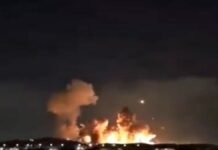
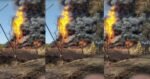
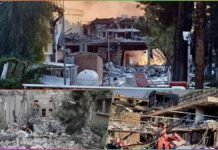
The United States has attacked Venezuela. The US military targeted a major military base in Caracas, the Venezuelan capital, in a series of precision strikes that began around 2 a.m. on Saturday. According to reports from international journalists on the ground, the attack focused on a naval base in the heart of Caracas, and the Pentagon’s involvement is suspected though not officially confirmed. At least seven loud explosions were heard across the capital, with plumes of smoke seen rising in several parts of the city.
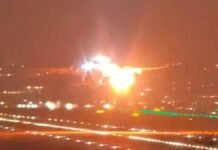
A CNN team witnessed a series of explosions in Caracas on Saturday night. The first explosion occurred around 1:50 a.m. local time. CNN correspondent Osmary Hernandez reported that one explosion was so powerful that it shook her window. Following the explosions, power outages occurred in several areas of Caracas, and several aircraft were seen flying overhead at low altitude. Eyewitnesses described the aircraft as resembling US Navy fighter jets, though identification was difficult due to darkness and the speed of the operation.
Immediate Aftermath and Public Panic
People came out of their homes upon hearing the explosions. The Venezuelan government has not yet issued an official statement regarding the incident. Upon hearing the explosions, people in several parts of the city came out of their homes and onto the streets. People were seen in large numbers in various parts of Caracas, many carrying essential belongings and heading away from government buildings and military installations.
Local hospitals reported receiving at least 23 injured civilians, mostly from falling debris and traffic accidents caused by the sudden power outages. The Caracas fire department deployed units to multiple locations, but access to the naval base remained restricted by military personnel. Mobile phone networks experienced intermittent outages, adding to the confusion and panic among residents.
Long-standing Tensions with the US
This attack comes at a time when the US military has recently been reportedly targeting boats used in drug trafficking. On Friday, Venezuela said it was ready to negotiate an agreement with the US to combat drug trafficking. President Nicolás Maduro accused the US of trying to overthrow his government and gain access to Venezuela’s vast oil reserves. According to him, a pressure campaign, including a large-scale military deployment in the Caribbean Sea, was launched in August for this purpose.
The relationship between Washington and Caracas has deteriorated significantly since 2019, when the US recognized opposition leader Juan Guaidó as Venezuela’s legitimate president. Sanctions imposed on Venezuela’s state oil company PDVSA have cost the country an estimated $30 billion in lost revenue. Maduro has consistently claimed that US actions are motivated by desire to control Venezuela’s oil reserves, the largest proven reserves in the world.
Trump’s Escalating Warnings
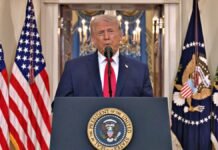
Before this attack, US President Donald Trump had repeatedly warned Venezuela. He had said that the US was preparing new actions against the alleged drug trafficking network in Venezuela. In October, Trump also claimed that he had authorized the CIA to operate inside Venezuela to stop illegal drug trafficking and the movement of migrants from that country.
Trump’s authorization expanded CIA paramilitary operations in the region, with a budget increase of $500 million for covert actions in Latin America. The President stated in a November press conference that Venezuela had become a “narco-state” that threatened US national security. Intelligence reports released by the White House claimed that Venezuelan military officials were directly involved in cocaine trafficking operations worth $5 billion annually.
International Response and Diplomatic Fallout
Regional governments have begun responding to the attack. The Caribbean Community (CARICOM) issued a statement calling for immediate de-escalation and respect for Venezuela’s sovereignty. Mexico’s President announced an emergency meeting of the Community of Latin American and Caribbean States (CELAC) to coordinate a regional response. Russia’s Foreign Ministry condemned the attack as a “blatant violation of international law” and warned of “serious consequences.”
The Organization of American States scheduled an emergency session for Sunday morning, though its ability to take meaningful action remains uncertain given the US’s significant influence within the organization. Colombia and Brazil have increased border security, anticipating a potential refugee crisis if the situation escalates further.
Latest Updates and Military Assessment
As of Saturday afternoon, satellite imagery shows significant damage to the naval base’s command center and several docked vessels. US military analysts speaking on condition of anonymity suggest the operation used precision-guided munitions launched from aircraft carriers positioned in the Caribbean Sea. The Pentagon continues its policy of neither confirming nor denying involvement in covert operations.
Venezuelan military sources, speaking to local media, claim at least 12 military personnel were killed in the attack, though this remains unverified. The country’s air defense systems reportedly engaged the attacking aircraft, with witnesses reporting anti-aircraft fire over Caracas for approximately 20 minutes following the initial explosions.
Implications for Regional Stability
The attack marks a dangerous escalation in US-Venezuela relations, moving from economic sanctions and diplomatic pressure to direct military action. Oil markets have already reacted, with crude prices rising 4% in early trading on concerns of supply disruptions. The situation threatens to destabilize the entire region, with potential economic and security consequences extending far beyond Venezuela’s borders.
Human rights organizations have expressed concern about potential civilian casualties and the legality of the strike under international law. The attack’s timing, just hours after Venezuela offered cooperation on drug trafficking, suggests either a breakdown in backchannel communications or a deliberate rejection of diplomatic solutions by the Trump administration.