
































Key Points
- US Navy F-35 fighter crashed near Naval Air Station Lemoore, California, on July 30, 2025; the pilot ejected safely.
- Aircraft belonged to VFA-125 “Rough Raiders”, a training squadron for new F-35 pilots and crew.
- Investigation underway; cause not yet known, no other injuries or property damage reported.
- Incident adds to a series of F-35 crashes and technical problems, including a prolonged UK F-35B grounding in India in June-July 2025.
- Experts raise concerns about high costs, recurring faults, and readiness of the F-35 program as global customers watch closely.
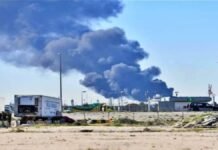
New Delhi: A US Navy F-35C Lightning II world’s most expensive and advanced fighter crashed near Naval Air Station Lemoore, California, at about 6:30PM local time on July 30, 2025. The pilot ejected safely with no injuries or ground damage, according to a Navy press statement. The crashed jet belonged to the VFA-125 “Rough Raiders”, the Navy’s principal training unit for F-35 aircrew.
Emergency services quickly responded to the site, with dramatic images showing smoke rising from the crash area. The Navy immediately launched a formal investigation to determine the cause which remains unknown as of this report.
Repeated Setbacks for the F-35 Program
This latest accident renews tough questions about the F-35 series, a fifth-generation fighter that’s cost over $1.7 trillion to develop and operate so far. The Lemoore crash follows a recent saga in India, where a British Royal Navy F-35B made an emergency landing in Kerala on June 14, 2025, due to a major technical fault. The jet sat grounded in Thiruvananthapuram airport for over a month requiring a UK team and special equipment before it could be flown home in late July. The incident fueled global memes and criticism, especially as India, a potential customer, looks on.
Other recent F-35 mishaps include:
- May 2024, New Mexico: F-35 crash, pilot injured.
- September 2023, South Carolina: F-35 lost after autopilot takeover, pilot ejects.
- October 2022, Utah: Data system failed during landing.
- January 2022, USS Carl Vinson: F-35C crashes during carrier landing, several hurt.
- Plus, previous crashes and emergency incidents worldwide have been documented including losses in Japan, the UK, and Korea.
Why So Many Problems?
The F-35 program envisioned as a “game-changer” has faced continuous criticism for:
- High costs (over $80–100 million per jet, not including maintenance)
- Frequent technical/integration issues
- Complex, sometimes unreliable software and supply chains
- Lingering doubts about readiness for combat and harsh environments.
Global Watch, Local Rescue
Despite criticism, the F-35 remains a cornerstone of US and allied airpower. The US, UK, Japan, Italy, Australia, Israel, South Korea, and others have committed to the jet, attracted by its stealth, sensors, and multirole capability.
India recently offered the F-35 by the US is monitoring every incident as it weighs investment in fifth-generation jets.
The Bottom Line
No one was hurt in the California crash, but the reputational and financial fallout could be significant. As global partner nations take note, the US Navy and Lockheed Martin must answer why the world’s flagship stealth jet continues to face high-profile public failures.
The California incident is the latest in a wave of F-35 mishaps fueling skepticism and highlighting urgent need for fixes in a program meant to define 21st-century air dominance.