
































Key Points:
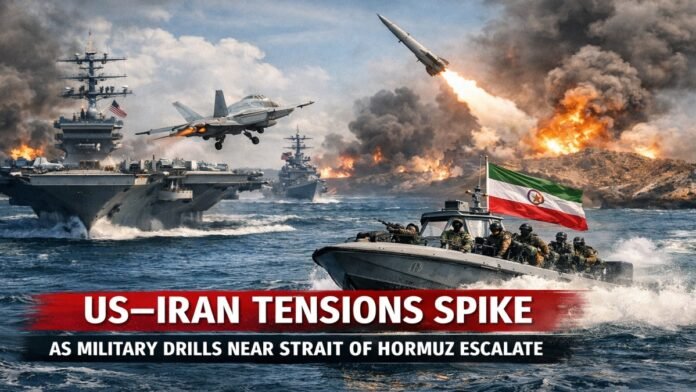
- The US has launched multi-day aerial and naval exercises, deploying the USS Abraham Lincoln carrier strike group to the Middle East.
- Iran issued NOTAM warnings and began live-fire exercises near the Strait of Hormuz from January 27 to 29.
- Iranian-backed militias have threatened attacks on US assets in Iraq and Yemen.
- Houthi forces in Yemen have signaled escalation if Iran is targeted.
- Gulf states like Saudi Arabia and the UAE are reluctant to support US military action.
Tensions between the United States and Iran in the Persian Gulf have reached heightened levels as Washington intensifies military activities in the region and Tehran responds with its own large-scale drills and forceful rhetoric. Recent developments underscore a volatile standoff with both military and diplomatic implications.
On January 26, the US initiated multi-day aerial military exercises under US Central Command, involving fighter jets and other aircraft designed to demonstrate the capability to deploy and sustain combat airpower across the Middle East. Simultaneously, the USS Abraham Lincoln aircraft carrier strike group arrived in the CENTCOM area of responsibility, accompanied by destroyers and support vessels, bolstering US naval presence amid ongoing concerns about regional stability.
In response, Iran issued a Notice to Airmen (NOTAM) on January 27 announcing live-fire military drills near the Strait of Hormuz, temporarily closing airspace within a five-nautical-mile radius up to 25,000 feet through January 29. The exercise is widely interpreted as a clear demonstration of Tehran’s readiness to showcase its defensive capabilities in a strategically vital corridor for global energy shipments.
Iran and its network of allied militias in Iraq and Yemen have escalated threats against US forces, with several groups indicating willingness to target American military assets should conflict intensify. These warnings add another layer of complexity, as the US seeks to deter aggression without triggering a broader confrontation.
Beyond state actors, the Houthis in Yemen have also issued signals of escalation, stating that any targeting of Iran could prompt intensified operations in the Red Sea and surrounding waters, potentially affecting commercial shipping routes and international trade.
At the same time, key Gulf allies, notably Saudi Arabia and the United Arab Emirates, have made clear their reluctance to allow their territory or airspace to be used for US strikes against Iran, complicating Washington’s strategic options and emphasizing regional desires to avoid open conflict.
Diplomatically, nations in the region and beyond have called for restraint and dialogue. Turkey’s top diplomat has urged both Washington and Tehran to prioritize negotiations and avoid reigniting war, reflecting broader fears of escalation following months of domestic unrest within Iran and international pressure over its nuclear program.
The current situation marks one of the most serious spikes in US–Iran military tensions in recent years and has drawn attention from global powers and markets alike, as analysts warn that missteps or miscalculations could rapidly escalate into armed conflict, with significant implications for regional security and global energy supplies.