

























Key Points
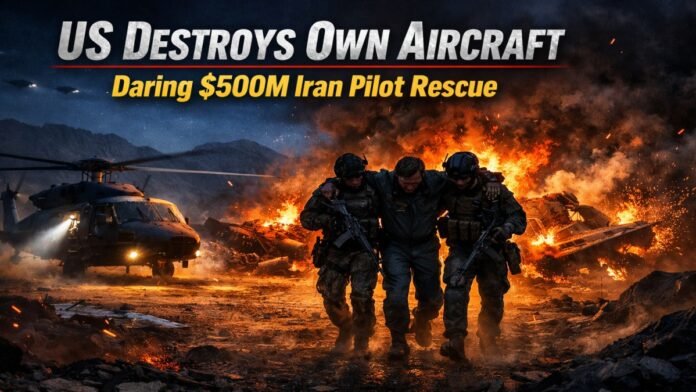
- Successful Extraction: Both the pilot and the Weapons Systems Officer (WSO) from the 494th Fighter Squadron are safe following their April 3 shootdown.
- Intentional Destruction: Two Lockheed Martin C-130 Hercules aircraft, valued at $100 million each, were blown up by U.S. forces after becoming stuck in sandy terrain near Isfahan.
- Rising Costs: The total mission cost is estimated at $500 million, including the loss of an A-10 Thunderbolt II and damage to two Black Hawk helicopters.
- Strategic Deception: The CIA reportedly launched a disinformation campaign to mislead the IRGC while SEAL Team Six tracked the WSO to a mountain crevice.
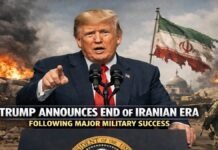
- Trump’s Reaction: The President described the mission as a “movie-like operation” and celebrated the recovery on social media.
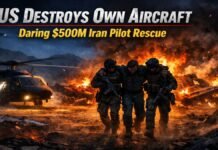
In an operation that President Donald Trump has characterized as one of the most daring in U.S. history, American Special Operations forces have successfully rescued two aviators stranded deep within Iranian territory. The mission, which unfolded over the weekend, concluded Sunday after a tense 30-hour window where U.S. personnel raced against the Islamic Revolutionary Guard Corps (IRGC) to locate a missing Weapons Systems Officer (WSO).
The crisis began on Friday, April 3, 2026, when an F-15E Strike Eagle was shot down over southern Iran. While the pilot was recovered shortly after the crash, the WSO managed to evade capture by hiding in the rugged terrain of the Zagros Mountains. To facilitate the final extraction, the U.S. military utilized an abandoned agricultural airstrip near Shahreza City in Isfahan as a temporary forward base, but the mission was nearly compromised by the very environment it sought to exploit.
Strategic Sacrifice: Why the C-130s Were Destroyed
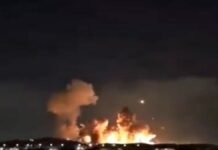
During the extraction phase, two Lockheed Martin C-130 Hercules transport aircraft became immobilized in the soft, sandy terrain of the makeshift landing strip. Fearing that the aircraft, which were equipped with highly sensitive navigation systems and classified communication hardware, would fall into enemy hands, commanders ordered their immediate destruction.
This tactical decision mirrors the famous 2011 raid in Abbottabad, Pakistan, where U.S. Navy SEALs destroyed a modified stealth Black Hawk helicopter to prevent its technology from being reverse-engineered. In this instance, the U.S. military incurred losses estimated at $100 million for the aircraft alone. Iran later released drone footage showing the charred remains of the transport planes, attempting to frame the wreckage as evidence of a failed American incursion.
A “Movie-Like” Operation Amid Heavy Fire
President Trump, who monitored the mission from the White House, praised the “cinematic” nature of the rescue. In a post on Truth Social, he wrote, “WE GOT HIM!,” referring to the WSO, who was reportedly injured but alive. Trump emphasized that the U.S. maintained absolute radio silence during the most critical seven-hour daylight window to avoid detection.
The operation was far from bloodless. During the intense extraction, two Black Hawk helicopters were hit by small-arms fire from local tribesmen and IRGC units, resulting in injuries to an undisclosed number of crew members. Additionally, an A-10 Thunderbolt II providing air cover was reportedly shot down during the mission. The CIA played a pivotal role by spreading false reports that the airman had already been moved to a ground convoy, a move that successfully diverted Iranian resources and allowed SEAL Team Six to secure the airman from his mountain hideout.
Regional Tensions and the Tuesday Deadline
The successful rescue comes at a moment of maximum friction. The total mission expenditure, now estimated at $500 million, highlights the escalating financial toll of the ongoing conflict that began on February 28.
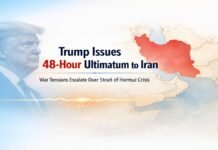
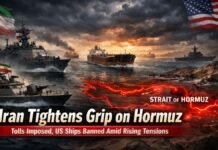
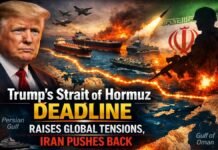
As the rescued crew members receive medical attention, the focus shifts back to Trump’s Tuesday evening deadline. The President has warned that if the Strait of Hormuz is not reopened by 8:00 PM Eastern Time, the U.S. will begin a systematic strike on Iran’s power plants and bridges. With the pilot safely home, the diplomatic and military guardrails appear to be thinning as both nations brace for what could be a decisive 24 hours.
Do you think this successful rescue will embolden the administration to take even firmer military action tomorrow, or will the high cost of the mission encourage a shift back toward the negotiating table?