






























Key Points:
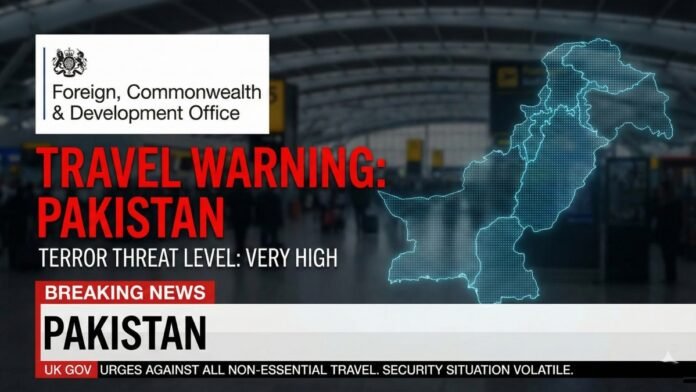
- UK declares Pakistan as “very high” terrorism threat zone
- Multiple terrorist groups active including TTP, ISKP, al-Qaeda, and Baloch militants
- Major cities Karachi, Islamabad, Quetta, Peshawar, and Lahore identified as dangerous
- Chinese citizens and East Asians specifically targeted in recent attacks
- Religious sites, government offices, hotels, markets, airports marked as high-risk targets
- British citizens advised to avoid crowds, change travel routes, stay vigilant
- Advisory comes amid Pakistan’s economic crisis, political instability, and rising extremism
The United Kingdom has issued a new, stricter travel advisory for its citizens in response to escalating terrorist incidents across Pakistan, declaring that the threat of terrorist attacks is “very high” and could occur at any time without warning. The British Foreign Office explicitly stated that UK citizens are often considered high-profile targets for terrorists globally, requiring extreme vigilance for those currently in Pakistan or planning to visit. The advisory, updated on December 5, 2025, reflects heightened concerns following a surge in attacks targeting both security forces and civilian populations.
According to the advisory, numerous terrorist organizations remain active throughout Pakistan, including Tehreek-e-Taliban Pakistan (TTP), Tehreek-e-Jafaria Pakistan (TJP), Islamic State Khorasan Province (ISKP), al-Qaeda, and various Baloch militant groups. These organizations frequently carry out attacks against security forces while also targeting major urban centers to project intimidation and create widespread fear. Recent intelligence indicates that foreign nationals face an increased threat, with terrorists specifically targeting Chinese citizens and East Asian-looking individuals in several high-profile incidents.
Major Cities Under Threat
The British government has identified Karachi, Islamabad, Quetta, Peshawar, and Lahore as the most dangerous cities for foreign nationals. These urban centers have experienced multiple terrorist attacks in recent months, with militants deliberately targeting locations frequented by international visitors. The advisory specifically highlights religious sites, government offices, hotels, restaurants, markets, shopping malls, schools, tourist destinations, public events, railway stations, and airports as particularly high-value targets for terrorist operations.
Security experts note that the threat intensity has escalated significantly in recent months, especially in sensitive regions like Kashmir and Balochistan. The advisory warns that terrorists may conduct attacks with little or no warning, making it extremely difficult for authorities to prevent incidents. British citizens are strongly advised to avoid large crowds, frequently change travel routes, and closely monitor local security updates through reliable sources.
Foreign Nationals at Increased Risk
This strengthened travel advisory comes at a critical time when Pakistan grapples with multiple crises including severe economic challenges, political conflicts, and rising extremism. Security analysts confirm that the threat to foreign nationals has reached unprecedented levels, prompting increasingly stringent warnings from Western nations. The UK government has categorized multiple public spaces as potential targets, emphasizing that religious gatherings, government buildings, commercial establishments, educational institutions, transportation hubs, and tourist attractions remain vulnerable to terrorist attacks.
The advisory specifically mentions that Baloch militants have escalated their activities, while ISKP and TTP continue to demonstrate capability to strike in major urban centers. The combination of political instability and intensifying violence threatens Pakistan’s overall security situation, creating an unpredictable environment for international visitors. The British Foreign Office has made it clear that citizens should reconsider all non-essential travel to Pakistan and those already present should maintain a high state of alert while avoiding all unnecessary risks.