



























Key Highlights
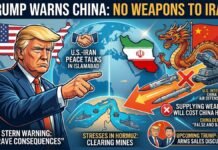
- Diplomatic Re-engagement: Senior U.S. envoys Steve Witkoff and Jared Kushner met with Iranian Foreign Minister Abbas Araghchi in a highprofile attempt to revive stalled nuclear dialogue.
- Security Presence: In a rare move, Admiral Brad Cooper, commander of U.S. Central Command, attended the session, signaling Washington’s readiness for military action if diplomacy falters.
- Proposed Three-Year Halt: Mediators from Egypt, Turkey, and Qatar have proposed a framework where Iran would freeze uranium enrichment for three years and export its 60% enriched stockpile.
- Shadow of Conflict: The talks occur just days after a U.S. F,35 shot down an Iranian drone near the USS Abraham Lincoln and following a year of direct military exchanges between Israel and Iran.
- Internal Pressures: Foreign Minister Araghchi acknowledged “deep mistrust” but described the start as positive, even as Tehran faces the fallout from the brutal suppression of nationwide protests.
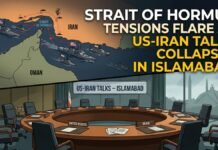
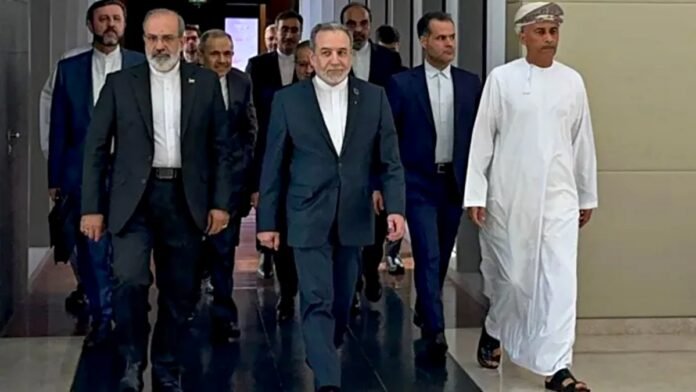
The capital of Oman once again became the stage for a critical diplomatic gamble as U.S. and Iranian officials met at a secluded palace on the outskirts of Muscat. The meeting, brokered by Omani Foreign Minister Badr al,Busaidi, represents the first significant face,to,face engagement since the “Twelve,Day War” in June 2025, during which U.S. and Israeli strikes severely damaged Iranian nuclear facilities.
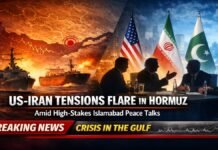
The atmosphere in Muscat was described as professional but strained. For the first time, the U.S. negotiating team included Admiral Brad Cooper, head of CENTCOM. His presence served as a calculated reminder of the “armada” currently stationed in the Arabian Sea, including the aircraft carrier USS Abraham Lincoln. This “dual,track” approach , combining high,level political envoys like Jared Kushner with top military brass , underscores the Trump administration’s strategy of applying “maximum pressure” while keeping a narrow door open for a deal.
The “Oman Framework”: Enrichment and Missiles
The core of the discussions centered on a new regional proposal drafted by Egypt, Turkey, and Qatar. This framework seeks to create a “cooling,off period” of three years, during which Iran would:
- Cease all uranium enrichment at 3.67% purity or higher.
- Ship its existing 440kg stockpile of 60% enriched uranium to a third country (potentially Russia or a neutral regional state).
- Halt the testing and deployment of long,range ballistic missiles.
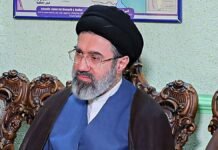
Foreign Minister Abbas Araghchi, speaking to state media, characterized the talks as a “good start” but remained firm on Iran’s sovereignty. Tehran has historically viewed the removal of enriched material as a “non,starter,” though the recent destruction of its air defenses and centrifuges in 2025 may have shifted its internal calculus. Araghchi emphasized that while Iran is negotiating with “open eyes,” the deep scars of the previous year’s military strikes remain a primary hurdle to building trust.
A Region on the Brink
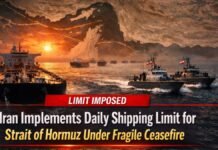
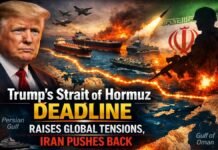
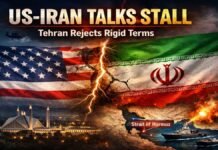
The urgency of the Muscat talks is fueled by recent kinetic activity in the Persian Gulf. Only three days ago, on February 3, U.S. forces intercepted an Iranian Shahed,129 drone that approached the carrier strike group, while Iranian fast attack craft attempted to seize a U.S.,flagged tanker in the Strait of Hormuz.
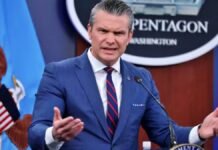
Furthermore, U.S. Secretary of State Marco Rubio and Secretary of State Mike Pompeo have both signaled that any final agreement must go beyond the nuclear file. Washington is demanding a “comprehensive deal” that includes an end to Iran’s support for regional proxies and a verifiable commitment to human rights following the recent domestic crackdown that resulted in thousands of casualties.
Next Steps: Moving From Framework to Technicals
The initial session in Muscat ended with an agreement to continue discussions at a technical level. While no immediate breakthrough was announced, the fact that both sides remained at the table despite the ongoing naval standoff is seen by regional analysts as a fragile sign of progress.
Omani officials stated that the focus will now shift to preparing the specific conditions for formal negotiations. However, with the U.S. military presence at its highest level in years and the Iranian leadership under intense domestic and economic strain, the window for a peaceful resolution remains exceptionally narrow.