























Key Points
- Final Ultimatum: Trump demands the “immediate” reopening of the Strait of Hormuz to prevent full-scale military strikes on civilian infrastructure.
- Infrastructure at Risk: The U.S. has identified oil wells, power plants, and the critical Kharg Island export terminal as primary targets.
- Diplomatic Claims: The President asserts that “serious discussions” are underway with a “new and more sensible” regime in Iran.
- Historical Retribution: The potential strikes are framed as retaliation for American lives lost during the “47-year reign of terror” since 1979.
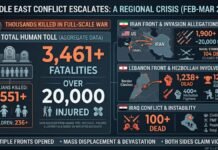
- Global Economic Crisis: Oil prices have surged toward $115 per barrel as the month-long conflict chokes nearly 20% of the world’s oil supply.
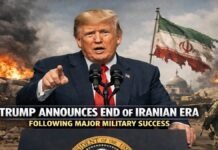
In his most aggressive rhetoric since the outbreak of Middle East hostilities one month ago, President Donald Trump has warned Iran that the United States is prepared to “completely obliterate” the nation’s economic backbone. In a series of high-stakes posts on Truth Social, the President made it clear that the U.S. military is finished waiting for a diplomatic breakthrough, placing the burden of de-escalation squarely on Tehran’s willingness to restore maritime trade.
A Strategic List of Targets
The President’s warning specifically highlights a list of high-value targets that have, until now, remained “untouched” by U.S. and Israeli air campaigns. Chief among these is Kharg Island, the coral-fringed terminal in the northern Persian Gulf that handles roughly 90% of Iran’s crude oil exports. Military analysts suggest that the destruction of Kharg’s jetties and storage tanks, which hold up to 30 million barrels, would effectively end Iran’s ability to participate in the global energy market for years.
Beyond oil, Trump threatened to strike the nation’s entire power generation grid and desalination plants, sites critical for the survival of the Iranian populace. “We will conclude our lovely ‘stay’ in Iran by blowing up and completely obliterating all of their Electric Generating Plants,” Trump wrote, signaling a shift from surgical military strikes to a campaign against national infrastructure.
Diplomacy Amidst Decay
In a pivot that has characterized his current administration’s “maximum pressure” strategy, Trump simultaneously claimed that the U.S. is engaged in “very good and productive conversations” with a “new and more sensible” leadership in Tehran. These comments follow the recent passing of the former Supreme Leader, an event that has left the Iranian political landscape in a state of flux.
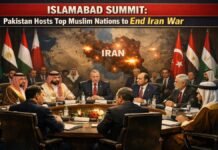
While the President expressed optimism that a deal could be reached as soon as April 6, 2026, he emphasized that any progress is contingent on the Strait of Hormuz being declared “Open for Business.” Through intermediaries, reportedly including Pakistani emissaries, the U.S. is seeking a total resolution that would see Iran’s new leadership abandon the “47-year reign of terror” that began with the 1979 Revolution.
Retribution and Global Fallout
Trump’s rhetoric has increasingly focused on historical justice, linking current military operations to decades of grievances. He asserted that the proposed destruction would serve as “retribution” for the American soldiers and civilians killed by Iranian-backed actions over the last nearly five decades.
The global community, however, remains on edge. The Strait of Hormuz is the world’s most critical oil chokepoint, and its continued closure has already forced the International Energy Agency (IEA) to release 400 million barrels of emergency reserves. With oil prices hovering near $115 a barrel and inflation threatening to destabilize Western economies, the eyes of the world are fixed on April 6, the expiration of Trump’s self-imposed “pause” on energy infrastructure strikes.