



























Key Updates on the New Trade Policy
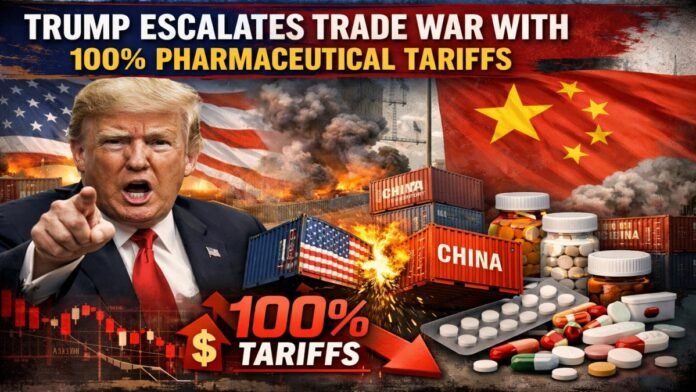
- Patented Drug Tax: A 100 percent tariff now applies to patented pharmaceuticals produced abroad, specifically targeting companies that have not signed reshoring or price-reduction agreements.
- Metal Tariff Overhaul: New rules shift the 25 percent tariff on “derivative” metal products to be calculated based on full customs value, while maintaining a 50 percent baseline for raw steel, aluminum, and copper.
- Reshoring Windows: Large pharmaceutical corporations have 120 days to move production to the U.S., while smaller firms have 180 days.
- India’s Generic Shield: Indian pharmaceutical exports remain largely safe for now as generic drugs are currently exempt, though the administration is actively reviewing this status.
- Legal Pivot: Following a Supreme Court ruling that struck down previous trade measures, Trump is now utilizing Section 232 of the 1962 Trade Expansion Act to bypass existing legal roadblocks.
On Thursday, April 2, 2026, President Donald Trump marked the first anniversary of his “Liberation Day” trade policy by significantly escalating pressure on the global pharmaceutical and metals industries. Invoking Section 232 of the Trade Expansion Act of 1962, a law that allows the president to restrict imports for national security reasons, Trump signed orders designed to achieve “economic independence” from foreign supply chains.
This move follows a major legal setback in February 2026, when the U.S. Supreme Court struck down earlier global tariffs in the case of Learning Resources, Inc. v. Trump. By shifting legal authorities, the administration seeks to reinstate and expand its protectionist agenda.
The Pharmaceutical Ultimatum
The centerpiece of the announcement is a 100 percent tariff on foreign, patented drugs. The policy creates a tiered system of penalties and incentives:
- Most Favored Nation (MFN) Agreements: Companies that agree to lower U.S. drug prices to match the lowest prices in other developed nations and build U.S. factories can qualify for a 0 percent tariff.
- Construction Incentives: Firms currently building U.S. facilities face a reduced 20 percent tariff during the construction phase.
- Regional Exemptions: Existing trade partners, including the European Union, Japan, South Korea, and Switzerland, face a 15 percent rate, while the United Kingdom currently holds a 10 percent rate with a path toward zero.
Strategic Impact on India
For India, the “pharmaceutical hub of the world,” the news is a double-edged sword. While the 100 percent tariff specifically targets patented drugs, the vast majority of India’s exports to the U.S. are generic medicines. Currently, these generics remain exempt from the new duties. However, the U.S. Commerce Department has signaled this exemption is under evaluation, warning that if the generic sector does not show progress in reshoring manufacturing, it could be the next target for increased levies.
Metals and “Derivative” Goods
The administration is also closing what it calls “loopholes” in the metals trade. While raw steel and aluminum have faced 50 percent tariffs since 2025, the new order targets “derivative” products, finished goods like washing machines or heavy machinery that are metal-intensive.
Starting Monday, April 6, 2026, these items will face a 25 percent tariff based on their full customs value. For products where metal content is incidental, less than 15 percent of the total weight, only standard country-specific tariffs will apply. This change is expected to significantly increase the cost of imported consumer appliances and industrial equipment.