






























Key Highlights
- Historic Mandate: The BNP secured 209 of 299 seats, marking a definitive end to 18 months of interim rule.
- National Interest First: Rahman defines future diplomacy under the doctrine of “Friends, yes, Masters, no.”
- Extradition Push: The incoming government will formally request India to hand over Sheikh Hasina to face trial for crimes against humanity.
- Economic Recovery: Addressing a “fragile economy” and restoring law and order are the administration’s top domestic priorities.
- Regional Balance: Invitations have been extended to 13 nations, including India and China, for the February 17 swearing-in ceremony.
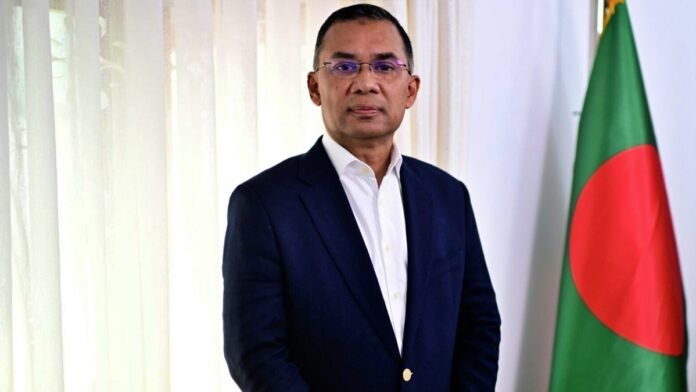
In his first major address following the Bangladesh Nationalist Party’s (BNP) sweeping victory in the 13th General Election, Tarique Rahman has set a clear tone for the country’s future. Returning from a 17-year exile to lead his party to a two-thirds majority, the 60-year-old leader emphasized that external pressures will no longer dictate Bangladesh’s foreign policy, but by the welfare of its own citizens.
Speaking to a packed room of international journalists at the Intercontinental Hotel in Dhaka, Rahman stated that while Bangladesh seeks robust partnerships, the “People’s Interests” will remain the ultimate North Star for his administration. This pragmatism comes at a critical time as the nation transitions from the interim government led by Professor Muhammad Yunus to a fully elected civilian leadership.
Navigating the India-Bangladesh Nexus
The relationship with New Delhi remains the most delicate challenge for the incoming administration. While Indian Prime Minister Narendra Modi was among the first to congratulate Rahman, several “thorns” remain. Rahman’s close aide, Humayun Kabir, indicated that the new government is eager to strengthen people-to-people ties, yet the shadow of the past 15 years looms large.
A significant point of tension is the status of ousted Prime Minister Sheikh Hasina, currently in exile in India. BNP Standing Committee member Salahuddin Ahmed confirmed that the party will formally invoke the bilateral extradition treaty to bring Hasina back to Dhaka. Having been sentenced to death in absentia by a special tribunal in late 2025 for her role in the 2024 crackdown, her presence in India remains a volatile issue for the Bangladeshi public.
Balancing Regional Powers
In an effort to avoid the perceived over-dependence of the previous regime, the BNP has invited heads of state from 13 countries to the swearing-in ceremony on February 17. This list includes India, China, Saudi Arabia, and Pakistan, alongside regional neighbors like Sri Lanka, Nepal, and Bhutan.
Analysts suggest that by inviting both New Delhi and Beijing, Rahman is attempting a sophisticated “regional balance” strategy. This approach is intended to signal to the global community that the new government is open for business and diplomatic engagement on equal footing, moving past the “master-servant” dynamics of previous decades.
Rebuilding from the Ground Up
The road ahead for the Rahman administration is fraught with domestic hurdles. The new government inherits an economy described as “shattered” after nearly two years of political volatility and interim management. Restoring the rule of law and ensuring the safety of all citizens, including minority communities, are immediate priorities.
Rahman has notably called for national unity, urging his supporters to avoid retaliatory violence. “The law must be equal for every citizen,” he remarked, acknowledging that the country’s institutions require deep structural reform to recover from years of politicization. As Dhaka prepares for the historic ceremony at the South Plaza of the Jatiya Sangsad Bhavan, the eyes of the world are on whether this new chapter can deliver the stability the nation’s 170 million people desperately seek.