





























Key Points:
- Explosion at Imam Ali bin Abi Talib Mosque in Wadi al-Dahab, Homs province during Friday prayers
- At least six killed, 20+ seriously injured in blast that created deep crater in prayer hall wall
- Initial investigation suggests suicide bomber or pre-planted explosives, no group has claimed responsibility
- Three suspected ISIS members arrested near Aleppo recently, US conducted airstrikes on ISIS targets last week
- Syria joined global anti-ISIS coalition in November 2025, attack threatens sectarian harmony in mixed community
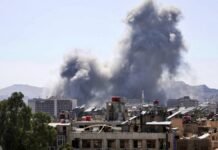
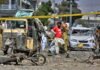
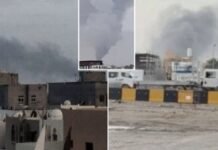
A powerful explosion ripped through the Imam Ali bin Abi Talib Mosque in Homs’ Wadi al-Dahab area on Friday morning, killing at least six worshippers and seriously injuring more than 20 others. The blast occurred at approximately 12:30 PM local time during the main Friday prayer congregation, when the mosque was filled with hundreds of devotees. Video footage released by Syrian state media shows worshippers running in panic immediately after the explosion, with several injured being carried out on stretchers to waiting ambulances. Rescue workers wrapped other victims in sheets as they evacuated the wounded through debris-filled corridors. The surrounding area descended into complete chaos as security forces rushed to cordon off the site.
Investigation: Evidence Points to Suicide Attack
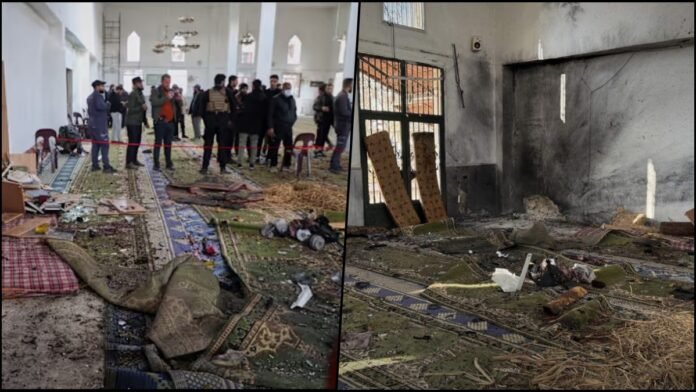
According to state news agency SANA, the explosion originated from a corner of the mosque’s main prayer hall, creating a small but deep crater in the concrete wall. The force of the blast tore through prayer mats, shattered windows, and scattered debris across the entire hall. Religious books, pieces of stone from the damaged wall, and broken objects were strewn across the blood-stained floor. Forensic teams from the Syrian Interior Ministry have collected evidence, including body parts that suggest a suicide bomber detonated an explosive vest containing approximately 5-7 kilograms of high-grade explosives. However, investigators have not ruled out the possibility that explosives were planted in the mosque complex beforehand, as the blast pattern shows characteristics of both attack methods. Bomb disposal squads are conducting a thorough sweep of the entire mosque complex for secondary devices.
Sectarian Context: Targeting of the Alawite Community
Experts warn that this attack could significantly increase sectarian tensions in Syria’s third-largest city. Homs has a mixed population of Alawites, Christians, and Sunni Muslims, and the Imam Ali bin Abi Talib Mosque is reportedly associated with the Alawite or Nusayri community, a Shia offshoot to which President Bashar al-Assad belongs. The targeted attack on a place of worship during Friday prayers represents a deliberate attempt to disrupt the fragile social harmony that has slowly returned to Homs after years of civil war. Local community leaders have appealed for calm, but tensions remain high as funeral processions for the victims are planned for Saturday morning. The Syrian Ministry of Endowments has announced a three-day mourning period and enhanced security at all places of worship across the province.
ISIS Resurgence: Recent Arrests and Military Action
The attack comes amid a troubling resurgence of Islamic State activity in Syria. Just three days before the Homs bombing, Syrian army special forces arrested three suspected ISIS members during a raid near Aleppo, seizing weapons, explosives, and propaganda materials. The suspects were allegedly planning coordinated attacks on civilian targets in major cities. Additionally, US Central Command conducted precision airstrikes on ISIS targets in eastern Syria last week, targeting weapons depots and training camps. Those strikes were launched in response to the killing of two American soldiers and their translator in a roadside bombing near the al-Omar oil field. In November 2025, Syria formally pledged to join the global anti-ISIS coalition, committing to intelligence sharing and joint counterterrorism operations.
International Response and Security Measures
No organisation has yet claimed responsibility for the Homs mosque attack, but security sources privately point to ISIS as the prime suspect. The United Nations Special Envoy for Syria has condemned the attack and called for immediate de-escalation. The US State Department issued a statement expressing solidarity with the victims and reaffirming support for Syria’s counterterrorism efforts. Immediately after the attack, Syrian security forces established a three-kilometre security perimeter around the mosque and launched house-to-house searches in surrounding neighbourhoods. Checkpoints have been set up on all major roads leading into Homs, and security has been heightened at government buildings, markets, and other mosques. The Syrian Interior Ministry has deployed additional counterterrorism units to the province and is coordinating with Russian military advisors to strengthen intelligence gathering.
Latest Updates and Ongoing Investigation
As of Friday evening, the death toll remains at six, but medical sources warn that several critically injured victims may not survive, potentially raising the casualty count. The Syrian Health Ministry has dispatched specialised medical teams to Homs’ hospitals to assist with trauma cases. Forensic experts from Damascus have joined the investigation, analysing DNA evidence from the blast site. Security camera footage from nearby buildings is being reviewed to identify the bomber’s approach route and any accomplices. The Syrian government has announced a reward of 10 million Syrian pounds for information leading to the arrest of those responsible. Meanwhile, community leaders in Homs are organising peace marches to reject sectarian division, though the atmosphere remains tense as residents brace for potential further attacks.