






























Key points
- Sonia Gandhi was admitted to Sir Ganga Ram Hospital in Delhi on Tuesday morning.
- She has faced recurring health issues over the past few years and undergoes regular check ups.
- A specialised medical team is monitoring her condition, no detailed official statement has been released yet.
- She was earlier taken to IGMC Shimla in June for routine tests and was discharged in stable condition.
- Sonia Gandhi, who entered active politics in 1997, led Congress to two consecutive Lok Sabha victories.
- She stepped down as Congress president in 2017 and is currently a Rajya Sabha MP and Congress Parliamentary Party chairperson.
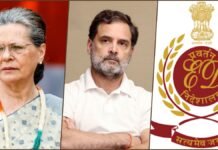
Congress Parliamentary Party chairperson and Rajya Sabha MP Sonia Gandhi has been admitted to Sir Ganga Ram Hospital in Delhi. According to initial information, she was taken to the hospital on Tuesday morning after her health suddenly deteriorated at her residence in the national capital.
At the hospital, a team of senior specialists is closely monitoring her condition and carrying out necessary examinations. As of now, the Congress party has not issued any formal medical bulletin or detailed statement on the nature of her ailment or her present condition, party leaders are awaiting an update from the hospital.
Ongoing health concerns and regular check ups
Sonia Gandhi has been battling health related issues for the past several years, due to which she has frequently undergone medical evaluation and treatment in both Delhi and outside. Her hospital visits for routine check ups, observation and follow up treatment have become periodic in recent years, especially during phases of increased political activity or travel.
On Tuesday, she was once again admitted to Sir Ganga Ram Hospital, one of Delhi’s leading multi specialty hospitals, which has treated several senior political leaders in the past. Doctors are expected to keep her under observation while they complete diagnostic tests and review her existing treatment plan, any change in her condition is likely to be shared through an official update later in the day.
Previous hospitalisation in Shimla
Earlier, in June, Sonia Gandhi was taken to Indira Gandhi Medical College and Hospital, IGMC, in Shimla, the capital of Himachal Pradesh, for a routine medical check up. She was in Shimla at the time, and her visit to the hospital was described as a scheduled examination rather than an emergency.
A team of specialist doctors at IGMC conducted her medical evaluation, after which her condition was reported to be stable. Following completion of the required tests and observation, she was discharged and returned to her residence, party sources had then indicated that the visit was part of her regular health monitoring.
Sonia Gandhi’s entry into active politics
Sonia Gandhi formally entered active politics in 1997, when she joined the Congress party during its Kolkata plenary session. Until then, she had largely stayed away from frontline politics despite being the widow of former Prime Minister Rajiv Gandhi.
In 1998, amid a deep leadership crisis in the Congress marked by internal factionalism and a series of electoral setbacks, Sonia Gandhi was appointed Congress president. At that time, the party’s organisational strength was weakened and it held power in only three states, Madhya Pradesh, Odisha and Mizoram, her elevation was seen as an attempt to reunite the party’s warring factions and revive its national presence.
Resignation offer, internal dissent, and consolidation
Sonia Gandhi quickly emerged as the principal face of the Congress and a key player in national politics. However, her ascent was accompanied by sharp criticism from some senior party leaders, who raised questions over her foreign origin and suitability to lead the party.
In May 1999, amid internal dissent, Sonia Gandhi briefly offered to resign from the party presidency. Her move triggered a wave of support from a large section of Congress leaders and workers, who publicly rallied behind her. That show of backing helped consolidate her position and marginalised those who had opposed her leadership from within.
Also read, ‘Modi’s friendship with Trump is a threat to India…’, BJP leader Subramanian Swamy advises retirement
Two national victories and later transition
Under Sonia Gandhi’s leadership, the Congress bounced back at the national level. The party led the United Progressive Alliance, UPA, to two consecutive general election victories in 2004 and 2009, forming the central government and expanding its footprint to as many as 16 states during the 2000s.
After nearly two decades at the helm, she resigned as Congress president in 2017, passing on organisational responsibilities while continuing to play a central role in strategy and alliance building. She currently serves as a member of the Rajya Sabha and chairs the Congress Parliamentary Party, remaining one of the most influential figures in the party.
Awaited update on current health status
Following her latest admission to Sir Ganga Ram Hospital, attention within political circles is focused on her health bulletin. Senior Congress leaders and workers are understood to be in touch with her family and aides, but no detailed update has been made public so far.
Once doctors at Ganga Ram complete their evaluation, the hospital or the Congress party is expected to release an official statement on Sonia Gandhi’s condition and the course of treatment advised, till then, party functionaries have urged people to avoid speculation and wait for verified information.