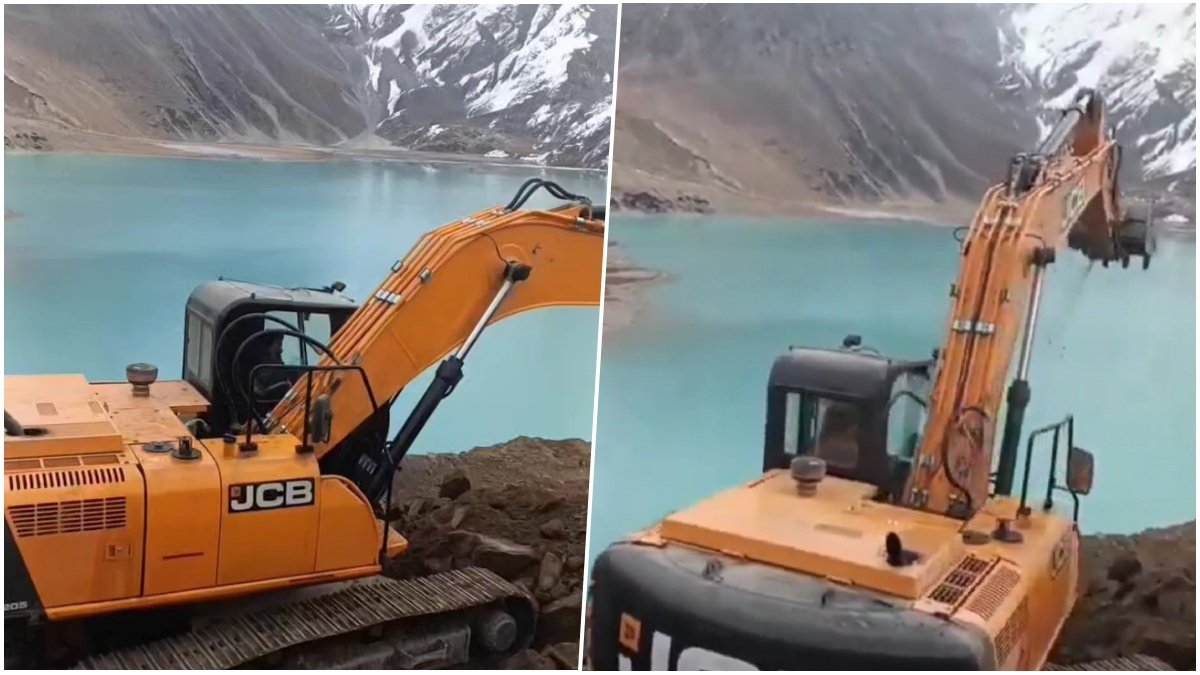
A viral video showing heavy machinery at the high-altitude Sheshnag Lake has triggered widespread concern over environmental damage and the potential desecration of a sacred religious site.
Key Points
- Viral Video: Social media footage shows an excavator dumping soil near the glacial lake.
- Religious Concern: PDP leader Mohit Bhan termed the activity a crime against the Hindu faith.
- Ecological Impact: Climate activists and religious leaders warned of risks to the fragile alpine ecosystem.
- Official Status: Authorities stated excavations are for widening the Amarnath Yatra track.
Viral Footage Triggers Outcry
SRINAGAR: A video shared on social media, allegedly by an excavator operator, has sparked significant concern regarding large-scale damage to the ecologically fragile Himalayan landscape in the Kashmir Valley. The footage, which originated from an Instagram account, depicts heavy earth excavators dumping soil on the shores of Sheshnag, a high-altitude glacial lake situated at 3,590 metres above sea level.
The machinery appears to be involved in creating a road near the lake, which serves as a primary trekking route from Pahalgam to the Amarnath cave shrine. Although the original user has since deleted the post, the video has gone viral, prompting a wave of anger and concern from environmentalists and religious figures alike.
Religious and Environmental Concerns
Peoples Democratic Party (PDP) leader and spokesperson Mohit Bhan has characterized the construction as a crime against the Hindu faith. Bhan stated that Sheshnag is a sacred landscape in Hinduism, where Lord Shiva is believed to have left behind serpents before proceeding toward the Amarnath Cave. He argued that there is a profound contradiction in celebrating the sanctity of a pilgrimage while allowing the landscape associated with that faith to be disturbed by unnecessary construction and surface levelling.
Bhan emphasized that faith and ecology are not competing interests, asserting that development should not come at the cost of a fragile alpine ecosystem. He questioned the preservation of the Amarnath Yatra if the sacred landscape through which it passes is not respected.
Calls for Immediate Action
The Valley’s chief cleric, Mirwaiz Umar Farooq, described the visuals as very disturbing, citing the growing vulnerability of the Himalayas due to retreating glaciers and recent devastating floods in neighboring Nepal. He noted that while improving facilities for Amarnath Yatra pilgrims is not an issue, it should not occur at the expense of the fragile ecosystem.
Farooq called for an immediate halt to the activities, stating that the mountains, glaciers, and water bodies require protection rather than plunder for future generations. Meanwhile, climate activist Raja Muzaffar Bhat also expressed alarm over the presence of heavy machinery in the glaciers, questioning how such equipment reached the sensitive zone.
Official Context and Lake Details
Official sources have indicated that the excavations in the high-altitude Himalayas are part of the widening and stabilization of the existing track connecting Chandanwari in Pahalgam to the Amarnath cave. However, the government has yet to issue a formal statement regarding the specific use of excavators in such an eco-fragile zone.
Sheshnag is an oligotrophic lake, which is fed by glaciers and can be reached via a 23-kilometer trek from Chandanwari. The alpine lake measures approximately one kilometre in length and 0.7 kilometres in width, remaining covered in snow for much of the year.