
































Key Points
- Multiple states are under yellow alert for cold wave conditions through early December
- La Niña effect expected to make 2025-26 the coldest winter in decades
- Minimum temperatures in Delhi recorded at 7 degrees Celsius, forecast to drop to 8 degrees Celsius on December 4, 2025
- Heavy snowfall closes major roads in Himachal Pradesh including Rohtang Pass
- Cold wave conditions expected to persist from December 2025 to February 2026
- Dense fog likely in morning hours across northern plains
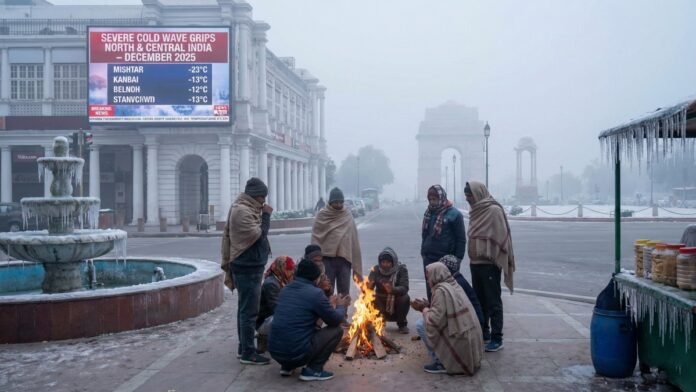
The India Meteorological Department (IMD) has issued a yellow cold wave alert for Delhi-NCR and surrounding regions as mercury levels continue to plunge dramatically. Temperatures are projected to drop sharply in many areas of North and Central India, with cold winds creating dangerous conditions in Uttar Pradesh, Bihar, Rajasthan, Haryana, Punjab, Delhi-NCR, northwestern Maharashtra, and parts of Madhya Pradesh. With the onset of December, the seasonal shift has brought intensified morning and night chills throughout these regions.
Delhi-NCR Braces for Extreme Cold Conditions
The capital region is witnessing a significant temperature plunge with the minimum temperature reaching 7 degrees Celsius on December 3, 2025, and forecast to hover around 8-10 degrees Celsius on December 4, 2025. The IMD has predicted that cold wave conditions may persist at isolated places in Delhi through December 5, 2025. This exceptionally cold spell comes as cold winds blowing from the Himalayan mountains intensify the freeze in the plains, creating hazardous weather conditions for residents of the capital and surrounding areas including Gurgaon, Noida, and Ghaziabad.
Himalayan Snowfall Intensifies Extreme Chill
Heavy snowfall continues to sweep through hilly areas, particularly in Kashmir and Himachal Pradesh, significantly accelerating the cold wave phenomenon across northern India. In Himachal Pradesh, the mercury has plummeted to minus 18 degrees Celsius in high altitude regions, causing water to freeze into solid ice in many areas. The extreme snowfall has forced authorities to close critical roads, including the famous Rohtang Pass, disrupting travel and commerce in the region. Srinagar in Kashmir recorded temperatures of minus 4 degrees Celsius, placing it firmly in the negative temperature zone with persistent cold wave conditions.
La Niña Effect Behind Record-Breaking Winter
The India Meteorological Department has indicated that the unusual severity of this winter is linked to the La Niña weather phenomenon, which emerged in September 2025 and is expected to persist through February 2026. According to meteorological experts, 2025-26 could be one of the coldest winters witnessed in decades, with the La Niña effect intensifying cold waves across northern and central plains. The phenomenon is expected to bring extended frost periods, heavier Himalayan snowfall, and significantly cooler seasonal temperatures compared to historical averages. All of North and Central India is anticipated to experience below-normal minimum temperatures and an increased number of cold wave days throughout the entire December 2025 to February 2026 period.
Punjab, Haryana, and Uttar Pradesh Under Cold Wave Alert
Cold winds blowing from the mountain ranges have dramatically intensified the cold in the plains of Punjab, Haryana, and Uttar Pradesh, resulting in widespread cold wave declarations across these states. The minimum temperature in Punjab and Haryana has dropped sharply, forcing the IMD to maintain yellow cold wave alerts for the region. In Uttar Pradesh, minimum temperatures are expected to remain well below normal, with forecasts indicating levels around 8 degrees Celsius on December 4, 2025. Meteorologists warn that dense fog is likely to form during morning hours across these regions, potentially reducing visibility and creating hazardous road conditions for commuters and travelers.
Rajasthan Experiencing Severe Cold Wave Conditions
Rajasthan is currently grappling with exceptionally severe cold conditions as yellow alerts have been issued for multiple districts across the state due to intense cold winds flowing from northern India. Fatehpur Shekhawati in Sikar district has emerged as one of the coldest locations in the state, recording a minimum temperature of just 3 degrees Celsius. Mount Abu, the highest point in Rajasthan, has recorded temperatures at or below zero degrees Celsius, making it the coldest zone in the entire state during this period. The Meteorological Department has maintained a yellow alert status for the next several days, specifically for the districts of Churu, Jhunjhunu, and Sikar, indicating sustained severe cold conditions in these vulnerable regions.
Extended Cold Wave Period Through February 2026
The IMD’s seasonal forecast for December 2025 through February 2026 reveals a concerning trend, predicting that cold wave occurrences during December 2025 are likely to be above normal over parts of northwest, central, and northeast India. Minimum temperatures throughout the entire winter season are expected to remain normal to below-normal over most central India, adjoining peninsular regions, and large parts of northwest India. This extended period of below-average temperatures necessitates enhanced preparedness across multiple sectors, from agriculture to public health, as farmers face potential risks to vulnerable crops like mustard and wheat due to prolonged frost periods.
Health and Safety Precautions During Cold Wave
As the severe cold wave sweeps across the region, health authorities and government agencies are urging residents to take necessary precautions against the extreme weather conditions. Dense fog formation in the morning hours poses additional risks to visibility and traffic safety, while the intense cold increases the risk of cold-related illnesses. Residents are advised to remain indoors during peak cold hours, use appropriate heating mechanisms, and avoid prolonged exposure to cold winds. Agricultural departments are monitoring crop conditions closely, particularly for frost-sensitive crops that may be damaged by the unusually prolonged cold spell.