























Key Points
- Mandated Timeline: The CBI must register a Preliminary Enquiry within two weeks and submit a full report within 16 weeks.
- Scope of Probe: The investigation covers all state public works and work orders issued between January 1, 2015, and December 31, 2025.
- Alleged Conflict: Contracts worth approximately ₹1,270 crore were reportedly awarded to four companies linked to the Chief Minister’s immediate family.
- Key Entities Involved: The probe focuses on companies such as ‘Brand Eagles’, linked to the Chief Minister’s relatives, following a PIL by two prominent NGOs.
- Judicial Oversight: A bench led by Justice Vikram Nath emphasised that the execution of these works must be thoroughly scrutinised for legal compliance.
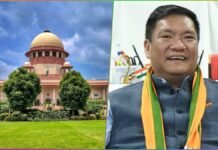
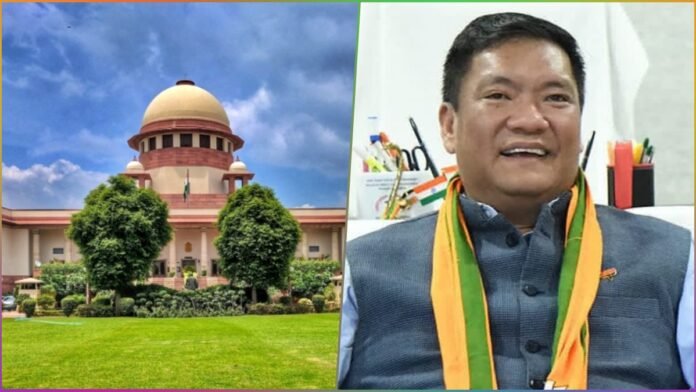
In a significant judicial move on Monday, April 6, 2026, the Supreme Court of India ordered the Central Bureau of Investigation (CBI) to probe allegations of nepotism and financial irregularities in Arunachal Pradesh. The court has directed the agency to investigate claims that lucrative government contracts were disproportionately awarded to firms associated with the family of Chief Minister Pema Khandu.
The bench, presided over by Justice Vikram Nath, issued strict instructions for the CBI to initiate its Preliminary Enquiry (PE) within the next 14 days. The agency has been granted a 16-week window to complete its investigation and present a comprehensive report to the apex court.
A Decade of Contracts Under Scrutiny
The investigation is set to examine a massive portfolio of public works projects spanning ten years from January 2015 to December 2025. During the proceedings, the court was informed that the cumulative value of the contracts under suspicion exceeds ₹1,270 crore. These work orders were allegedly funnelled to four specific companies tied to the Chief Minister’s family members, including his nephew, Tsering Tashi, and Rinchin Drema, the second wife of his late father, former CM Dorjee Khandu.
Advocate Prashant Bhushan, representing the petitioner NGOs, ‘Save Mon Region Federation’ and ‘Voluntary Arunachal Sena’, argued that the state’s own affidavits confirm the awarding of these contracts to family-owned entities. One specific firm, ‘Brand Eagles’, has been highlighted for receiving a substantial number of government orders despite what petitioners describe as a glaring conflict of interest.
Legal and Political Context
The ruling follows a Public Interest Litigation (PIL) that impleaded Chief Minister Pema Khandu as a primary party. The case has its roots in the legacy of Dorjee Khandu, who served as Chief Minister from 2007 until his tragic death in 2011. Since taking office, Pema Khandu has faced mounting pressure from local activist groups regarding the transparency of infrastructure spending in the border state.
The Supreme Court’s decision to involve the CBI marks a major escalation, as the court had previously sought a detailed affidavit from the state government in December 2025. That document, which detailed the particulars of all contracts awarded over the previous decade, reportedly provided the foundation for Monday’s order.
As the CBI prepares to register its enquiry, the political climate in Itanagar remains tense. The outcome of this probe could have profound implications for the state’s leadership and the future of public procurement transparency in Northeast India.